Bulk Black Ant Extract Powder: What Should Nutraceutical Buyers Evaluate?
Nov 26, 2026
Nutraceutical buyers should check Black Ant Extract Powder for contaminants by checking the species identification, extract ratio, marker compounds, physical properties, drying method, and batch-specific paperwork. They shouldn't just compare prices per kilogram; they should also look at traceability, MOQ, lead time, and total landed cost. I wrote this guide to help you put those things in a clear order. Your formula, your label, and your reorder schedule are all safe with a strong specification. Before you approve a bulk order, each section below tells you what to ask for, why it's important, and how to compare quotes fairly.
Understanding Black Ant Extract Powder in the Bulk Nutraceutical Market
What Buyers Are Actually Purchasing?
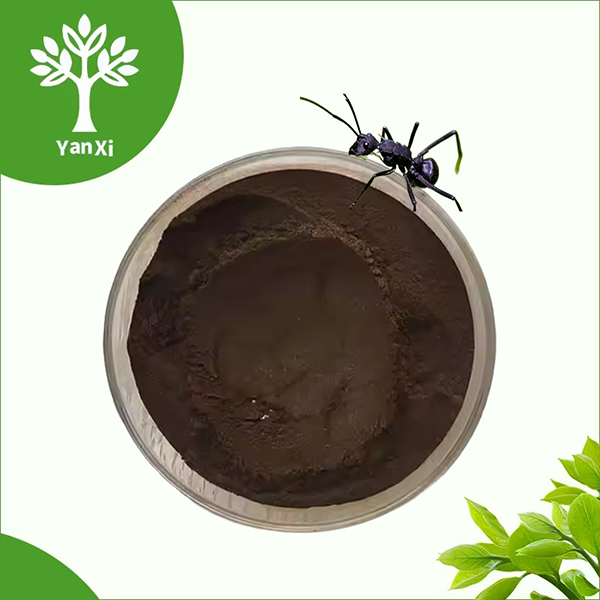
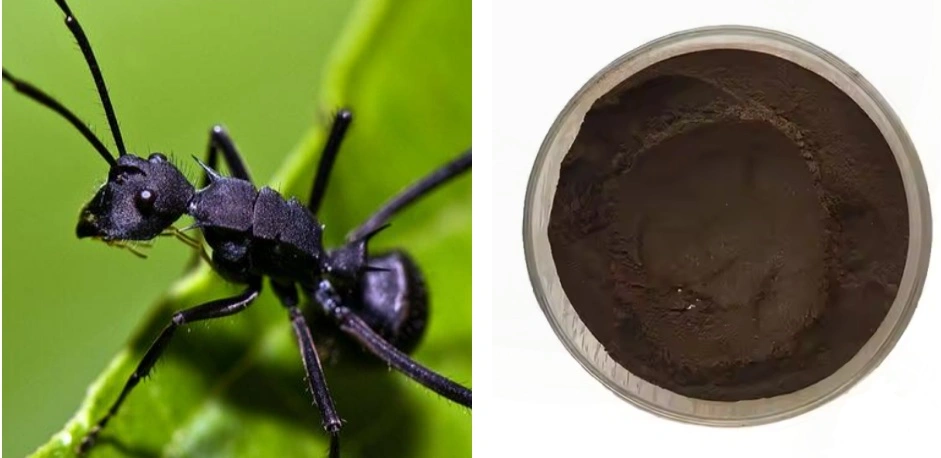
Black Ant Extract Powder is a concentrated ingredient that is made from real ant parts. Extracting, filtering, concentrating, drying, and milling are the steps that the material goes through. The source species is often Polyrhachis vicina Roger in business documents. The final specification is based on the species, where it comes from, the solvent used for extraction, the processing method, and how it is standardized. This means that two products with the same name can behave in your formula in very different ways. I always tell people who want to buy something to start with the written specs instead of the name of the item. Find out what species is used, how it was proven to be real, and what standard the powder is based on. You can learn more from those answers than from any sales page.
Extract Powder Compared With Whole Powder and Other Formats
You cannot replace whole ground ant powder with extract powder. 20 kg of raw material to make 1 kg powder of a concentrated extract. Extraction leads to increased amounts of nutrients like zinc and ATP, and decreased amounts of indigestible chitin. Whole powders maintain the full body material at a lower concentration. Ready-to-sell capsules make a retail launch easier but restrict dose and formula options. When mixed, ant-derived products can mask the real contents of each part. Standardized material will only give more consistent potency if the marker is meaningful and tested with a proven method. Valid certification, not descriptions of natural sources, are necessary for organic claims.
Define Your Specification Before You Request Quotes
Before you call suppliers, make a list of: target market, dosage form, extract ratio, marker compounds, packaging format, annual volume, and regulatory classification. Please provide your MOQ and expected lead time. This short document allows all suppliers to quote against the same needs. This allows for easier price and technical comparison. I also think product descriptions should be linked to analytical written data. In the US, traditional use statements don’t always support allowed health claims, so your compliance team should be checking label and website wording right away. If you don’t have clear requirements up front, there will be a lot of back and forth weeks.
Key Quality Dimensions and Testing Documentation for Black Ant Extract Powder
Identity, Source, and Traceability
Quality starts with knowing what the raw materials are. Find out the name of the species, where it came from, how it was collected or farmed, and how each batch can be tracked back to its source. Also, ask for the method of authentication. You can be sure that the material is Polyrhachis vicina Roger by using DNA barcoding or identifying it under a microscope. Ants live in soil, so controlling the source of contaminants is also important. A supplier who can connect a finished batch to a lot of raw materials makes it easy to look into any complaints. As a warning sign, if a supplier can't say where the ants come from or how identity is checked, you should look elsewhere.
Potency, Markers, and Physical Properties
When evaluating Black Ant Extract Powder, document the extract ratio, assay value, marker content, carrier percentage, and calculation methods. Without these details, it is difficult to compare supplier quotations fairly. The Kjeldahl method for measuring total protein and ICP for measuring zinc are common analytical approaches for assessing composition and authenticity. Report bioactive marker results separately from nutritional values. To determine whether the powder suits your intended formulation, examine its particle size, density, odor, solubility, flowability, and moisture content. Since the powder contains substantial protein and amino acids, it can absorb moisture, making moisture content and water activity particularly important. For every reported value, ask which analytical method was used.
Batch-Specific Documentation and Contaminant Testing
Every shipment should include a COA that includes the product, batch number, date of production, date of next testing or expiration, methods used and actual results obtained. Many standards use common reference points such as: lead < 2.0 ppm; arsenic and cadmium each < 1.0 ppm; total plate count < 1,000 cfu/g; and no E. coli or Salmonella present. Ethanol extracts should have less than 0.05% ethanol with a GC-MS and residual solvent data as well. Request a technical data sheet, SDS, allergen and origin statement, stability data, packaging information and any GMP, HACCP, ISO or FSSC certificates required. Ensure each document is assigned to the right batch and meets the rules for the destination market.
How Processing and Application Fit Shape Black Ant Extract Powder Performance?
Production Steps That Affect Quality
In production, controls determine the strength, stability, appearance, smell and reaction with other ingredients. In a typical process, the raw materials are inspected, cleaned, dried, extracted, filtered, concentrated, dried, sieved, mixed and packed. Determine which parts of the process are critical for the supplier and whether they are done in-house or at a contract processor. There should be a direct question about the smell as the ant extract can have an earthy note. Some producers use low-temperature vacuum drying and deodorization during the filtration to minimize the effect on the senses and keep the heat-sensitive parts safe. Don’t just accept a process description – ask for extraction-ratio records and batch-consistency data.
Freeze Drying Versus Spray Drying
Freeze drying might protect heat-sensitive parts better, but spray drying has a higher throughput, better flowability, and lower costs. There is no clear winner between the two methods. What you choose will depend on your product, your budget, and your marker. Use data from stability tests, residual solvent controls, extraction ratio records, and multi-batch consistency to make an informed decision about each option. When a supplier suggests a certain method, you should ask them to show you proof and ask for samples that were made using that method. Put them through your own lab. Even if the powder looks fine on a COA, it may still cake up or separate in your rig.
Matching the Powder to Capsules, Tablets, and Beverages
Check the particle size, hygroscopicity, flowability, bulk density, disintegration, and content uniformity of capsules and tablets. For drinks and functional foods, check how well they dissolve, mix, settle, and taste, as well as how they react with acids, proteins, fibers, minerals, and sweeteners. Pilot-scale tests should be an exact copy of how you make things in the real world. Storage is also important. Heat-sealed, moisture-proof aluminum foil bags with desiccants can help keep things from clumping together, and nitrogen flushing and light protection can also help. Any claim about storage should be backed up by real-time or accelerated stability data for both the ingredient and the final product. This item comes from insects, so it's not vegan or vegetarian, and the label should say that.
Evaluating Suppliers, Pricing, and Supply Planning
Manufacturer, Distributor, or Trader
You should find out if the company you are dealing with is a direct manufacturer, a specialized distributor, a trader, or a contract processor. The answer tells you how fast the seller can answer technical questions and how much control they have over the production. Ask about the annual capacity, batch size, testing done in-house and by outside companies, procedures for deviation and recall, change notification, and sample availability. A brochure isn't as clear as a site audit, which can be done in person or by video. For private-label or custom projects, make sure there is support for the specifications, packaging, labeling, review of claims, and regulatory documents. Also, make sure that the formula owner is clear in writing.
Looking at Total Landed Cost
The cost of Black Ant Extract Powder depends on the raw material source, species, harvest season, extraction process, standardization, drying method, carrier content, testing, certifications, packaging, freight, tariffs, and compliance requirements. This is why the lowest price per kilogram does not necessarily indicate better value, as it may reflect a lower extract ratio, higher carrier content, or less comprehensive testing. Instead, compare the total landed cost and the cost per standardized serving. A cheaper powder may cost more per serving if a larger dose is needed to deliver the same marker content. Make sure all supplier quotations are based on the same written specification so that every figure can be compared consistently.
MOQ, Lead Time, and Continuity of Supply
Before placing a bulk order, you should approve a written spec and ensure that samples are satisfactory through pilot production. Next, understand the minimum order quantities (MOQs) for both standard and custom items, production lead times, seasonal capacity limits, safety-stock needs and change-control duties. Ask your supplier about their forward planning as seasonal changes can make it harder to get hold of raw materials. Even if it’s just a small amount, having a qualified second source keeps your launch schedule safe. You agree that the supplier will tell you about any change in the source of the raw material, the process or the site. Keeping in touch after the first question is just as important as it was after the first shipment.
A Practical Evaluation Checklist, Common Mistakes, and Final Selection
A Three-Part Checklist
Use a separate checklist for each supplier on your short-list. Technical approval checks the product identity, source, extract ratio, standardization, physical properties, contaminant testing, storage and shelf life. Supplier approval: Site visit, Batch-specific COAs, Capacity assessment, Quality system documents, Complaints, Recalls, Deviations, Change control, Export assistance. It looks at minimum order quantity (MOQ), payment terms, pilot results, supply continuity, backup options, etc. to see if they are commercially acceptable. You can have a separate section for each of the following teams: Procurement Quality Regulatory Formulation If all suppliers are using the same list, it’s easier to compare quotes and there is less risk of not getting approval.
Procurement Mistakes to Avoid
The first mistake is picking the cheapest quote without seeing what's behind it. The second is taking a generic COA instead of results that are linked to your records of shipping and packaging. The third is using the same claim language in all markets, since standard language does not always support allowed health claims. The fourth one stops at getting lab approval. If a powder passes the assay, it might not work in your tablet press or beverage base, so make sure it passes all of the formulation, sensory, stability, compatibility, and content-uniformity tests before putting it on the market.
Choosing by Business Type
We will match you with the best on your needs. If consistent potency is important then authenticated raw materials, marker standardization, validated testing and multi-batch data should be at the top of your list. Buyers looking to save money should look at carrier content, serving economics, drying technology and landed cost without lowering safety standards. “For private-label brands, you need a supplier who can handle custom requirements, packaging, paperwork, artwork, claims review and creation of finished goods.” Distributors and Importers should look for companies with the capacity for large volumes, export experience, robust packaging, assistance with customs, and who are reliable for repeat orders. Match the supplier’s strengths to the way you run your business and then get samples to be sure.
Conclusion
Buying Black Ant Extract Powder in bulk is the best choice when you can measure the facts The quality base is confirmed species and traceability, a clearly defined extract ratio, relevant marker testing, and lot-specific COAs. How well the ingredient works in capsules, tablets and drinks depends on how they processed it (freeze dried, spray dried, etc.) and the powder properties of the ingredient (how much water it has, how well it dissolves and how well it flows). Unit price is important, but so is supplier type, capacity, change control and total landed cost. One of the common mistakes people make is comparing apples to oranges, so to speak. A typical checklist, pilot testing and destination-market review before going on sale reduce risk. Thus the final choice depends on the documented quality and the real performance of the formulation.
FAQ
How does Black Ant Extract Powder differ from ground ant powder?
For instance, to prepare the extract 20 kg of raw material are converted into 1 kg of powder. Extraction removes the indigestible chitin and concentrates nutrients such as zinc and ATP. This is because ground powder maintains the concentration of whole-body material at a low level.
Is the powder vegan or vegetarian?
No. Since the ingredient comes from insects, the label should say "insect-based" so customers know what to expect.
How can I verify potency?
For zinc by ICP and total protein by the Kjeldahl method, get a report from a third-party lab. Then, compare the results to the COA for that batch. Both tests are used as substitutes in the industry for authenticity and concentration.
Does the powder clump during storage?
It can because it can hold water. Keep it in aluminum foil bags with desiccants that are heat-sealed and won't let moisture in.
Request Bulk Black Ant Extract Powder Specifications and a Sample From Yanxi Herbs
Looking for a company that sells Black Ant Extract Powder and can answer your technical questions? Yanxi Herbs can share a specification, a sample that is typical of the batch, and a COA that is specific to that batch. Please email info@yanxiherbs.com with your target market, application, extract ratio, packaging format, and annual volume. We'll look over your needs and get back to you with information about the MOQ and lead time. For more information, go to yanxiherbs.com.
References
1. FAO, Edible Insects: Future Prospects for Food and Feed Security, 2013
2. U.S. Food and Drug Administration, Current Good Manufacturing Practice for Dietary Supplements (21 CFR Part 111), 2007
3. AOAC International, Official Methods of Analysis, 22nd Edition, 2023
4. International Council for Harmonisation, ICH Q3C(R8) Guideline for Residual Solvents, 2021
5. NIH Office of Dietary Supplements, Zinc Fact Sheet for Health Professionals, 2022
6. U.S. Food and Drug Administration, FDA Food Safety Modernization Act (FSMA), 2011

Send Inquiry