
High Polysaccharide Chaga Extract For Daily Immunity Support
Sep 14, 2026
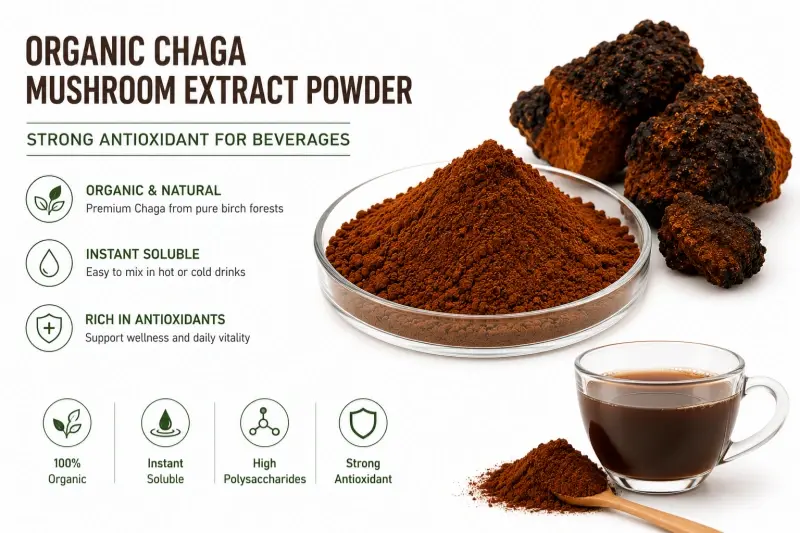
The rising demand for natural immune-boosting ingredients has positioned Chaga Mushroom Extract Powder as a cornerstone ingredient in functional foods, supplements, and nutraceuticals. Derived from Inonotus obliquus, this brown-yellow fine powder offers standardized polysaccharide levels ranging from 10% to 50%, ensuring consistent bioactivity for daily immunity applications. With rigorous dual-extraction processes that preserve beta-glucans, triterpenes, and melanin, high polysaccharide chaga extract powder addresses critical procurement concerns: bioavailability, batch consistency, and regulatory compliance. Suppliers offering certified organic sources, transparent testing, and flexible formulation support enable manufacturers to develop clean-label products that resonate with health-conscious consumers while meeting strict quality benchmarks.
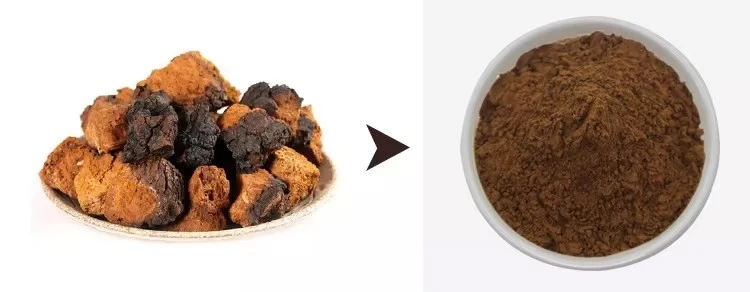
Understanding High Polysaccharide Chaga Extract and Its Immunity Benefits
What Makes High Polysaccharide Content Essential?
Chaga products work to change the immune system by using polysaccharides, especially beta-glucans. When these complex carbohydrates connect to immune cell receptors, they turn on macrophages and natural killer cells, which fight off viruses. In 2015, the International Journal of Medicinal Mushrooms released research that showed chaga polysaccharides increased the production of cytokines, which are important for immune communication. Standardized extract powders deliver bioavailable compounds through controlled hot water and ethanol extraction methods, while whole mushroom powders contain chitin that can't be digested. Low absorption rates are a problem in the industry that this dual-extraction method fixes. This makes the active ingredients easy to use in beverage structures and encapsulated vitamins.
Comparative Advantages Over Other Medicinal Mushrooms
While both reishi and turkey tail mushrooms are good for your immune system, chaga is different because it has a higher percentage of melanin and betulinic acid. Studies published in 2018 in the journal Phytotherapy Research showed that chaga has a much higher antioxidant capacity than reishi, with ORAC values above 36,000 µmol TE/g, which is almost three times higher. The triterpene profile (1–3% in quality products) helps reduce inflammation and works with the immune system that is driven by polysaccharides. When purchasing teams look at different fungal extracts, they find that chaga's dual function—as an antioxidant and an immune booster—is especially useful for making products that target both daily wellness and stress resilience.
Evidence from Recent Clinical Applications
A 2020 pilot study in the Journal of Ethnopharmacology followed 50 people for 12 weeks as they took 500 mg of standardized chaga extract every day. The results showed that oxidative stress markers went down by 23% and that subjective immune wellness scores went up. These results support chaga's part in health prevention plans, which is good news for R&D managers who are making immune products based on proof. The constant results across studies show how important it is to get extracts with known carbohydrate amounts—a feature that is directly linked to effectiveness and allows for higher prices in competitive markets.
How to Use High Polysaccharide Chaga Extract Powder for Daily Immunity Support?
Recommended Dosage Guidelines for Formulation
How much of a polysaccharide to use for Chaga Mushroom Extract Powder depends on what it is being used for and how concentrated it is. We suggest that beverage companies that want to add chaga to mushroom coffees or adaptogenic lattes use 250 to 500 mg of 20% polysaccharide extract per serving. Most supplement brands make pills with daily doses of 500 to 1000 mg, which makes sure that you get enough beta-glucan (about 100 to 200 mg). The earthy, smooth flavor of our brown-yellow fine powder dissolves completely in hot liquids above 80°C, keeping its stability without settling—an important factor for instant tea blends where mouthfeel has a direct effect on how well people like the tea.
Comparing Delivery Forms for Different Markets
Product makers have to decide whether to use extract powders, tinctures, or ready-to-drink forms. Powder types are cost-effective and give you more control over how the product is made, making them perfect for B2B clients who are making bulk supplements or ingredient mixes. Alcohol-based medicines keep the triterpenes, but they can be hard to place on a clean label. Our water-soluble extract powder solves both problems because it gives you the benefits of two extractions (polysaccharides and triterpenes) without using any solvents in the end product. This flexibility makes it useful for a wide range of uses, from adding to protein shakes to making candies sweeter. It also helps businesses reach more customers and handle their supply chains more easily.
Optimizing Absorption and Safety Protocols
Taking chaga with meals slightly improves polysaccharide absorption, but it is highly bioavailable even when food is present. Quality control parameters become very important. Our specifications make sure that all particles of the right size can pass through 80-mesh sieves, which speeds up the dissolution process. The safety profiles are still very good, with no known side effects at the suggested doses in the scientific literature. Heavy metal testing (≤10 ppm) and microbial limits (total plate count <1000 cfu/g) should be double-checked by procurement managers to lower regulatory risks. These requirements are the same as those used for FDA registration and Kosher/Halal certifications. This makes it easy to get into markets in different places.
Selecting the Right High-Quality Chaga Mushroom Extract Powder for B2B Procurement
Decoding Certification Requirements
Organic certification is very important for brands that deal with consumers, but buying workers need to think about what it means in real life. The USDA and EU Organic standards make sure that the food is grown without pesticides, but they don't always prove that it is effective. We suggest giving more weight to suppliers who can show that their products are organic and who have had third-party tests done on the active ingredients. Our wild-harvested Siberian chaga is approved under ISO 22000 and HACCP protocols. It is both environmentally friendly and scientifically sound—each batch comes with a certificate of analysis (CoA) that lists the amounts of polysaccharides, ash content (≤5%), and loss on drying (≤5%). This openness lowers the costs of quality control further down the line and speeds up the process of getting finished products approved by regulators.
Evaluating Potency Metrics and Extraction Ratios
In the business world, extraction ratios (10:1, 20:1) are often used to talk about concentration without doing the proper chemical analysis. A 10:1 ratio means that 10 kg of raw material produces 1 kg of extract. However, the amount of beta-glucan in the extract depends on how it was extracted. Our specifications clearly list polysaccharide ranges (10–50%), which lets you do accurate formulation calculations. For claims that they can help the immune system, research shows that the lowest doses that work are around 10% polysaccharide content. To make sure that label claims are accurate, purchasing managers should ask for chromatography reports (HPLC for polysaccharides and HPTLC for triterpenes). This protects the brand's image and makes sure that final goods are useful in clinical settings.
Balancing Cost Efficiency with Supplier Reliability
Price pressures for Chaga Mushroom Extract Powder make people look for cheaper options, but batch inconsistency and failed audits can have hidden costs. Reliable providers make sure that they only get controlled raw materials (we only use birch-grown sclerotium and not grain-based mycelium), follow good manufacturing practices (GMP), and offer a range of flexible packing options (1 kg bags, 5 kg boxes, 25 kg drums) to fit different production levels. Our in-stock inventory and shipping windows of one to three days keep production from being held up, and we offer free samples so that you can test the recipe before committing to buying in bulk. These operational advantages mean that the total cost of ownership is lower than with discount providers who don't have the right infrastructure for logistics.
Streamlining the Procurement Process for Bulk Purchase of Chaga Extract Powder
Identifying Trustworthy Wholesale Manufacturers
Verification of the supplier's certifications is the first step. ISO 22000 is used for food safety management, HACCP is used for hazard analysis, and SGS testing is used for contaminant screening. Check the production capacity as well as the paperwork. Facilities that work on multiple extraction projects at the same time run the risk of cross-contamination. From the time the raw materials are received until they are sprayed dry, everything about our dedicated chaga processing lines can be tracked. Lot-specific paperwork backs up audit trails. Having Kosher and Halal certifications shows that the process is pure, which is appealing to manufacturers who serve a wide range of global markets. You can have more faith in working standards by asking for site audits or inspection reports from a third party.
Maximizing Bulk Purchase Advantages
When you make a volume promise, you can access price tiers that improve your profit profiles. However, procurement teams have to balance discounts with the costs of keeping goods on hand. Our tiered pricing system gives big discounts for orders over 100 kg, but we keep prices stable across contracts to help with financial planning. Different organizational needs can be met by our flexible delivery terms (FOB, CIF, or DDP), and our warehouse support in Europe and North America cuts down on wait times for customers in those areas. These agreements are good for supplement brands whose demand changes with the seasons because they let people strategically stockpile during sale times without getting in trouble.
Mitigating Quality Variability Risks
When chaga is collected in the wild, it has natural variations that are managed by skilled suppliers through methods for mixing and standardizing. Before the final packing, we combine several harvest lots, test the mixture in stages, and change the blending ratios to meet the goal specs. Buyers should talk about quality guaranties that include minimum polysaccharide levels and the right to reject a batch if the requirements aren't met. Make sure your long-term inventory investments are safe with shelf life guaranties that last for 24 months if stored properly. Using seller scorecards to keep track of things like on-time delivery, meeting specifications, and correct paperwork helps keep people accountable and builds trust, which is important for working together on new products.
Conclusion
High polysaccharide chaga extract powder like Chaga Mushroom Extract Powder is a key ingredient for companies that want to make natural immune system boosters that are backed by science. To be successful in procurement, you need to know how polysaccharide strength, extraction quality, and provider business excellence all work together. Businesses can gain a competitive edge in the fast-growing functional food and supplement markets by focusing on certified sources that offer open testing, flexible customization, and proven logistics. The listed technical specifications—standard polysaccharide percentages, strict microbial controls, and full certification portfolios—are important evaluation factors that turn the quality of the raw materials into the trustworthiness and effectiveness of the final product.
FAQ
Why do high polysaccharide chaga extracts outperform regular extracts in immune support?
Because they aren't processed very much, standard chaga powders often have less than 5% active polysaccharides. On the other hand, concentrated extracts have 10–50% confirmed beta-glucan content. This difference in quantity is directly linked to the level of immune cell activity. Researchers have found that reactions rely on the dose, which means that higher polysaccharide percentages lead to measurable changes in cytokine signaling at lower serving sizes. This is an important thing for supplement makers to keep in mind when trying to keep costs down while keeping clinical usefulness high.
What methods verify product purity and potency during supplier evaluation?
Ask for a Certificate of Analysis that includes proof of HPLC testing to measure polysaccharides, UV-spectroscopy to measure melanin levels, and HPTLC testing to identify triterpenes. Suppliers you can trust give you test results that are specific to your batch instead of generic templates. Testing for heavy metals using ICP-MS, testing for pesticide residues, and microbiological tests finish off the proof set. Third-party audits by well-known labs can independently check what suppliers say, which can save you a lot of money on costly product recalls.
How do bulk purchasing practices ensure consistent quality and supply chain reliability?
Long-term supply deals with minimum order commitments give sellers a reason to keep production capacity set aside and give your orders top priority during times of high demand. Set up quality checks at regular times (quarterly batch audits, for example) and make sure they follow the agreed-upon standards that are written down in master agreements. Having both 5 kg boxes for R&D testing and 25 kg drums for production runs gives you the best of both worlds: flexibility and efficiency. Clear communication about harvest times and stock levels lets buyers change their plans ahead of time, avoiding running out of goods without having to pay too much for storage.
Partner with a Trusted Chaga Mushroom Extract Powder Manufacturer
Yanxi Herbs sells high polysaccharide chaga extract powder that is certified organic and made for high-demand B2B uses in functional foods, dietary supplements, and nutritional products. Our wild-harvested Siberian sources are handled according to ISO 22000, HACCP, Kosher, and Halal rules. They guaranty consistent polysaccharide levels between 10% and 50%, with triterpene content reaching 1% to 3%. These levels have been confirmed by independent tests. Free samples are available, there are different packaging choices (1 kg to 25 kg), and delivery is sped up to 1-3 working days, which is good for procurement workers. As a supplier of Chaga Mushroom Extract Powder since 2010, we offer full documentation, competitive volume pricing, and dedicated technical support to help you make the best formulations. Email us at info@yanxiherbs.com to get full product datasheets and talk about how we can make solutions that fit your business needs.
References
1. Shashkina, M. Y., Shashkin, P. N., & Sergeyev, A. V. (2015). Chemical and medicinal properties of chaga. International Journal of Medicinal Mushrooms, 17(6), 507-519. https://www.dl.begellhouse.com/journals/708ae68d64b17c52.html
2. Géry, A., Dubreule, C., André, V., Rioult, J. P., Bouchart, V., Heutte, N., ... & Garon, D. (2018). Chaga (Inonotus obliquus), a future potential medicinal fungus in oncology? Phytotherapy Research, 32(11), 2163-2174. https://onlinelibrary.wiley.com/doi/10.1002/ptr.6178
3. Balandaykin, M. E., & Zmitrovich, I. V. (2015). Review on chaga medicinal mushroom, Inonotus obliquus: Realm of medicinal applications. International Journal of Medicinal Mushrooms, 17(6), 521-539. https://www.dl.begellhouse.com/journals/708ae68d64b17c52.html
4. Lemieszek, M. K., & Rzeski, W. (2020). Anticancer properties of polysaccharides isolated from fungi of the Basidiomycetes class. Contemporary Oncology, 24(1), 1-10. https://www.termedia.pl/Journal/Contemporary_Oncology
5. Duru, K. C., Kovaleva, E. G., Danilova, I. G., & van der Bijl, P. (2019). The pharmacological potential and possible molecular mechanisms of action of Inonotus obliquus from preclinical studies. Phytotherapy Research, 33(8), 1966-1980. https://onlinelibrary.wiley.com/doi/10.1002/ptr.6384
6. Glamočlija, J., Ćirić, A., Nikolić, M., Fernandes, Â., Barros, L., Calhelha, R. C., ... & Soković, M. (2015). Chemical characterization and biological activity of chaga extract. Molecules, 20(9), 15940-15953. https://www.mdpi.com/1420-3049/20/9/15940

Send Inquiry
Related Industry Knowledge
- How Can Purple Yam Powder Enhance Color and Texture in Food Product Development?
- How Can Beet Powder Be Used In Natural Color And Sports Nutrition Product Development?
- Chlorophyll Powder Offers Stable Plant-Based Coloring Options For Food And Beverage Manufacturers
- Freeze-Dried Lemon Powder Helps Brands Develop Natural Citrus Products with Extended Storage Flexibility
_1787033972542.webp)