How Does Bulk Astaxanthin Powder Support Antioxidant Supplement Formulations?
Nov 12, 2026
People who make antioxidant supplements can use Astaxanthin Powder Bulk to get a concentrated, standardized form of the carotenoid that they can use to make functional drinks, capsules, and tablets that have the right amount of antioxidants. The powder comes in set strengths, such as 1% to 10% astaxanthin. This means that formulators can figure out fill weights, make sure that all batches are the same, and make more without having to change the recipe. Astaxanthin from Haematococcus pluvialis mixes well with fat, which makes it a good choice for antioxidant-rich products. At Yanxi Herbs, we have this ingredient in stock. It tells you how to choose one, try it out, and use it.
Why Astaxanthin Powder Bulk Matters in Antioxidant Supplement Formulations
What Astaxanthin Powder Bulk Is and How Buyers Use It
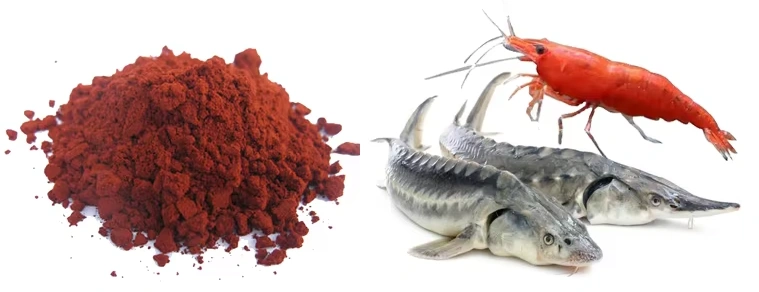
Concentrated Astaxanthin Powder Bulk. It's not a full supplement yet. The name of our powder comes from the microalgae Haematococcus pluvialis. This plant colors itself with astaxanthin and can store a small amount of it in its dry weight (Shah et al., 2016). A fine, dark red to purple-red powder. It says that the amount is between 1% and 10% astaxanthin. Some companies that buy it by the kilogram are supplement brands, private-label companies, distributors, and OEM clients. They all use it in their own products. When you buy powder in bulk, your R&D team can decide on the ingredients, strength, and serving size. Labels, dosage, and claims about antioxidants still need to follow the rules of the market you're going to, like the US FDA's rules.
What Are the Main Benefits of Bulk Astaxanthin Powder?
One use for astaxanthin is in antioxidant products because it is a xanthophyll carotenoid. A review that Kidd wrote for Alternative Medicine Review in 2011 talks about how its shape lets it sit on top of cell membranes. Health in general, nutrition for sports, healthy aging, skin care, and eye care are all ideas for products. I'm not going to say anything medical here, and your label should only use structure/function language that you can back up. Bulk supply also has some good points, like consistent batch specifications, standardized potency, and the ability to create private labels in a variety of ways. No man-made astaxanthin is added to our water-dispersible grade, which has a range of 1.5% to 10%. It can be added to drinks and healthy foods. Powder is in stock and will be sent out one to three business days after you pay.
How to Calculate Dosage from Potency
To find the right amount of powder, all you have to do is divide the amount of astaxanthin you want to use by its concentration. In one gram of 5% powder, there are 50 mg of astaxanthin. In one gram of 10% powder, there are 100 mg. Several human studies, such as Brendler and Williamson's (2019), talk about low daily doses of 4 mg to 12 mg. This is what many formulators aim for. To get to 4 mg, you need 80 mg of 5% powder, 40 mg of 10% powder, or 400 mg of 1% powder. It's easier to blend when the potency is low, because it gives you more bulk. When the potency is high, it saves space in the capsule. Check prices based on how much active astaxanthin is in the powder, not how much it weighs, and make sure that everyone on your regulatory team agrees on the final dose.
Natural vs. Synthetic Astaxanthin Powder Bulk: Which Is More Suitable?
Source and Isomer Differences
Most of the natural astaxanthin comes from Haematococcus pluvialis. Most of it is found as esters linked to fatty acids (Higuera-Ciapara et al., 2006). The main type is 3S,3'S. To make synthetic astaxanthin, chemicals are mixed together. It's a mix of stereoisomers and mostly appears as a free form. Chiral analysis is a test that can be done in a lab to tell the difference. Capelli and others wrote a review for Nutrafoods in 2013 that compares the two forms and says they work as antioxidants in different ways. People shouldn't use them instead of each other because the molecules are different. Our Astaxanthin Powder Bulk comes from Haematococcus pluvialis, and our water-dispersible grade contains no added synthetic astaxanthin.
Documentation and Consumer Positioning
Source can change where an item is put, too. Brands with clean labels often care about how they talk about their natural origins, but they need to back up what they say with proof. For each batch, you should ask for a source statement, a COA, and a technical data sheet. They need our astaxanthin powder to have ISO, HACCP, FDA Registration, Kosher, and Halal certificates in order to export and sell it. You still need to test even though you have a certificate, so your quality team should still match each batch to the specs. Synthetic material might work for some budgets or uses that aren't supplements, but the rules about it change based on the market and the use. You should choose to use a source after reading those rules.
Matching Source to Your Market
Sometimes it's not clear which option is better. The choice is made based on five things: the budget, the claims strategy, the target market, the need for potency, and the need for certification. Natural ingredients are likely to be used by a business that sells antioxidant capsules made from algae. There are other things a buyer should know besides price. They should know how much it costs for testing and compliance as well as how much it costs per milligram of active astaxanthin. Before you give them the go-ahead, ask each one on your shortlist for samples, COAs, technical data, and the source statement. Your team can use our free samples to test them on a bench and come up with its own ways to judge color, flow, and assay results.
Astaxanthin Powder Bulk Formulation: Solubility, Dosage, and Stability
Solubility and Dispersion
The powder form of astaxanthin doesn't mix well with water because it is lipophilic. In order for your lab to do a full test, they need to look at how well the substance dissolves, stirs, and spreads. Standard powder can be used in softgels with oil, capsule blends, and tablets. It is better for drinks and sachets to use a grade that lets water through. There are strengths of our astaxanthin powder that dissolves in water that range from 1.5% to 10%. That powder is fine and reddish-brown, and it doesn't stick together when it gets wet. That works for drinks and foods that are good for you and are made in large amounts. You can expect the liquid to change color. Check the suspension at the pH level, sugar level, and storage temperature that work best for you.
Stability Against Light, Heat, and Oxygen
Marine Drugs (2014) by Ambati et al. says that astaxanthin breaks down in light, heat, oxygen, and water. So, the first thing that needs to be done to make a good formulation is gentle processing. When you blend, use containers that are clear and don't add too much air to the headspace. Less than 5% of the powder is lost when it dries, and it can be kept for 24 months if it is stored properly and sealed. Now you have a good place to start. But finished goods are not the same as raw materials. Test your last pill, capsule, or drink for both short- and long-term stability. At each time point, make sure the astaxanthin level is still high. Make sure it works with oils and other ingredients as well.
A Five-Step Formulation Workflow
I believe that manufacturers and private-label brands should work together in this way. To begin, choose the dosage form, serving size, market, and certification needs. Take a look at the fill weight, active load, cost, and equipment to help you choose a strength and format for Astaxanthin Powder Bulk. Third, there are binders, acids, disintegrants, flow agents, and oils. Fourth, test things in the lab and with small groups of people. Fifth, make sure the blend is even, that it tests and flows well, that capsules are full, that tablets are pressed down, that the ingredients are spread out evenly, that the finished product looks good, and that it stays stable before you make more of it. One time, our powder goes through an 80-mesh sieve and comes out smooth and fine. You should still check the results in your own process, though.
How to Compare Quality and Choose the Best Astaxanthin Powder Bulk Supplier
Reading the Certificate of Analysis
Price and marketing claims don't tell you much about how good something is. A certificate of analysis for a certain batch should list the batch's strength, identity, appearance, moisture, contaminants, microbial limits, batch number, and when it goes bad or needs to be tested again. Do some research before you buy any natural products. Find out where the Haematococcus pluvialis comes from, how it is grown, how it is extracted, and if there are any allergen or GMO claims. Food grade, pharmaceutical grade, and application-specific suitability are not the same thing. Before you buy something, make sure you know what each label says. Your quality manager can compare batches with the help of tested methods that can be tracked. You should not accept a COA that is not linked to a lot number.
Our Astaxanthin Powder Bulk Specification
Our numbers are written here so that your quality team can compare them to other ideas. The fine powder is made from H. pluvialis and is dark red to purple-red in color. It has between 1% and 10% astaxanthin in it. The pieces that go through an 80-mesh sieve are all the same size. When it dries, less than 5 percent is lost. The same is true for ash. Heavy metals are present at less than 10 parts per million. The plate as a whole had less than 1000 cfu/g, and yeast and mold had less than 100 cfu/g. If you store it right and seal it, it will last for 24 months. An ISO, HACCP, FDA Registration, Kosher, and Halal certificate is one of the keys. These numbers make it easy for people in charge of regulations to see what each COA's limits are.
Screening a Supplier and Comparing Price
Before you ask for quotes, it's a good idea to write down what you need, such as the potency, the level of synthetic or natural source, the sample size, the minimum order quantity (MOQ), the packaging, the country of destination, the certifications, and the delivery needs. Next, check to see how well each supplier manages information, can make products, provides product details, maintains quality systems, supports exports, offers technical support, ensures short lead times, and accommodates private labeling. When sourcing Astaxanthin Powder Bulk, don't focus only on the price per kilogram of powder; instead, compare the cost per milligram of active astaxanthin. Yanxi Biotech has been in business since 2010 and holds ISO 22000, HACCP, SGS, Kosher, and Halal certifications. Its naturally sourced products are supplied to more than 100 countries and regions worldwide. Yanxi Biotech also maintains local astaxanthin inventory in the US and Europe, with in-stock orders dispatched within 1 to 3 business days after payment.
Packaging, Storage, Applications, and Mistakes to Avoid
Packaging and Storage
It's easy to handle both small orders and large production runs with this astaxanthin powder, which comes in 1 kg bags, 5 kg boxes, and 25 kg drums. Light, oxygen, water, and heat can all harm astaxanthin. When you open a sealed pack, put it back in a cool, dry place out of direct light. This will keep it safe. Write down the lot numbers, the dates the warehouse opened, and the state of the warehouse. When you get new items, check to see how long they have left on the shelf and order the right amount based on the 24-month shelf life. Buyers can avoid running out of stock and having items go bad with planned replenishment.
Applications Across Product Categories
How the product is made, the tools used, and the conditions during processing all affect picking the correct grade. It is important to keep an eye on how capsules and tablets flow, how uniform the blend is, how much they weigh, how they compress, how consistent the color is, and how they oxidize. Functional foods and drinks often need grades that break down in water. Also, their taste, color, and ability to stay dark need to be checked. When used in cosmetics, ingredients and paperwork need to follow the rules of the market they are going to. Dosages for feeding animals need to be based on the species, and rules need to be reviewed. We can talk to your R&D team about changes to potency and packaging since our natural ingredients are used in foods, drinks, supplements, and cosmetics.
Common Mistakes and a Quick Buyer Checklist
The same mistakes are made over and over again in many projects. People who buy don't think about the costs of testing, shipping, and following the rules; they only look at the price per kilogram. It seems like all powders break down the same way, but then they notice that powders don't mix well with drinks. Light, heat, oxygen, and water don't bother them. They will also take generic forms or big orders before pilot testing. A short list can help you avoid most of these issues. Take a look at the source, strength, format, and spread. Go over the batch COA, the certifications, and the market rules. Check the minimum order quantity, the packaging, the shelf life, the lead time, and the paperwork for export. Okay, first a sample, then the whole volume.
Conclusion
Bulk astaxanthin powder gives companies that make antioxidant supplements a standard ingredient that can be used in different amounts. Astaxanthin Powder Bulk is available in strengths between 1% and 10%, allowing teams to use simple calculations to determine the required fill weights. Natural and synthetic sources come from different origins and have different isomer profiles and documentation. This means that the choice should be based on the target market and claims strategy. Astaxanthin is easily degraded by light, heat, oxygen, and water, so it is important to test its solubility, dispersion, and stability in a finished product before scaling up production. Purchasing and quality teams can evaluate suppliers more effectively when they have batch-specific COAs, clear specifications, and price comparisons based on active content. Finally, proper storage, packaging, and pilot testing help maintain product quality and reduce costly production errors.
FAQ
What is the difference between 5% and 10% powder?
In one gram of 5% powder, there are 50 mg of astaxanthin. In one gram of 10% powder, there are 100 mg. The capsule has more room because it needs less powder to hold the same amount of medicine.
Is astaxanthin powder soluble in water?
In its normal form, astaxanthin doesn't mix with water but does with fat. For drinks and functional foods, grades that don't stick to water, like our 1.5% to 10% powder, work well. Look at your own formula to see how dispersion works.
What documents should I request, and how should I store the powder?
As well as a COA that is unique to the batch, you should ask for a source statement, contaminant testing, a technical data sheet, a specification sheet, a safety data sheet, a source data sheet, and any other certificates you need. Place sealed boxes somewhere cool, dry, and out of the light. After taking one apart, put it back together again. If you store it right and seal it, it will last for 24 months.
Can I get a sample before ordering?
Yes. We give away free samples so that you can check out the formula and see how stable it is.
Request an Astaxanthin Powder Bulk Quote or Sample from Yanxi Herbs
Want to buy Astaxanthin Powder Bulk from a company that knows how to make supplements? Astaxanthin levels in the powder that Yanxi Herbs sells range from 1% to 10%. Plus, they give away free samples, deliver within one to three business days of payment, and help with storage in both the US and Europe. Simply email us at info@yanxiherbs.com with information about how you plan to use the herbs, how much you need each year, the market, any certifications you need, and the packaging you need. We will then help you choose the right grade. Visit yanxiherbs.com to find out more.
References
1. Ambati RR, Phang SM, Ravi S, Aswathanarayana RG. "Astaxanthin: Sources, Extraction, Stability, Biological Activities and Its Commercial Applications—A Review." Marine Drugs, 2014.
2. Higuera-Ciapara I, Félix-Valenzuela L, Goycoolea FM. "Astaxanthin: A Review of Its Chemistry and Applications." Critical Reviews in Food Science and Nutrition, 2006.
3. Shah MMR, Liang Y, Cheng JJ, Daroch M. "Astaxanthin-Producing Green Microalga Haematococcus pluvialis: From Single Cell to High Value Commercial Products." Frontiers in Plant Science, 2016.
4. Capelli B, Bagchi D, Cysewski GR. "Synthetic Astaxanthin Is Significantly Inferior to Algal-Based Astaxanthin as an Antioxidant and May Not Be Safe for Human Consumption." Nutrafoods, 2013.
5. Brendler T, Williamson EM. "Astaxanthin: How Much Is Too Much? A Safety Review." Phytotherapy Research, 2019.
6. Kidd P. "Astaxanthin, Cell Membrane Nutrient with Diverse Clinical Benefits and Anti-Aging Potential." Alternative Medicine Review, 2011.

Send Inquiry
Related Industry Knowledge
- How Does Freeze-dried Dragon Fruit Powder Improve Natural Color In Food Applications?
- What Factors Matter When Purchasing Astaxanthin Powder Bulk For Large-Scale Production?
- Freeze-Dried Lemon Powder Helps Brands Develop Natural Citrus Products with Extended Storage Flexibility
- Food Grade Bulk Astaxanthin Powder For Skincare Antioxidant Supplements