
No Added Sugar Beet Root Powder for Natural Food Coloring
Sep 20, 2026
When formulators search for a reliable natural colorant that carries zero additives and full regulatory transparency, no added sugar beet root powder consistently rises to the top of the conversation. Yanxi Herbs' Beet Powder is produced from fresh beetroot tubers, ground to an 80–100 mesh fineness, and delivered as a vivid red-to-deep-purple fine powder with no sweeteners, fillers, or artificial processing aids. Its active compounds — betalains, dietary fiber, and naturally occurring nitrates — give manufacturers a clean-label pigment solution that performs across beverages, dairy, baked goods, and supplement applications.
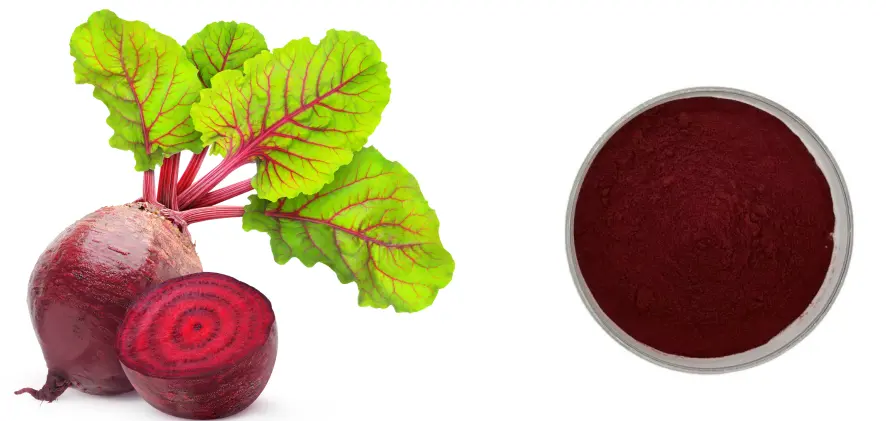
What Makes No Added Sugar Beet Root Powder Different
The Chemistry Behind the Color
Betalains are the nitrogen-containing pigments that give beet its distinctive color. According to a study published in the journal Food Chemistry, betanin, the main red betalain, is most stable between pH 4 and 6. It starts to break down above pH 7 or at temperatures higher than 60 °C. You have to understand this behavior; it's the basis of every successful application. Because there is no added sugar, these colors stay pure in beet root powder. This is because no heat-processing chemicals or carrier sugars are added during production. Yanxi Herbs' specifications confirm that loss on drying is less than 5%. This shows that the pigments are carefully dried at low temperatures from the start to keep them intact.
Clean-Label Status and Labeling Compliance
According to a study by Innova Market Insights in 2023, 64% of U.S. consumers actively avoid ingredients that list artificial colors. This number directly turns into product placement risk for procurement teams. No added sugar Beet Powder only lists "beetroot powder" as an ingredient on the label. It doesn't have any secret fillers or sweeteners that could make labeling harder in places where FDA 21 CFR Part 73 natural color rules apply. It's easy to market finished goods as "clean label" in food service, retail, and online stores because they are so pure.
Key Procurement Considerations When Sourcing Beet Root Powder
There are more factors to consider than just color specs when looking for beetroot-based colorants on a large scale. Before signing long-term contracts with suppliers, procurement managers and quality teams need to make sure they meet a structured set of technical and logistical requirements.
A seller of beetroot powder that is ready to be bought has the following qualities:
- Particle size consistency: Yanxi Herbs guarantees 100% passage through an 80-mesh sieve, ensuring homogeneous dispersion in liquid systems and uniform color distribution in dry blends. Inconsistent particle size is one of the most common causes of color patchiness in baked goods.
- Microbial safety: Total plate count below 1,000 cfu/g and yeast & mold below 100 cfu/g align with FDA and EU food ingredient safety thresholds, reducing downstream recall risk for finished-product manufacturers.
- Heavy metal compliance: Heavy metals controlled to ≤ 10 ppm satisfy global import requirements, including those of the U.S., EU, and Japan, which matter enormously for ingredient distributors managing multi-market portfolios.
- Shelf life and packaging: A 24-month shelf life under sealed storage, with flexible packaging in 1 kg bags, 5 kg boxes, or 25 kg drums, gives supply chain managers the flexibility to manage inventory across different production volumes.
These requirements immediately lead to fewer quality problems, faster approval processes, and a lower overall cost of ownership over the course of a production year. When procurement teams choose suppliers based on these criteria, formula launches go more smoothly, and batch rejections go down.
How to Apply No Added Sugar Beet Root Powder as a Natural Food Colorant
Dosage by Application Category
The amount needed varies depending on the application and the desired color intensity. A deep magenta tone can typically be achieved with 1–3% w/w Beet Powder in cold drinks and smoothies. For dairy products such as yogurt and ice cream, 0.5% to 1.5% Beet Powder can provide a strawberry-pink color without allowing strong earthy notes to dominate. At 0.5% to 1%, Beet Powder works well in frostings and candy fillings. For plant-based meat products, manufacturers can use up to 2% Beet Powder to create an appearance similar to fresh ground beef, making it a popular choice because betalains can provide a blood-red visual effect similar to the color traditionally associated with synthetic Red 40.
pH and Temperature Management
The stability of betalain changes with pH and heat. Before adding the powder, manufacturers of alkaline dough systems should add a buffer to bring the pH level of the mixture down to a slightly acidic range. When baking, encapsulated forms offer extra safety because they delay the pigment's exposure to high oven temperatures. The powder can be mixed directly with water in cold-process drinks like kombucha, cold-brew coffee, and functional hydration drinks because it dissolves completely in water. The 80–100 mesh fineness of Yanxi Herbs ensures that they dissolve quickly and completely, so there is no sedimentation in clear beverage formats.
Beet Root Powder vs. Other Natural Colorants
When it comes to color strength, cost per unit of pigment, regulatory status, and compatibility with formulations, natural colorants are all competing. R&D managers can make choices based on facts when they compare powder made from beet to other options.
Phycocyanin in spirulina gives it blue-green tones, but it breaks down quickly in acidic pH conditions, which are common in most beverage applications. Curcumin in turmeric gives foods their yellow color, but it has a strong flavor that makes it hard to use in neutral-tasting foods. Annatto and carmine are better at withstanding heat, but in the U.S. and EU, carmine needs to be labeled as an allergen, which makes it harder to place on clean labels.
Beet root powder is unique because Beet Powder provides a warm red-to-magenta color spectrum, can be processed at low temperatures without significant color changes, and generally costs less per kilogram than concentrated beet extract. Beet Powder also offers a formulation option without intentionally added allergens, GMOs, or additives, depending on the supplier's specifications. Its dietary nitrate content gives Beet Powder a functional dimension that is not present in colorants used solely for appearance. This makes Beet Powder particularly useful for nutraceutical and functional food companies seeking multifunctional ingredients that can contribute both color and nutritional value.
Ensuring Quality and Compliance in Bulk Procurement
Certifications That Matter for Global Market Access
Standardized requirements make sure that the quality is the same from batch to batch: ash content must be less than 5%, drying loss must be less than 5%, and microbe limits must be kept within the limits set by international food ingredient standards. After receiving payment, Yanxi Herbs ships within one to three business days. They have warehouses in both Europe and the US that help shorten wait times for bulk reorders. The company has been around since 2010 and has spent that time improving its supply chain so that it can serve medium and big food, drink, supplement, and skincare companies in more than 100 countries.
- ISO 22000 establishes food safety management system rigor throughout the supply chain.
- HACCP documents critical control points during manufacturing, a prerequisite for U.S. retail and foodservice supply.
- FDA registration signals that the facility meets U.S. federal standards for food ingredient production.
- Kosher and Halal certifications open access to two of the fastest-growing dietary compliance segments in the U.S. market.
Quality consistency across batches is enforced through standardized specifications: ash content ≤ 5%, loss on drying ≤ 5%, and controlled microbial limits that meet international food ingredient standards. Yanxi Herbs ships within 1–3 working days after payment confirmation, supported by warehouse infrastructure in Europe and the United States that reduces lead times for bulk reorders. Established in 2010, the company has spent over a decade refining its supply chain to serve medium and large food, beverage, supplement, and cosmetics manufacturers across more than 100 countries.
Conclusion
There is a very good chance that the beet root powder you buy won't have any extra sugar. It has great nutritional value, clean labels, and a reliable supply chain. The range of uses is wide, from cold drinks to plant-based meat, and the legal path is clear. Yanxi Herbs' Beet Powder meets the technical, microbiological, and certification standards that global procurement teams need. It is also made in the same way every time and shipped quickly. This is a sensible and business-savvy choice for companies that want to replace synthetic colorants or change their recipes to use fewer processed ingredients.
FAQ
Is no added sugar beet root powder safe for use in all food categories?
Yes. As a single-ingredient natural colorant derived from fresh beetroot tubers, it is recognized as safe under FDA 21 CFR guidelines for use in food and beverages. No synthetic additives, carriers, or sweeteners are present in Yanxi Herbs' Beet Powder, which simplifies regulatory submissions across most global markets.
How does beet root powder compare to beet juice in terms of shelf life?
Beet root powder carries a 24-month shelf life under sealed, proper storage conditions, while fresh beet juice typically remains viable for days to weeks under refrigeration. The powder format eliminates cold-chain dependency, reduces logistics costs, and provides far greater flexibility for bulk inventory management.
How should bulk beet root powder be stored to preserve color quality?
Store in a cool, dry environment away from direct light and moisture. The hygroscopic nature of the powder means that moisture exposure accelerates clumping and pigment oxidation. Sealed original packaging — 1 kg bags, 5 kg boxes, or 25 kg drums — maintains quality throughout the 24-month shelf life. Opened containers should be resealed immediately after use.
Can the powder be used in heat-processed applications like baking?
Betalain pigments are sensitive to high temperatures and alkaline conditions. Maintaining a slightly acidic pH (4–6) during baking and keeping processing temperatures as low as the formula permits helps preserve color vibrancy. Encapsulated formats offer additional protection for high-temperature applications.
Partner with Yanxi Herbs — Your Trusted Beet Powder Supplier
From 2010 to now, Yanxi Herbs has sold approved botanical products to companies in over 100 countries. Orders for our Beet Powder come with free samples, quick shipping (within one to three business days), and all the necessary paperwork (including ISO 22000, HACCP, FDA registration, Kosher, and Halal licenses). Our team is ready to help you with your needs, whether you are scaling up a new recipe or getting a long-term supply deal. You can get your free sample right now by emailing us at info@yanxiherbs.com or going to yanxiherbs.com.
References
1. Stintzing, F. C., & Carle, R. (2004). Functional properties of anthocyanins and betalains in plants, food, and in human nutrition. Trends in Food Science & Technology, 15(1), 19–38.
2. Clifford, T., Howatson, G., West, D. J., & Stevenson, E. J. (2015). The potential benefits of red beetroot supplementation in health and disease. Nutrients, 7(4), 2801–2822.
3. Hendry, G. A. F., & Houghton, J. D. (Eds.). (1996). Natural Food Colorants (2nd ed.). Blackie Academic & Professional.
4. Innova Market Insights. (2023). Top Trends in Food & Beverages: Clean Label and Natural Ingredients Report. Innova Market Insights.
5. Kujala, T. S., Vienola, M. S., Klika, K. D., Loponen, J. M., & Pihlaja, K. (2002). Betalain and phenolic compositions of four beetroot (Beta vulgaris) cultivars. European Food Research and Technology, 214(6), 505–510.
6. U.S. Food and Drug Administration. (2022). Color Additives Exempt from Certification: 21 CFR Part 73. U.S. Department of Health and Human Services.

Send Inquiry
Related Industry Knowledge
- Bulk Phycocyanin Powder Supports Stable Natural Blue Coloring For Food And Beverage Production
- What Factors Matter When Purchasing Astaxanthin Powder Bulk For Large-Scale Production?
- Chlorophyll Powder Offers Stable Plant-Based Coloring Options For Food And Beverage Manufacturers
- Food Grade Bulk Astaxanthin Powder For Skincare Antioxidant Supplements
_1787033972542.webp)