
Purple Yam Powder for Vibrant Color in Bakery and Dessert Products
Oct 20, 2026
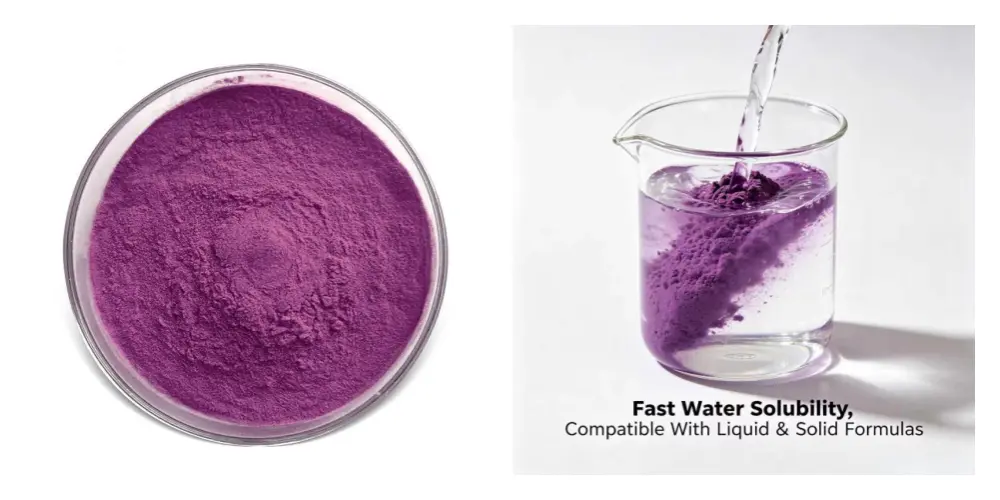
If you're searching for a natural way to give your baked goods and desserts a striking, consistent purple color, Purple yam powder is one of the most effective botanical ingredients available today. Derived from Dioscorea alata — the species behind the beloved Filipino ube — this 100% pure, spray-dried powder delivers a deep, natural violet pigment sourced entirely from fresh purple yam tubers. It contains no artificial colors, no added sugar, and no additives, making it a strong fit for clean-label product lines in bakery, confectionery, dairy, and functional food manufacturing.
Understanding Purple Yam Powder and Its Benefits
What Is Purple Yam Powder?
Dioscorea alata, a root vegetable widely grown in the Philippines, is used to make Purple Yam Powder from its tubers. It is not the same as taro powder, which is made from Colocasia esculenta and has a lighter, grayish-lilac color. Although the terms "ube powder" and "Purple Yam Powder" are frequently used interchangeably, "ube" actually refers to the Filipino variety of Dioscorea alata, which is distinguished by its darker color and sweet, vanilla-like earthiness. This difference has a direct effect on the color and taste of final goods for procurement teams looking at natural colorants.
Antioxidant Content and Clean-Label Appeal
Anthocyanin is the main color in this ingredient. It is a water-soluble flavonoid that has been shown to have antioxidant qualities. A study in the Journal of Agricultural and Food Chemistry shows that the anthocyanins in purple yam are very good at getting rid of free radicals. For companies that make foods and supplements for health-conscious people, this is useful in more ways than one. Clean labeling, which doesn't use synthetic dyes like Red No. 40 or Blue No. 1, is becoming more and more popular in the U.S. and Europe.
Sensory and Application Versatility
The powder adds color and a mild, sweet, earthy flavor that goes well with frostings, pastry doughs, and ice cream bases that are made with dairy. Its fine 80-mesh particle size makes it easy to spread out without making it gritty. Some people who make cosmetic ingredients have also looked into how its antioxidant profile can be used in skin care, which means it's more useful in markets other than food.
How Purple Yam Powder Is Made and Processed for Quality Assurance
From Tuber to Powder: The Production Process
Fresh purple yam tubers are picked, cleaned, and then low-temperature spray-dried to get rid of any excess water while keeping the color. Compared to normal air drying, which leads to oxidation and color loss, this method keeps a lot more of the anthocyanin content. Yanxi Herbs gets its raw roots from known farms and follows strict batch-by-batch processing rules to keep the color consistent from one production cycle to the next.
Quality Control Standards and Certifications
The Purple Yam Powder from Yanxi Herbs is certified by ISO, HACCP, FDA Registration, Kosher, and Halal. The following standards are used to test each production batch:
Before looking at the table of specifications, it's important to note that these parameters show the lowest quality levels that can be accepted for B2B supply:
- Particle Size: 100% pass through 80-mesh sieve
- Loss on Drying: ≤5%
- Ash Content: ≤5%
- Heavy Metals: ≤10 ppm
- Total Plate Count: <1,000 cfu/g
- Yeast & Mold: <100 cfu/g
- Shelf Life: 24 months under sealed storage
These controls make sure that every shipment that comes into your facility meets the same standards as the last one. This is very important in production environments with a lot of goods.
Organic vs. Conventional Options
Conventional Purple Yam Powder is safe enough to use in food and can be used in most B2B manufacturing processes. Organic-certified varieties cost more, but they help brands that want to get USDA Organic labeling. The people in charge of buying things should think about who the product is meant for. In the U.S., organic labels tend to command higher prices in natural food stores than in foodservice or private label sectors.
Using Purple Yam Powder in Bakery and Dessert Products
Dosage Guidelines and Mixing Techniques
It is common for 3–5% by weight of flour to be used for coloring in industrial bakeries. Doses of 10–15% are good for bringing out more of the flavor. Particles with a size of 80 mesh mix well in both wet batter and dry premix systems. When mixing, mixing the powder with the dry ingredients first, before adding the liquids, keeps the dough or batter from sticking and helps the color spread evenly.
pH Sensitivity and How to Manage It
One problem that needs to be brought up is that anthocyanins are sensitive to pH. When the color is in an alkaline setting, like bread with baking soda, it can change to blue or green. It's easy to fix: add an acidic ingredient like cream of tartar to your leavening system to smooth it out, or use baking powder instead of baking soda. With this easy change, the purple tone stays the same during baking.
Storage, Shelf Life, and Allergen Notes
The powder should be kept in sealed, moisture-proof containers below 25°C and with a relative humidity of less than 60%. If you store it right, it will stay good for 24 months. Because purple yam doesn't contain gluten by nature, it can be used in gluten-free bakery recipes. The U.S. Food and Drug Administration (FDA) does not list it as a major allergen, but manufacturers should check the cross-contamination rules in their own production areas.
Procurement Guide: How to Choose and Buy Purple Yam Powder for Your Business
Key Decision Criteria for Bulk Purchasing
When buying a lot of ube extract powder or purple yam-based colorants, the total cost of ownership is always based on three things: how complete the certification is, how consistent the batches are, and how reliable the lead time is. Yanxi Herbs ships within one to three business days after receiving payment confirmation. They offer different sizes of packaging, such as 1 kg bags, 5 kg boxes, and 25 kg drums, to accommodate different orders. You can get free samples to check the quality before you decide to buy.
Supplier Traceability and Export Readiness
Full traceability paperwork is a must for importers who sell to markets in the U.S. and Europe. This includes the certificate of analysis (COA), the material safety data sheet (MSDS), and the paperwork from the place where the goods came from. Yanxi Herbs provides all of its products' paperwork that is ready to be exported. The company has been sending botanical ingredients to more than 100 countries for more than 10 years, and its transportation system can handle both one-time sales and long-term contracts.
Organic Versus Non-Organic: A Balanced View
Organic-certified ube powder costs about 20–40% more than regular grades. This is because the market usually prices plant ingredients higher. For brands that are sold in high-end natural food channels, the extra cost is usually justified by what the labels say. Functional food makers who are mostly interested in anthocyanin delivery and color performance can get the same technical performance from conventional grades at a lower cost.
Advantages of Purple Yam Powder Over Alternative Natural Colorants
Color Vibrancy and Baking Stability
Purple Yam Powder gives the deepest violet color of all the root-based colorants that are commonly used. Taro powder gives off pale lavender tones, and sweet potato powder gives off orange-red tones. The amount of anthocyanin in it is significantly higher than that in taro, and the carbohydrates in it help keep the color when baked as long as the pH level is kept in the right range.
Clean-Label Credentials for OEM and Private Label Brands
OEM brands and private label makers can benefit from this ingredient's positioning: it replaces synthetic colors with a traceable, plant-based option that people know and trust. As the FDA and other foreign officials continue to look closely at man-made color additives, natural alternatives that come from plants pose less of a long-term legal risk. Innova Market Insights says that the number of clean-label products with natural colorants that came out in the U.S. market in 2023 rose by 12% year-over-year.
Rising Demand in North America and Europe
In the U.S., Canada, and Western Europe, people still want more plant-based treats that are naturally colored. From croissants to ice cream, purple yam flavors have spread far beyond Filipino food and into popular baking stores. This is not a short-lived food trend for B2B buyers; it's a long-term demand trend.
Conclusion
Purple Yam Powder, which comes from Dioscorea alata, is a useful and well-studied option for food companies that want to use natural colors and clean labels in their baked goods and desserts. It has a deep violet color that works better than most root-based options thanks to the anthocyanins that are in it. It can be safely used in industrial production systems as long as the pH is managed, dosed, and stored correctly. If purchasing teams want to make sure they get certified supplies, regular quality, and export-ready paperwork, the easiest way to make sure their products do well is to buy them from a botanical producer with a track record of success.
FAQ
How long does bulk purple yam powder last?
Purple Yam Powder stays fresh for 24 months if it is kept in sealed containers below 25°C and away from direct moisture. After opening, resealing with desiccants and keeping the bottle away from moisture makes it last a lot longer.
Is purple yam powder suitable for gluten-free bakery products?
Yes. Purple Yam Powder doesn't contain gluten by itself, and it works well in gluten-free cookie, cake, and pastry recipes. It also adds fiber, which can help gluten-free doughs that are crumbly hold together better.
How does it compare to synthetic colorants in cost?
The initial cost of synthetic dyes is lower, but natural colorants like this one lower regulatory risk and help place the product as a premium one. Label Insight (2022) research shows that 63% of U.S. consumers actively prefer products that are labeled as free from artificial colors.
Can I request a sample before placing a bulk order?
Yes, Yanxi Herbs does offer free samples so that you can check the quality. Send an email to info@yanxiherbs.com to ask for a sample and full product information.
Source Your Purple Yam Powder Supplier from Yanxi Herbs
Since 2010, Yanxi Herbs has sold plant-based ingredients to companies in more than 100 countries. We are a reliable Purple Yam Powder producer, and our 80-mesh ube powder is 100% pure. It is certified by ISO, HACCP, FDA Registration, Kosher, and Halal, and we offer free samples, flexible packaging from 1 kg to 25 kg drums, and shipping within 1–3 working days. To get a price or sample right away, email us at info@yanxiherbs.com or go to yanxiherbs.com.
References
1. Terahara, N. et al. "Anthocyanins in Purple Yam (Dioscorea alata) and Their Antioxidant Activities." Journal of Agricultural and Food Chemistry, 2003.
2. Montilla, E.C. et al. "Characterization of Anthocyanins from Philippine Purple Yam." Food Chemistry, 2011.
3. Innova Market Insights. "Top Trends in Natural Food Colorants in North America and Europe." Innova Market Insights Annual Report, 2023.
4. Label Insight. "Consumer Attitudes Toward Artificial Additives in Food Products." Label Insight Transparency ROI Study, 2022.
5. Abdel-Aal, E.S.M. et al. "Dietary Sources of Lutein and Anthocyanin and Their Functional Roles." Nutrients, 2013.
6. Giusti, M.M. & Wrolstad, R.E. "Acylated Anthocyanins from Edible Sources and Their Applications in Food Systems." Biochemical Engineering Journal, 2003.

Send Inquiry
Related Industry Knowledge
- Can Bulk Rose Powder Add Botanical Appeal to Tea Blends and Natural Cosmetic Formulations?
- Bulk Rose Powder Supports Scalable Botanical Ingredient Sourcing for Beauty and Wellness Product Manufacturing
- Can Instant Green Tea Powder Improve Efficiency in Ready-to-Mix Beverage Production?
- Instant Green Tea Powder for Ready-to-Mix Beverages, Tea Blends, and Functional Drink Manufacturing