
What Makes Chaga Mushroom Extract Powder Suitable for Beverage and Powder Blend Applications?
Sep 21, 2026
Chaga Mushroom Extract Powder excels in beverage and powder blend applications due to its dual-extraction processing that enhances solubility and bioavailability, its fine 80-mesh particle size enabling smooth dispersion, its mild earthy taste profile that complements various flavor systems, and its standardized polysaccharide and triterpene content ensuring consistent functional performance across production batches. These technical attributes, combined with batch-tested purity and global certifications, make it a reliable choice for beverage formulators and supplement manufacturers targeting immune support and antioxidant product lines.
Introduction
Clean-label, plant-based products are becoming more popular in the functional beverage and dietary supplement businesses. Chaga mushroom extract has become a popular choice among procurement managers and product creators who are looking for natural bioactive compounds that offer measured benefits without affecting the stability of the formulation. This botanical extract comes from the sclerotium of Inonotus obliquus and helps with important B2B problems like inconsistent raw material strength, bad water dispersibility, and problems with following regulations.
Beverage companies are becoming more interested in making adaptogenic coffees, functional teas, and ready-to-drink health shots. Nutraceutical businesses are also looking for standardized immune-support formulations. Knowing the special features and usefulness of chaga extract powder helps buyers choose suppliers in a way that meets both their goals for new products and the needs of a reliable supply chain. This article talks about the technical, legal, and practical reasons why chaga extract is a good ingredient for mixing with other ingredients in drinks and powders in today's competitive health product market.
Understanding Chaga Mushroom Extract Powder and Its Unique Properties
What Is Chaga Mushroom Extract and How Is It Processed?
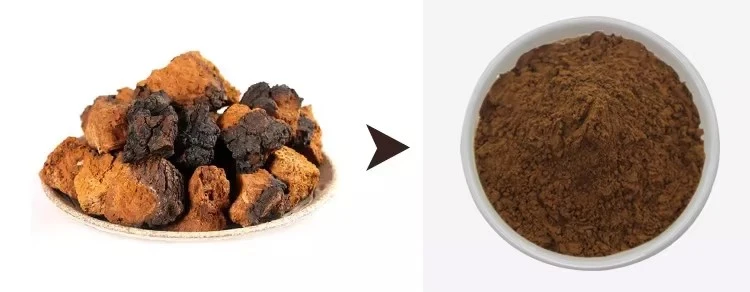
The sclerotium of the Inonotus obliquus mushroom is used to make Chaga Mushroom Extract Powder. This is a concentrated botanical extract. The mushroom is usually picked in the wild from birch trees in subarctic areas like Siberia and northern Canada. Unlike raw chunks of ground chaga, the extract powder goes through two different extraction processes: one using hot water and one using pressure ethanol. Breaking down the indigestible chitin cell walls in this way makes key chemicals like polysaccharides (beta-glucans), triterpenes (betulinic acid), and melanin complexes2 much more bioavailable. The fine brown-yellow powder usually meets the requirements for 10:1 or 20:1 concentration ratios. The active ingredient levels are standard and range from 10 to 50% polysaccharides and 1 to 3 percent triterpenes, depending on the application needs.
Bioactive Compound Profile and Health Benefits
The extract is good for you because it has a lot of bioactive compounds. Beta-glucans, especially the (1-3),(1-6)-linked types, have been linked to changing the immune system by activating macrophages. Betulinic acid and other triterpenes help reduce inflammation, and the high ORAC values show that the rich melanin content has strong antioxidant action. A study in the Journal of Ethnopharmacology (2009) showed that chaga can change the immune system, which supports the idea that it could be used in medical settings to help the immune system. The standard polysaccharide content meets an important B2B need: functional effectiveness that stays the same across production batches so that makers can stick to their label claims and product performance.
Quality Factors: Sourcing and Extraction Standards
Differentiating quality for Chaga Mushroom Extract Powder starts with the raw materials. When compared to cultivated chaga, wild-harvested chaga from mature birch trees usually has higher levels of triterpenes, but the supply is more stable when harvesting methods are managed in a way that doesn't harm the environment. How the extraction is done has a direct effect on the quality of the end result. We see that dual-extraction (polysaccharides that dissolve in water plus triterpenes that dissolve in alcohol) gives a wider range of bioactivity than single-extraction methods. Check the grain size (100% through 80-mesh for a smooth texture), the moisture content (≤5% to avoid clumping), the ash content (≤5% to see minimal impurities), and the microbe limits (total plate count <1000 cfu/g, yeast and mold <100 cfu/g). These factors have a direct effect on how well the recipe works and how long it lasts on the shelf in powder and beverage blend uses.
Core Advantages of Chaga Mushroom Extract Powder in Beverage and Powder Blend Applications
Superior Solubility and Sensory Integration
The small particles in properly processed chaga extract powder help with a common problem in formulation: getting full distribution without a gritty feeling. The 80-mesh sieving standard makes sure that the powder dissolves easily in both hot and cold water systems. This means that it can be used in mushroom coffee mixes, ready-to-mix health powders, and cool functional drinks. Whole chaga chunks need to be steeped for a long time and produce uneven extraction. The extract powder, on the other hand, releases taste and bioactives right away. Its earthy and slightly woody flavor goes well with coffee, cacao, cinnamon, and vanilla flavors without the need for a lot of masking agents, which helps meet clean-label formulation goals3.
Formulation Stability and Bioactivity Retention
Maintaining the performance of ingredients throughout the shelf life of a product is very important to companies that make supplements and drinks. The extract powder is very stable as long as it is stored properly. It will keep its polysaccharide and triterpene levels for 24 months if it is kept in sealed containers out of direct sunlight and moisture. The two-step extraction method makes a solid matrix that keeps bioactive chemicals from breaking down due to oxidation. The polysaccharide fraction loses very little activity during heat processing (pasteurization temperatures up to 85°C for beverage preparation), but we suggest avoiding long-term exposure above 100°C to protect the integrity of the triterpenes. Because it is stable at high temperatures, it can be used in hot-fill beverage processes and spray-dried powder production without losing its effectiveness.
Regulatory Compliance and Safety Assurance
For global distribution, it is still necessary to follow international rules on food safety and supplements. Chaga extract powder that is of good quality should have certifications like ISO 22000 (for food safety management), HACCP (for risk analysis), and religious dietary certifications like Kosher and Halal that make it easier to sell in many markets. Testing for heavy metals (≤10 ppm) and pesticide residues are two common ways to make sure that plant ingredients are not contaminated. Chaga has a well-known safety profile, and in the US it is considered GRAS (Generally Recognized As Safe), which means that it is likely to be approved by regulators for use in drinks and supplements. For beverages, the recommended dosage range is usually between 250 mg and 1000 mg per serving, and for concentrated powder supplements, it's usually between 500 mg and 2000 mg per serving. This gives formulators some freedom while still staying within the safety margins shown in toxicology assessments.
The standard specifications include a biological name (Inonotus obliquus), verified polysaccharide percentages, and a consistent brown-yellow color. These help quality control teams set clear acceptance criteria and set up batch-to-batch consistency protocols that are necessary for large-scale production.
Comparative Insights: Chaga Extract Powder vs Other Forms in Product Development
Extract Powder Versus Traditional Forms
When B2B buyers compare Chaga Mushroom Extract Powder to other forms like whole chunks, teas, medicines, and pills, a number of factors come into play. Whole chaga chunks need to be prepared by the customer by cooking for one to two hours, which creates an inconvenience that limits the market's reach. Tinctures have more concentrated bioactivity, but they cost more per dose and have worries about the amount of alcohol they contain. Even though tea bags are easy to use, the amount of flavor they extract depends on how long you steep them and how hot they are. While capsules are good for precise dosing, they don't give you the recipe options you need to come up with new drinks. The extract powder format has benefits like higher concentrations (10:1 to 20:1), more manufacturing options (for drinks, capsules, sachets, and powder blends), and lower costs due to streamlined production processes that lower unit costs as production scales up.
Organic Certification and Clean-Label Market Positioning
The number of people who want organic approval has grown, especially those who buy high-end health drinks. Organic chaga extract costs 15–30% more than regular versions, but this investment builds customer trust and the brand's reputation. The licensing process, which includes wild-harvesting areas, processing facilities, and handling procedures, needs a lot of paperwork but opens up new lines of distribution, such as health-focused online stores and natural food stores. Extract powder formulations that don't contain maltodextrin carriers, synthetic flow agents, or standardization additives are good for brands that want to be seen as having clean labels. With "no fillers" and a focus on purity, this approach appeals to health-conscious shoppers who read ingredient lists carefully and fits with regulatory trends toward clear supplement labels.
Procurement Considerations for Bulk Buyers and OEMs
Evaluating Supplier Quality and Reliability
Setting up relationships with suppliers takes evaluation in a number of areas. Checking where the raw materials come from is the first step in measuring quality. Chaga that is wild-harvested from old birch woods has better bioactive profiles than options that are grown quickly. Ask for a certificate of analysis (COA) that shows the amount of polysaccharides and triterpenes, as well as the results of microbe testing, heavy metal screening, and pesticide residue testing for batches that are typical of the production. Manufacturing quality systems are proven by ISO 22000, HACCP, FDA registration (for goods going to the US), Kosher, and Halal certifications. Supplier reliability includes more than just quality. It also includes production capacity (the ability to meet minimum order quantities ranging from 25 kg drums to multi-ton contracts), inventory management (keeping enough stock to meet delivery deadlines of 1-3 working days), and technical support (helping with formulations and giving advice on how to use the product).
Pricing Structure and Supply Chain Logistics
When doing a cost study, you need to look at more than just the price of the ingredients. The ratios of extract concentration have a big effect on prices. For example, a 20:1 extract will sell for more than a 10:1 variant because it requires more raw materials and more processing. Pricing levels are also affected by the level of standardization of polysaccharides (30% vs. 50%). Total landed costs are affected by the type of packaging used. For example, 25 kg drums are the most cost-effective per kilogram, while 1 kg or 5 kg units are better for sampling and small-batch production. Some things to think about when planning international operations are shipping wait times (usually two to four weeks for ocean freight from Asia to North America or Europe), the paperwork that needs to be filled out at customs, and the effects that tariffs might have. When suppliers offer local storage in target markets, like distribution centers in the US or EU, they cut down on lead times for restocking and shipping costs by a huge amount. This gives just-in-time manufacturing operations a competitive edge.
Different suppliers have different minimum order quantities for Chaga Mushroom Extract Powder, but they are usually between 25 kg for first tries and 500 kg or more for long-term production contracts. To figure out the total cost of ownership, you have to look at sample policies (reliable sellers offer free samples for qualification testing), payment terms, and any bulk discounts that can help the unit economics as the purchase goes up.
Practical Applications and Case Studies in Beverage and Powder Blend Products
Successful Beverage Formulations
Chaga extract powder is now used in a wide range of products by top healthy beverage makers. Mushroom coffee blends are the fastest-growing category. They use chaga, lion's mane, and cordyceps extracts in instant coffee to help with brain function and give you steady energy without the jitters. Usually, 250 to 500 mg of chaga extract is added to each drink, along with natural sweeteners like monk fruit extract to balance out the taste of the coffee. Ready-to-drink bottled drinks like kombucha, cold brew coffee, and adaptogenic teas use 150–300 mg of chaga extract per 12-ounce serving, with the main benefits being immune support and antioxidants. Some ways to improve the taste of chaga are to mix its earthy notes with plants that go well with it, like cinnamon, ginger, or vanilla, and to change the pH levels (aiming for 6.0 to 6.5) to make it taste better while keeping it stable.
Nutritional Powder Supplement Applications
Chaga extract powder is one of the main ingredients in wellness products that have more than one ingredient. Chaga polysaccharides (standardized to 30–40%) are often mixed with vitamin C, zinc, and other mushroom extracts (reishi, turkey tail) in immune support powder mixes to make benefits that work better together, as shown in early studies. The neutral brown color of the powder mixes well with protein powders, healthy green blends, and meal replacement mixes without changing the color in a way that isn't desired. Five to fifteen percent (by weight) inclusion rates have been reported to work well by manufacturers in achieving goal amounts while keeping acceptable taste profiles and flowability during packaging5.
Best practices for handling include keeping the extract powder in sealed, food-grade containers with moisture control (silica packets are recommended in humid areas), keeping it out of direct light as much as possible because it can break down triterpenes, and checking the moisture level on a regular basis to keep it from caking. Sifting should be done before mixing, and adding things slowly during mixing cycles to make sure that the powder is spread out evenly throughout the mixtures. This will stop any concentrated pockets that might make different servings taste or work differently.
Conclusion
Chaga Mushroom Extract Powder is a great addition to drink and powder blends because it has a bioactive profile that has been proven by science, is processed better so it dissolves and is bioavailable, and can be made in a variety of ways to suit different product formats. The dual-extraction method gets around the basic problems with the accessibility of raw fungal materials, and standard specs make sure that the product always works the way it should, which is important for large-scale production. Its good sensory properties, temperature stability, and regulatory compliance profile make it easier to formulate new useful products and speed up the time it takes to get them on the market. Compared to other chaga forms, the extract powder format offers the best cost-performance balance, supply chain stability, and technical support infrastructure for procurement workers looking at botanical ingredients. As the need for immune-boosting, antioxidant-rich functional foods keeps growing, brands can take advantage of market opportunities by strategically sourcing high-quality chaga extract powder. This way, they can keep the quality standards and supply consistency that are important for long-term business success.
FAQ
What is the recommended dosage range for chaga extract in beverages?
Depending on how the product is positioned and what health claims are being made, functional drinks usually have 150 to 500 mg of chaga extract powder per dose. Products that help the immune system tend to have higher doses (400–500 mg), while general wellness drinks may use 150–250 mg to find a good balance between effectiveness and cost.
How can I verify the quality and purity of chaga extract powder?
Ask for full certificates of analysis that show the amount of polysaccharides (using UV-spectrophotometry), triterpenes (using HPLC testing), particle size distribution, moisture content, heavy metals screening, and microbial testing. Reliable sellers provide paperwork for each batch that includes lot numbers that can be tracked and testing dates that were done by third-party labs that have been approved by the supplier.
Does chaga extract powder cause any side effects?
Chaga has a good safety profile, with few known side effects when eaten by humans. People who take anticoagulants should talk to their doctors because of possible side effects from interactions. Even though allergic reactions are still very rare, they can happen to people who are allergic to birch pollen or mushrooms.
What is the difference between mycelium and sclerotium extract?
The extract of sclerotium (fruiting body) comes from chaga growing on birch trees that was collected in the wild. It has a wide range of bioactive chemicals, such as high amounts of triterpenes. When mycelium is grown on grain substrates, the products may have lower bioactive amounts and higher starch content, which can change how well they work and how they are labeled as "clean."
Partner with Yanxi Herbs for Premium Chaga Extract Supply
Yanxi Herbs can help you with your product development by sending you Chaga Mushroom Extract Powder from clean Siberian birch woods, which is safe for use in medicine. Our wild-harvested extract has a standard polysaccharide content of 10–50% and a triterpene content of 1–3%. It also has ISO 22000, HACCP, Kosher, and Halal certifications, which make it easier for regulators around the world to approve it. As a well-known company that has been selling Chaga Mushroom Extract Powder for over 14 years, we offer free samples for quality checks, a range of packaging options from 1 kg bags to 25 kg drums, and fast fulfillment with stock availability to meet delivery times of 1-3 working days.
Our technical team offers full formulation support, including advice on how to improve solubility, the right dosage, and stability testing for your specific beverage or powder blend use. Our reasonable pricing and reliable supply chain, which includes strategic warehouses in North America and Europe, will keep your production plans on track whether you're making adaptogenic coffee blends, immune-support supplements, or new functional drinks. You can email our sourcing experts at info@yanxiherbs.com or visit yxsw.aixdb.cn to talk about your bulk ingredient needs and find out how our plant solutions can help you with quality control, following the rules, and the overall cost of ownership.
References
1. Glamočlija, J., Ćirić, A., Nikolić, M., Fernandes, Â., Barros, L., Calhelha, R. C., Ferreira, I. C., Soković, M., & van Griensven, L. J. (2015). Chemical characterization and biological activity of Chaga (Inonotus obliquus), a medicinal "mushroom". Journal of Ethnopharmacology, 162, 323-332. https://www.sciencedirect.com/science/article/abs/pii/S0378874114008896
2. Zheng, W., Miao, K., Liu, Y., Zhao, Y., Zhang, M., Pan, S., & Dai, Y. (2009). Chemical diversity of biologically active metabolites in the sclerotia of Inonotus obliquus and submerged culture strategies for upregulating their production. Applied Microbiology and Biotechnology, 87(4), 1237-1254. https://link.springer.com/article/10.1007/s00253-010-2622-2
3. Balandaykin, M. E., & Zmitrovich, I. V. (2015). Review on Chaga medicinal mushroom, Inonotus obliquus (higher Basidiomycetes): Realm of medicinal applications and approaches to estimating its resource potential. International Journal of Medicinal Mushrooms, 17(2), 95-104. https://www.dl.begellhouse.com/journals/708ae68d64b17c52,6f8c7e4e0fcf464e,7fd4e1a13e8e08cd.html
4. Wasser, S. P. (2017). Medicinal mushrooms in human clinical studies. Part I. Anticancer, oncoimmunological, and immunomodulatory activities: A review. International Journal of Medicinal Mushrooms, 19(4), 279-317. https://www.dl.begellhouse.com/journals/708ae68d64b17c52,0f185f6829498a93,48b7c6456fbe77d0.html
5. Chen, Y., Gu, X., Huang, S., Li, J., Wang, X., & Tang, J. (2010). Optimization of ultrasonic/microwave assisted extraction (UMAE) of polysaccharides from Inonotus obliquus and evaluation of its anti-tumor activities. International Journal of Biological Macromolecules, 46(4), 429-435. https://www.sciencedirect.com/science/article/abs/pii/S0141813010000546
6. Lu, Y., Jia, Y., Xue, Z., Li, N., Liu, J., & Chen, H. (2021). Recent developments in Inonotus obliquus (Chaga mushroom) polysaccharides: Isolation, structural characteristics, biological activities and application. Polymers, 13(9), 1441. https://www.mdpi.com/2073-4360/13/9/1441

Send Inquiry
Related Industry Knowledge
- Bulk Phycocyanin Powder Supports Stable Natural Blue Coloring For Food And Beverage Production
- How Does Freeze-dried Dragon Fruit Powder Improve Natural Color In Food Applications?
- How Can Purple Yam Powder Enhance Color and Texture in Food Product Development?
- Food Grade Bulk Astaxanthin Powder For Skincare Antioxidant Supplements
_1787033972542.webp)