
What Makes Polyglutamic Acid Powder Suitable for Next-Generation Moisturizing Skincare Formulations?
Sep 25, 2026
A biopolymer created through fermentation is polyglutamic acid powder (PGA). 5,000 times its own weight in water can soak it up. This is a lot more than hyaluronic acid can do. The hydrogel film covers the skin and stops hyaluronidase from working. Hyaluronidase is an enzyme that breaks down the skin's natural hyaluronic acid stores. It is made by Bacillus subtilis microorganisms fermenting plant-based materials. Because it moisturizes in two ways, PGA is a good choice for formulators who want to make high-performance moisturizing products with clean labels.
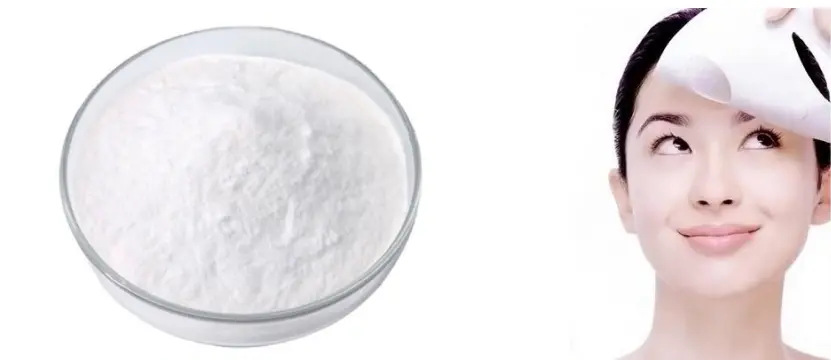
Understanding Polyglutamic Acid Powder: Composition and Moisturizing Mechanism
In PGA, there is more than one weight. The people who make it can choose where and how much moisture goes to different layers of skin because the molecules can be changed.
Molecular Structure and Fermentation Origin
One way to make PGA is to join D- and L-glutamic acid units together. Bacillus subtilis can make business-related products with non-GMO plant-based materials like glucose or monosodium glutamate. Because it comes from living things, it is naturally vegan, gluten-free, and good for the environment. It doesn't leave any waste behind when it breaks down into glutamic acid.
How PGA Retains Moisture?
There are two ways that PGA works, and they both work together. Water loss through the skin's surface is stopped by a part of its molecular weight (HMW) that is over 700 kDa. This part makes a film on top of the skin that doesn't stick. The LMW part, which is less than 100 kDa, can get to the skin's stratum corneum and join with water molecules there. Over time, this keeps the skin wet and bendy.
Hyaluronidase Inhibition: A Distinct Functional Advantage
PGA doesn't just pull water to itself; it also stops hyaluronidase from taking care of things. The skin's own hyaluronic acid network is kept safe, which makes PGA and HA work better together. To keep moisture in for longer, tests in the lab show that this method works better than using just one ingredient.
Comparing Polyglutamic Acid Powder with Other Moisturizing Agents
The R&D and buying teams can defend the use of PGA in high-end goods by looking at how it works and how it compares to other ingredients.
PGA vs. Hyaluronic Acid
Hyaluronic acid can hold 1,000 times its own weight in water. PGA is five times this and can be as high as five thousand times. PGA doesn't just keep water together; it also stops water from going elsewhere. This helps a lot in dry places where HA-only recipes often don't work. They make even more water when you mix them.
PGA vs. Sodium Hyaluronate and Collagen
Salt hyaluronate is easy to get deep into the skin because its molecules are small. But it can't make a film on top of the skin. Hydrolyzed collagen makes you feel better, but it can only be made from animal products, which is not allowed by vegetarian or Muslim laws. That's where Polyglutamic Acid Powder comes in. It is safe to use on both the top layer of skin and the layers below it, according to both the Kosher and Halal groups. It comes from plants that are good for both of them.
Purity and Grade Differentiation
PGA needs to be more than 92% pure, have a stable color (off-white to white), and smell like nothing else. PGA made for farming can handle more color variation and less clarity (about 85%). Skin care product makers have to state what grade the product is and ask for a Certificate of Analysis (COA) that proves the product is pure, has a pH range of 5.0 to 7.0 in a 1% aqueous solution, and has less than 10% moisture.
Integrating Polyglutamic Acid Powder into Skincare Formulations
Following a few simple rules will make it easy to get PGA into a formula the right way.
Recommended Concentrations and pH Range
An amount of PGA between 0.1% and 1% works well in most makeup carriers, such as serums, gels, and emulsions. It doesn't change much when the pH level changes from 4.0 to 12.0. In other words, it can be mixed with acidic ingredients like L-Ascorbic Acid or retinoids that are sensitive to pH without changing how they work. Studies have shown that it can lower the chance of discomfort in products with these active ingredients, making them easier to use in general.
Dissolution and Mixing Best Practices
This kind of Polyglutamic Acid Powder can stick together if you add water quickly. To avoid fish-eye formation, mix the powder with a polyol like glycerin before adding it to the water phase. This creates a clear to slightly opalescent solution that is uniform. People who work in companies that make a lot of things at once find it easier to work with types that break down quickly.
Synergistic Ingredient Pairings
PGA works well with niacinamide, panthenol, and ceramides to make formulations that focus on barriers. It works well with peptides or plant-based stem cell extracts for anti-aging lines. It needs to be handled carefully in cationic systems because it has a negative charge. If you mix it directly with a lot of cationic detergents, like cetrimonium chloride, it will form a solid. When used as leave-on skin care, the mixture should stay in a non-ionic or anionic realm. It is possible to control this process to make deposition systems for rinse-off hair care.
Procurement Guide for Polyglutamic Acid Powder: Sourcing Trusted Suppliers
Quality and purchasing managers care just as much about how well materials work as they do about how well sellers do their jobs.
Essential Documentation to Request
Ask your seller for the following things before you place your order:
- Certificate of Analysis (COA): This says that each batch is pure (>92%), has the right pH range, looks good, and has the right amount of wetness.
- Material Safety Data Sheet (MSDS): This tells you how to handle, store, and mark a product in a way that follows government rules for safety.
- Certification documents: If the things are organic, they must have ECOCERT/COSMOS, ISO 22000, HACCP, Kosher, or Halal approvals.
These forms must be on hand when one business sells Polyglutamic Acid Powder to another. This is especially true for businesses that sell to people in the Middle East, the EU, or the US.
Storage, MOQ, and Logistics Considerations
It is important to keep PGA dry and below 25°C in fiber drums with double-sealed polyethylene liners so that it doesn't get wet. If a seller has storage in the US or Europe, you don't have to wait as long, and there is less chance that wet shipping will damage the goods. There are different private label options and minimum order amounts from each provider. Before buying a lot of something, people often ask for a sample batch or two.
Evaluating Batch Consistency
When fermented ingredients are used, it's hard to be consistent from batch to batch. Ask companies for COA data from previous production lots and how they check the quality of their work as it's being made. Suppliers who are ISO 22000 approved have written plans for how to deal with this risk at every stage of the production process.
Future Trends and Market Prospects for PGA in Skincare
More and more people are using moisturizers made from biopolymers. A study published in 2023 in Cosmetics & Toiletries found that fixing the skin barrier and keeping the skin's moisture are the two most important things for people who buy high-end skin care. PGA can get a big piece of this growth because it meets both needs at the same time.
Biotechnology Advances in PGA Production
As fermentation optimization continues, the cost of production keeps going down, and molecular weight stability keeps getting better. When suppliers buy their own fermentation technology, they can offer MW ranges that can be changed to meet the needs of formulators who need different lines of products with different performance profiles.
Regulatory Acceptance in Global Markets
As long as the FDA doesn't make rules against it, PGA can be used in cosmetics in the US. There is also Polyglutamic Acid in the EU and most of the big Asian countries. It breaks down naturally and meets the organic standards set by ECOCERT and COSMOS. This helps brands that want to show they care about the environment.
Growth in Sensitive Skin and Clean Beauty Categories
Hair and skin care lines for dry and sensitive skin are some of the ones that are growing the fastest in US beauty shops. PGA doesn't bother people with allergies or other health problems, and it comes from clean fermentation, so it makes sense to use it in products for these groups.
Conclusion
Today's hydrating skin care products should use Polyglutamic Acid Powder because it can hold water, stop hyaluronidase from working, be made from clean fermentation, and come in many different molecular forms. This is both a scientific and business case. Whether you want a high-performance serum, a barrier-repair cream, or a clean-label gel lotion, PGA can help you get the effects you want. You're making a smart choice when you buy an ingredient from a supplier that can offer consistent quality, clear certifications, and dependable shipping.
FAQ
Can PGA fully replace hyaluronic acid in a formula?
Not really, and that's not the best method. Hyaluronidase is blocked by PGA, which keeps HA from breaking down. These two ingredients work together to make a compounding hydrate. This synergy would be lost if HA were completely changed.
Which molecular weight is better for anti-aging?
Low molecular weight PGA (below 100 kDa) is better at getting into the skin and making it more flexible and hydrated, which is why it is the best choice for anti-aging uses. It is better to clean surfaces and keep them from getting damaged with PGA that has a molecular weight of more than 1,000 kDa.
Is PGA stable with Vitamin C or retinol?
It is clear that retinoids and PGA work well together. It can help lower the chance of formula pain, which is helpful when using these active ingredients in goods.
Does the fermentation source affect Halal or vegan status?
Bacillus subtilis is used to make PGA on non-animal materials, such as corn or soy that is not genetically modified. This Polyglutamic Acid Powder is completely vegan, kosher, and halal. Always check with your source to make sure the material is right before making claims.
How do I prevent clumping during production?
Before adding the Polyglutamic Acid Powder to the water phase, mix it with glycerin or another polyol. To stop hygroscopic caking, keep bulk materials below 25°C in containers that can't get wet and are covered.
Partner with Yanxi Herbs for Certified Polyglutamic Acid Powder Supply
Yanxi Herbs has been sending natural beauty products to more than 100 countries since 2010. They have many types of certifications, such as ISO 22000, HACCP, Kosher, and Halal. We are a trustworthy Polyglutamic Acid Powder seller, and the PGA we sell is 92% pure and made for cosmetic use. The molecular weight can also be changed, and we offer full batch documentation and local warehousing support in the EU and the US. Ask for your sample and COA today. You can go to yanxiherbs.com or email us at info@yanxiherbs.com.
References
1. Shih, I. L., & Van, Y. T. (2001). The production of poly-(γ-glutamic acid) from microorganisms and its various applications. Bioresource Technology, 79(3), 207–225.
2. Bajaj, I., & Singhal, R. (2011). Poly (glutamic acid) — An emerging biopolymer of commercial interest. Bioresource Technology, 102(10), 5551–5561.
3. Stern, R., Asari, A. A., & Sugahara, K. N. (2006). Hyaluronidase: A natural enzyme with therapeutic applications. European Journal of Cell Biology, 85(8), 699–715.
4. Cosmetics & Toiletries. (2023). Consumer trends in skin barrier and moisturization: Annual market analysis. Cosmetics & Toiletries, 138(4), 22–31.
5. Nakamura, Y., Yamamoto, K., & Kadowaki, M. (2014). Evaluation of poly-γ-glutamic acid as a moisturizing agent in skincare formulations. Journal of Cosmetic Science, 65(3), 153–162.
6. European Chemicals Agency (ECHA). (2022). INCI assessment report: Polyglutamic Acid in cosmetic applications. ECHA Cosmetic Ingredient Review, Vol. 14.

Send Inquiry
You may like
Related Industry Knowledge
- What Factors Matter When Purchasing Astaxanthin Powder Bulk For Large-Scale Production?
- How Can Beet Powder Be Used In Natural Color And Sports Nutrition Product Development?
- Chlorophyll Powder Offers Stable Plant-Based Coloring Options For Food And Beverage Manufacturers
- Freeze-Dried Lemon Powder Helps Brands Develop Natural Citrus Products with Extended Storage Flexibility
_1787033972542.webp)