
Why Do Food Brands Choose Pumpkin Powder for New Product Development?
Sep 20, 2026
Food brands across the United States are increasingly turning to pumpkin powder as a strategic ingredient for new product launches. Derived from mature Cucurbita moschata fruit and processed into a stable 80-mesh yellow fine powder, it delivers natural carotenoids, dietary fiber, and a mild sweetness without synthetic additives. Compared to fresh pumpkin or puree, this dehydrated botanical ingredient solves critical manufacturing challenges — seasonal supply volatility, cold-chain logistics costs, and inconsistent batch quality — while supporting clean-label positioning that today's health-conscious consumers actively seek.
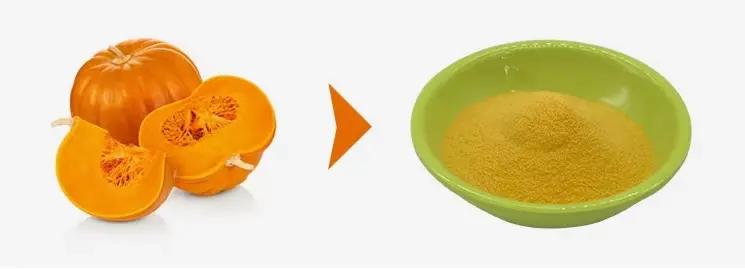
What Is Pumpkin Powder and Why Does It Matter in Food Manufacturing?
From Fresh Fruit to Functional Ingredient
By carefully drying and grinding ripe pumpkin fruit, Pumpkin Powder is created. The end result is a smooth, yellow 80-mesh powder that mixes evenly in oatmeal, baked goods, drinks, and instant soups without leaving behind any grainy bits. It can be stored for 24 months in a covered container, has a Loss on Drying value of ≤5%, and is strictly controlled for microbes (Total Plate Count < 1,000 cfu/g; Yeast & Mold < 100 cfu/g). This gives producers a level of batch-to-batch dependability that fresh pumpkin just can't match.
Nutritional Profile That Supports Consumer Health Claims
Carotene, vitamins, and dietary fiber are some of the active substances in this plant ingredient. They directly support health stories that consumers hear about their immune systems, skin health, digestive health, and weight management. According to a study released in the Journal of Agricultural and Food Chemistry, beta-carotene, the main nutrient that gives it its bright orange color, has been linked to antioxidant activity and the function of a vitamin A precursor. These proven benefits give manufacturers a solid basis for making claims on the package without using artificial supplements.
Key Advantages That Make Pumpkin Powder Attractive for Product Development
When R&D managers and buying teams look at new botanical ingredients, they often look at performance, cost stability, and legal readiness all at the same time. In all three ways, dehydrated pumpkin fruit extract stands out. Here are the main formulation benefits that procurement professionals always stress:
- Natural colorant and flavor in one ingredient: The naturally occurring carotenoids deliver a warm orange tone across bakery, dairy, and beverage applications, replacing synthetic dyes while simultaneously contributing mild sweetness. No added sugar or preservatives are required, which directly supports clean-label SKU development.
- Broad application compatibility: The fine 80-mesh particle size dissolves readily in both hot and cold liquid matrices. It performs equally well as a functional inclusion in gluten-free breads, protein shake blends, confectionery coatings, and supplement capsule fillers — reducing the need for multiple specialty ingredients across a product portfolio.
- Supply chain resilience: Unlike fresh pumpkin, which is subject to harvest seasonality and rapid biological degradation, the powdered form decouples production schedules from agricultural cycles. With a 24-month shelf life and packaging options of 1 kg/bag, 5 kg/box, and 25 kg/drum, manufacturers can maintain stable raw material inventory without cold-chain dependency.
These benefits lead to real cost savings and faster time-to-market, which are two things that buying and supply chain managers put above almost everything else when they decide where to get ingredients.
How to Evaluate a Pumpkin Powder Supplier Before Placing a Bulk Order
Picking the right botanical ingredient supplier is just as important as selecting the ingredient itself. For products such as Pumpkin Powder, one missing certification or unreliable heavy metals testing result can delay regulatory approval, disrupt production, or damage a brand’s reputation in international markets. When quality and regulatory managers evaluate suppliers of Pumpkin Powder, they should begin with a set of non-negotiable criteria. These requirements help ensure that Pumpkin Powder meets the necessary quality, safety, and compliance standards before it enters the supply chain.
Transparency in certification is the starting point. Not just verbal promises, suppliers to the US, EU, and Middle Eastern markets need proof that they meet ISO 22000, HACCP, FDA registration, Kosher, and Halal standards. Buyers should ask for full Certificates of Analysis (CoA) for every production batch. These should include microbiological data, heavy metals testing (≤10 ppm), and ash content testing (≤5%).
Customization Capability and Private Label Flexibility
In addition to licenses, providers that give private-label packaging, customizable particle sizes, and custom formulations are very helpful to product development teams. Because of this, brands can make their finished goods stand out instead of buying a stock good. Before signing a long-term supply deal, it's important to make sure that a seller can handle both test runs and full-scale production runs.
Sample Testing as a Non-Negotiable Step
No decision about procurement should be made until it has been tested in the real world. When internal R&D teams ask for a free sample, which reputable providers are happy to give, they can test the product's solubility, color consistency, taste intensity, and how it reacts to moisture in their specific processing environment. Before moving up to business quantities, it's also a good idea to try the end formulation with a shelf-life simulation.
How Leading Food Brands Are Already Innovating With Dehydrated Pumpkin
The market data supports this trend. The 2023 Global New Products Database from Mintel shows that pumpkin-flavored and pumpkin-fortified foods have been growing in North America's functional snack, bakery, and supplement categories. Pumpkin Powder is increasingly suitable for brands developing concentrated pumpkin ingredients across a range of high-growth product formats. For manufacturers seeking convenient and versatile pumpkin ingredients, Pumpkin Powder can be incorporated into snacks, baked goods, supplements, and other functional food products. The growing use of Pumpkin Powder gives brands more flexibility when developing new pumpkin-based formulations.
Functional bakery teams are using it to keep the moisture in gluten-free muffins and breads, which is what makes the crumb texture of breads and muffins that are made with rice or tapioca flour bases less dry. It is being used by supplement companies to make greens powder mixes and fiber supplement sachets because it has a neutral gut profile and a lot of natural soluble fiber. It's being used in fast drink mixes and smoothie boosts because it mixes quickly and tastes great, making it easy to market as a superfood ingredient.
The plant-based and clean-label groups are speeding up acceptance even more. People are paying more attention to ingredient lists, and a single recognizable botanical name, like "pumpkin," is much more appealing to shoppers than a long list of chemical names. With this dynamic, brands can tell a strong marketing story without having to pay extra to do so.
Conclusion
Dried pumpkin fruit powder has proven to be a useful and marketable ingredient for food and health products. Its natural color, fiber content, nutritional value, and stable supply make Pumpkin Powder a practical choice for addressing the everyday needs of sourcing, R&D, and quality teams. When Pumpkin Powder is purchased from a certified and experienced supplier with clear documentation and flexible production capabilities, it can become a genuine competitive asset rather than simply a trend ingredient. For manufacturers seeking a reliable and versatile botanical ingredient, Pumpkin Powder can also support consistent product development and long-term supply planning.
FAQ
Why is pumpkin powder preferred over pumpkin puree in industrial manufacturing?
Because it has a lot of water in it, puree needs to be kept cool and only lasts for a few days to a week. The powdered form can be stored for 24 months at room temperature, doesn't require cold-chain operations, and has the same amount of nutrients in every batch, which are all very important for large-scale production.
Does pumpkin powder support clean-label product claims?
Yes. It can be a single-ingredient, recognizable food component if it is found without any additives or preservatives, like in the Yanxi Herbs standard. This directly helps the positioning of clean-label, non-GMO, and natural products.
Is it suitable for allergen-free and gluten-free formulations?
The FDA doesn't list pumpkin as one of the main food allergens, and the item doesn't have any parts that come from wheat. A lot of approved gluten-free food lines use it.
What is the typical reconstitution ratio?
Depending on the way the pumpkin is processed, about 1 kg of powder has the same amount of dry matter as 10–12 kg of fresh pumpkin.
How should bulk inventory be stored to protect quality?
Keep sealed packages in a cool, dry place below 25°C and out of direct sunlight. Product that is kept correctly stays in line with specifications for the full 24-month shelf life.
Partner With Yanxi Herbs for Certified Pumpkin Powder Supply
Since 2010, Yanxi Herbs has been a reliable producer of Pumpkin Powder. They have supplied certified botanical ingredients to cosmetic, food, and supplement brands in more than 100 countries. Our product is certified by ISO, HACCP, FDA Registration, Kosher, and Halal, and it will be delivered within 1–3 business days of receiving payment. You can get free samples for your R&D team to look over. You can email us at info@yanxiherbs.com or go to yanxiherbs.com to ask for details, talk about bulk order needs, or look into working together on a private label.
References
1. Murkovic, M., & Pfannhauser, W. — Journal of Agricultural and Food Chemistry, 2000.
2. Mintel Global New Products Database — Functional Snack and Supplement Trend Report, 2023.
3. Caili, F., Huan, S., & Quanhong, L. — Nutrition Research, 2006.
4. Stevenson, D. G., Eller, F. J., Wang, L., et al. — Journal of Food Science, 2007.
5. Sharma, A., & Rao, T. R. — Critical Reviews in Food Science and Nutrition, 2021.
6. USDA Agricultural Research Service — Nutritional Profile of Cucurbita moschata, 2019.

Send Inquiry
Related Industry Knowledge
- Why Do Food Manufacturers Choose Freeze-Dried Lemon Powder Over Fresh Citrus Ingredients?
- What Factors Matter When Purchasing Astaxanthin Powder Bulk For Large-Scale Production?
- Chlorophyll Powder Offers Stable Plant-Based Coloring Options For Food And Beverage Manufacturers
- Food Grade Bulk Astaxanthin Powder For Skincare Antioxidant Supplements
_1787033972542.webp)