Astaxanthin Powder Bulk for Functional Nutrition: Quality and Procurement Factors
Nov 21, 2026
Astaxanthin Powder Bulk for functional nutrition should be judged by active astaxanthin content, source, purity, dispersion, stability, documentation, and total cost, not by price per kilogram alone. At Yanxi Herbs, we supply natural astaxanthin powder from Haematococcus pluvialis in 1%–10% grades. We see the same pattern with every buyer: the best purchase starts with the finished product and the target market, then works backward to specifications. This guide covers the quality checks, formulation questions, and procurement steps that help purchasing, R&D, and quality teams choose a bulk supplier with confidence.
Astaxanthin is a fat-soluble carotenoid used in dietary supplements, sports nutrition, functional foods, beverages, and some cosmetics. Each use has different needs, so I will walk through the points our customers ask about most.
Understanding Astaxanthin Powder Bulk: Sources, Formats, and Specifications
What Astaxanthin Powder Bulk Contains
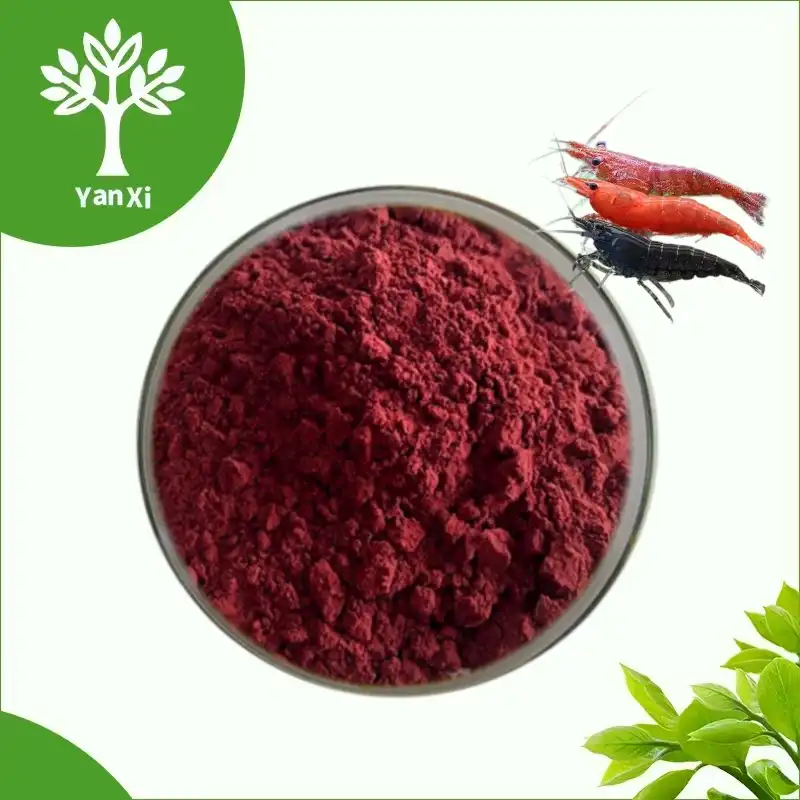
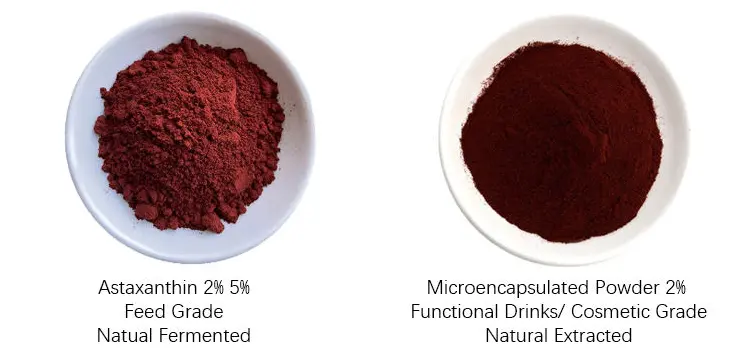
Astaxanthin Powder Bulk is a standardized ingredient made for capsules, tablets, dry blends, drink mixes, and premixes. Our product comes from Haematococcus pluvialis, a freshwater microalga, and appears as a dark red to purple-red fine powder. The label percentage shows active astaxanthin, not the whole powder. The rest of the weight comes from carriers and formulation aids that keep the pigment stable and easy to handle. Two powders with the same weight can therefore deliver very different amounts of active ingredient. Ask for the assay on every batch and confirm how the supplier measures it. This single number drives dosage, label claims, and cost.
Concentration Grades and Active-Content Math
Our specification runs from 1% to 10% astaxanthin, so you can match the grade to your process. The math is simple. One kilogram of 5% powder holds 50 grams of astaxanthin, and one kilogram of 10% powder holds 100 grams. A product that needs 4 mg per serving, the low end of the 4 mg to 12 mg daily range seen in published studies, takes about 80 mg of 5% powder or 40 mg of 10% powder. Higher grades save space in capsules and tablets. Lower grades often blend more evenly in dry mixes. Comparing cost per gram of active astaxanthin gives a fairer picture than comparing powder prices.
Natural vs. Synthetic: Making the Commercial Decision
Natural astaxanthin from Haematococcus pluvialis is mainly the 3S,3'S stereoisomer, while synthetic astaxanthin is a mix of three stereoisomers. Capelli and colleagues argued in 2013 that the two forms are not interchangeable in human nutrition. That is why many supplement brands choose the algal source for products with natural positioning. We add no synthetic astaxanthin to our powder. Still, the word "natural" does not prove other claims. Organic, vegan, non-GMO, and clean-label statements each need their own paperwork. Synthetic material may suit cost-driven or non-human uses, so match the source to your application, market, and label.
Key Quality Factors and Formulation Performance
Assay, Purity, and Safety Limits
Quality starts with measurable limits. Our specification lists heavy metals at 10 ppm or less, total plate count below 1,000 cfu/g, and yeast and mold below 100 cfu/g. Ask every supplier for the same data, plus the test method and testing date. Confirm that the assay reports astaxanthin, not total carotenoids, because a total carotenoid figure can mislead a dosage calculation. Also check species identification, origin, and traceability from algae batch to finished lot. In the United States, 21 CFR Part 111 requires dietary supplement makers to confirm the identity of dietary ingredients, so clear batch records protect your own compliance too.
Physical Properties and Water Dispersibility
Very important is the way Astaxanthin Powder Bulk looks and feels when it comes to how it works during production and processing. There is only our powder that can pass through an 80-mesh sieve. It dries to a weight of 5% and has no more than 5% ash in it. Astaxanthin Powder Bulk is easier to work with when you need to make a lot of it because the fine, dry particles mix and flow better. Because it dissolves in fat, astaxanthin powder does not mix with water like sugar does. This grade, which comes in concentrations between 1.5% and 10%, doesn't stick together when mixed with water, so it can be used to make a lot of drinks at once. If someone wants to make capsules out of Astaxanthin Powder Bulk, they should make sure that it mixes with oils. If someone wants to make tablets, they should pay attention to how well the powder moves and how evenly the contents are spread out. Before you approve a grade, you should do a pilot test to check the dispersion time, sedimentation, color uniformity, and retention of the active ingredient. The tests help make sure that the Astaxanthin Powder Bulk that was picked can be used and meets the standards for the end product's quality.
Stability and Storage Requirements
Astaxanthin reacts to light, oxygen, and heat, as the 2014 review by Ambati and colleagues describes. Moisture and repeated opening also shorten usable life. Our powder carries a 24-month shelf life when sealed and stored properly. Keep it in a cool, dry, dark, well-ventilated space, and close containers tightly after each use. We pack in 1 kg bags, 5 kg boxes, and 25 kg drums, so you can pick a size that limits exposure after opening. Ask any supplier for retest and stability data, and rotate stock on a first-expiry, first-out basis. Count remaining shelf life when you plan production.
Applications in Functional Nutrition and Other Industries
Supplements and Sports Nutrition
Supplement brands use astaxanthin powder in capsules, tablets, and stick packs. Published doses usually fall between 4 mg and 12 mg per day, and the European Food Safety Authority judged up to 8 mg per day safe for adults in food supplements in 2020. Check the limits for your own market and write labels to match. Dosage accuracy matters most here, so a stable assay and a uniform blend come first. Sports nutrition teams also care about taste and color, since the powder gives finished products a red tone. Our team supports custom specifications for these projects.
Functional Beverages and Foods
Drinks and fortified foods need more than potency. The powder must disperse evenly, hold its color, and stay stable through processing and storage. Our water dispersible grade suits eye-care drinks, anti-aging supplements, and other functional foods made in large batches. Expect a reddish-brown tint, so plan the color of the finished product early. Heat and oxygen can lower active content, so confirm retention after pasteurization or drying in your own pilot run. Test taste, sedimentation, and shelf-life stability, then compare results across at least two batches before scaling up.
Cosmetics, Private Label, and Custom Projects
Skincare brands value astaxanthin as a natural antioxidant ingredient, and our powder is positioned for skin anti-aging products. Cosmetic teams should test compatibility with their oil phase and ask for matching safety documents. Private-label and contract manufacturing projects add other needs, such as custom specifications, branded packaging, and technical documents. At Yanxi Herbs, we combine R&D support with flexible customization, so a formulator can request a specific concentration or packing size before the first order. Repeat production matters most in these projects, because a launch depends on every batch matching the approved sample.
Certifications, Compliance, and Supplier Comparison
Documents Every Buyer Should Request
Paperwork supports audits, customs clearance, and regulatory review. Ask for a batch-specific Certificate of Analysis, a product specification, a Technical Data Sheet, a Safety Data Sheet, an origin statement, and shelf-life information. When you read a COA, match the product name, lot number, production date, expiry date, assay result, test method, and pass or fail limit against your specification. Generic certificates with no lot number are a warning sign. So are unclear active-content statements. Quality managers save time by sending this document list with the first inquiry instead of after sampling.
Certifications for the U.S. Market
Yanxi Biotech cares about food safety, quality management, and international manufacturing standards. Its ISO 22000, HACCP, SGS, Kosher, and Halal certifications vouch for this. People who buy our Astaxanthin Powder Bulk can see if it is suitable for different markets and uses because it is certified by ISO, HACCP, FDA, Kosher, and Halal. It is important to know that FDA registration only means that the company has signed up with the FDA. It doesn't mean that the FDA supports or agrees with the product. If someone wants to buy Astaxanthin Powder Bulk, they should make sure they fully understand the FDA registration information and make sure they have all the necessary paperwork before they place their order. For food and drinks that sell to people with special dietary needs, they need to be certified as Kosher and Halal. When you're looking for providers of Astaxanthin Powder Bulk, you should always check the certificate's scope, when it expires, and who issued it. You should also get separate proof for claims that something is not GMO, vegan, or organic, instead of assuming that present certifications cover these things. If you pick a seller with a clean record of certification, you can be sure that the Astaxanthin Powder Bulk meets the quality, compliance, and market-entry needs of your business.
How to Compare Suppliers
A low quote tells you little without context. Compare manufacturing control, technical support, documentation quality, export experience, and capacity. Ask whether the supplier is a direct manufacturer or a trader, because this affects traceability and change notification. Useful questions include: Which source do you use? Do you provide batch-specific COAs? What are your MOQ and lead time? How do you handle deviations and complaints? Warning signs include vague source details, unexplained low pricing, and refusal to send samples. We offer free samples and keep stock ready, with delivery within 1–3 working days after payment, so buyers can verify quality before they commit.
Price, MOQ, and a Practical Buying Process
Total Procurement Cost and MOQ
Price per kilogram is only one line in the cost. Source, concentration, testing, certifications, packaging, order size, freight, duties, insurance, and payment terms all change the final number. Convert every quote to cost per gram of active astaxanthin by dividing the powder price by the grams of astaxanthin in one kilogram. Then match the minimum order quantity to your pilot plan, launch forecast, and the 24-month shelf life so stock does not sit too long. When you request a quote, include grade, packing size, destination, Incoterm, and target delivery date. That detail speeds up an accurate answer.
A Six-Step Buying Process
A simple process lowers technical and supply risk. First, define the finished product and target market. Second, set acceptance criteria such as potency, moisture, microbiological limits, contaminants, particle size, color, and dispersibility. Third, screen and shortlist suppliers. Fourth, run sample and pilot evaluations. Fifth, confirm commercial and logistics terms. Sixth, approve the supplier and monitor it with written specifications, change notification, complaint handling, and periodic review. Free samples make step four easy, and pilot results on two or more batches show whether quality holds between lots.
Quality Comparison Checklist
Here is a short checklist your procurement, quality, and R&D teams can share.
- Identity and source: Confirm natural or synthetic origin, the species Haematococcus pluvialis, the label grade, and the batch number. Ask for a batch-specific COA that reports the astaxanthin assay, test method, and testing date, so the potency you pay for matches the potency that reaches your production line in every lot.
- Potency and physical quality: Check moisture, ash, particle size, heavy metals, total plate count, yeast and mold, color, and dispersibility against your written limits. Run a small pilot blend and record flowability and active retention, because lab numbers alone do not show how the powder behaves on your own equipment.
- Compliance and logistics: Verify certificate validity, destination-market rules, packaging protection, shelf life, MOQ, and lead time. Ask how the packing limits light and oxygen exposure during shipping. Confirm change-control and complaint procedures in writing, and compare quotes on a cost-per-active-gram basis so every supplier sits on the same scale for fair comparison.
These checks turn a long supplier search into a clear yes or no decision.
Conclusion
Choosing Astaxanthin Powder Bulk for functional nutrition depends on more than concentration or price. Active astaxanthin content, source, and cost per active gram set the real value, and natural Haematococcus pluvialis material differs from synthetic stereoisomer mixtures. Measurable specifications, including assay, contaminant limits, particle size, and moisture, control dosage accuracy. Dispersibility, storage conditions, and the 24-month shelf life decide how the powder performs in capsules, drinks, and cosmetics. Complete batch documents and certificates support U.S. compliance and audits. Sampling, pilot testing, and written change control turn these checks into repeatable results across batches. A buyer who ties every decision to the finished product, target market, and total cost reaches a safer, more consistent supply.
FAQ
Is natural or synthetic astaxanthin better for supplements?
Natural astaxanthin from Haematococcus pluvialis suits products with natural positioning, and we add no synthetic astaxanthin to ours. Choose the source by application, target market, and label claims.
Is astaxanthin powder water soluble?
Astaxanthin is fat-soluble. Water dispersible grades, such as our 1.5%–10% powder, spread in water without agglomeration, which helps drink production. Run a pilot test before approval.
How do I read a 5% or 10% specification?
The percentage shows active astaxanthin. One kilogram of 5% powder holds 50 grams, and 10% holds 100 grams, so compare suppliers by cost per active gram.
Which documents should I request?
Request a batch-specific COA, product specification, Technical Data Sheet, Safety Data Sheet, and current certificates, then match lot numbers and test methods.
How should I store bulk powder?
Keep it sealed in a cool, dry, dark place. Our sealed powder has a 24-month shelf life, and first-expiry, first-out rotation protects stock.
Request Astaxanthin Powder Bulk Samples from Yanxi Herbs
Looking for an Astaxanthin Powder Bulk supplier for supplements, beverages, or private-label projects? Yanxi Herbs offers 1%–10% grades, free samples, stock on hand, and delivery within 1–3 working days after payment. Send your concentration, application, destination, certifications, and volume to info@yanxiherbs.com, and our team will reply with a specification, batch COA, and quotation. Visit yanxiherbs.com for details.
References
1. Marine Drugs, 2014 – Astaxanthin: Sources, Extraction, Stability, Biological Activities and Its Commercial Applications—A Review
2. Frontiers in Plant Science, 2016 – Astaxanthin-Producing Green Microalga Haematococcus pluvialis: From Single Cell to High Value Commercial Products
3. Nutrafoods, 2013 – Synthetic Astaxanthin Is Significantly Inferior to Algal-Based Astaxanthin as an Antioxidant and May Not Be Suitable as a Human Nutraceutical Supplement
4. EFSA Journal, 2020 – Safety of Astaxanthin for Its Use as a Novel Food in Food Supplements
5. Phytotherapy Research, 2019 – Astaxanthin: How Much Is Too Much? A Safety Review
6. U.S. Code of Federal Regulations, Title 21, Part 111, 2007 – Current Good Manufacturing Practice in Manufacturing, Packaging, Labeling, or Holding Operations for Dietary Supplements

Send Inquiry