Phycocyanin Powder for Food Manufacturers Developing Clean-Label Blue Food Products
Nov 16, 2026
You can use Bulk Phycocyanin Powder, a blue protein pigment that comes from spirulina and dissolves in water, to make "clean label" blue products instead of drinks, candies, dairy alternatives, and supplements that contain artificial blue dyes. To make it work, you need to make sure the formula and colour value match, keep the heat and pH in check, and read the paperwork before you buy. What is phycocyanin, how does it work, how to compare grades, and how to find a good supplier? This guide will help you make sure that your blue product stays blue from the lab to full production.
Understanding Phycocyanin Powder and How It Is Made
What Phycocyanin Powder Is and Is Not
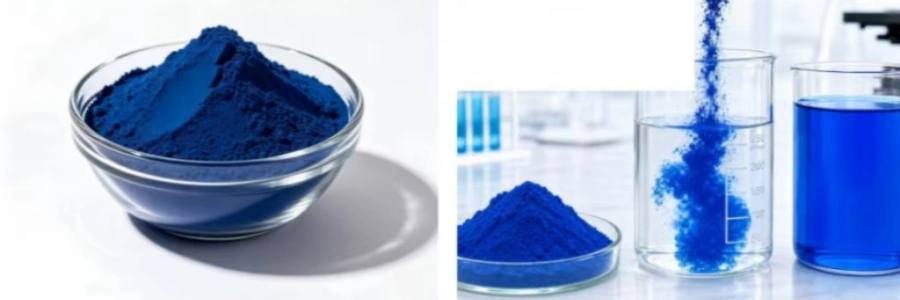
There is a blue protein pigment called phycocyanin in spirulina (Arthrospira platensis) that breaks down in water. "Blue spirulina," "spirulina powder," "spirulina extract," and "phycocyanin" are all words that a lot of people think mean the same thing. They don't. Whole spirulina powder is best because it has more nutrients, shades, and the taste of algae. You can remove the blue part with concentrated phycocyanin powder. This gives the food colour with a much smaller impact on taste. The herbs used to make our Bulk Phycocyanin Powder are whole spirulina plants. It's a fine blue powder that doesn't taste nasty like raw spirulina does. It matters whether you colour soft vegan ice cream or a blue matcha tea.
How Is Phycocyanin Powder Made?
The first step in making spirulina is to grow it and gather its waste. The colour is removed from the material by washing it. After that, water extraction and centrifuge separation are used to get the blue protein into a solution. It is controlled-dried to make a stable powder that can be kept and shipped after it has been filtered and concentrated. People who want to buy this can ask for a solvent-free process statement, since no chemicals are used in this route. There are changes in the colour, amount of protein, smell, and ability to break down after each step. This is the reason why two powders with the same name might have various effects on your plant. It's not enough to compare the names of products; you should also compare the specs and batch certificates.
Why Clean-Label Teams Choose It?
A lot of people stay away from synthetic dyes like Brilliant Blue FCF (FD&C Blue No. 1) when they read the recipe lists. As per 21 CFR 73.530, the US Food and Drug Administration (FDA) says that spirulina extract is a colour additive that does not need to be approved. The FDA gave the go-ahead for its first use in candy and gum in 2013. More types of food were added later, but each type has its own rules, so your regulatory team should make sure it's clear what the food is meant to be used for. It's also good for veggie and plant-based ideas, which fits with the types of drinks, sweets, and dairy-free choices that many companies are making.
How Phycocyanin Powder Performs in Food Formulation?
Heat, pH, and Light Limits
Phycocyanin is a protein, which means that heat, acid, and light can change it. The colour starts to break down above 60°C, which means that a long process at high heat can make the blue fade. It works best to add the powder after the milk has been heated up or when the filling is cold. The colour stays the same from pH 5.0 to 7.5. That's why clear haze or sediment forms in acidic drinks when the pH level drops below 4.0. The chromophore breaks down when light hits it. Pack it in something dark or thick to keep it safe. Natural blue colourants have been the subject of studies, such as the work done by Jespersen and colleagues in 2005. These studies show that stability changes with blue sources and is affected by light and heat.
Solubility and Dispersion in Real Products
Being able to dissolve well in water for Bulk Phycocyanin Powder doesn't always mean that something spreads quickly. It can clump or settle if you are not careful when adding the powder to things that have minerals, proteins, fats, or a lot of ions. It should first be mixed with a small amount of cool water. Then, add that pre-mix to the rest of the blend slowly. Our powder doesn't have any water in it because it all goes through an 80-mesh sieve. This makes it easier to mix dry blends evenly. Not only should you test the amount, shade, sedimentation, and colour shift in water, but you should also test them in your recipe. This is because the product matrix often determines the outcome.
Best-Fit Applications
Phycocyanin works best when it is cold or after being heated. Blue tea, vegan ice cream, plant-based drinks, yoghurt, dairy-style treats, and candy are all popular ways to use it. Adding the colour after the milk has been heated up helps dairy systems keep the colour. Companies that make supplements add it to masks and serums to give them colour. It's also used as an antioxidant in capsules and powder blends. Each area asks a different set of questions. pH is important for teams that make drinks, oven heat is important for teams that make baked goods, and traceability and paperwork are important for teams that make supplements. Matching the grade and the addition point to the method is the best way to keep the colour from running.
Comparing Grades and Choosing Bulk Phycocyanin Powder
Reading Color Value: E3, E6, E18, and E25
A colour value, shown as an "E" number, is found by measuring how much light is absorbed at about 618 nm. It means there is more colour per gram, which means you need less powder to get the same colour. We have grades E3, E6, E18, and E25. It is less likely for an E25 powder to contain things than an E18 powder. This means that it won't have much of an effect on the taste or use of the powder. One grade below, like E3 or E6, might work if the colour is light or pastel. This will help you get a correct E value. You should ask each supplier what test method they use. There's a chance that numbers from different tests won't directly match up.
Phycocyanin vs. Blue Spirulina Powder and Other Natural Blues
A colour value, shown as an "E" number, is found by measuring how much light is absorbed at about 618 nm. It means there is more colour per gram, which means you need less powder to get the same colour. We have grades E3, E6, E18, and E25. It is less likely for an E25 powder to contain things than an E18 powder. This means that it won't have much of an effect on the taste or use of the powder. One grade below, like E3 or E6, might work if the colour is light or pastel. This will help you get a correct E value. You should ask each supplier what test method they use. There's a chance that numbers from different tests won't directly match up.
Calculating Cost-in-Use
It can be hard to understand the price per kilogram. The cost per batch may go up in the end because more of the cheaper powder with less colour value is needed. How much does one unit of finished goods cost? Add up the dosage, freight, taxes, packing, minimum order number, and handling losses. If you need less of a more expensive grade to get the same shade, that grade may be cheaper to use. Don't guess when you want to compare; use real trial doses from your lab. They can also use this method to tell the finance and quality teams why they chose a certain seller.
Bulk Phycocyanin Powder Specifications and Quality Control
Product Specification Overview
Our Bulk Phycocyanin Powder has phycocyanobilin, a blue powder that comes from whole spirulina herbs. It has specs for E3, E6, E18, and E25. The item should completely go through an 80-mesh screen, not lose more than 5% of its weight when dried, have no more than 5% ash, no more than 10 parts per million of heavy metals, less than 1,000 cfu/g of total plate count, and less than 100 cfu/g of yeast and mould. It will last 24 months if you store it properly and seal it up. For your quality team, these numbers make it clear what levels of acceptance are okay for the receiving check.
Quality Control and Certificates
Our Bulk Phycocyanin Powder has phycocyanobilin, a blue powder that comes from whole spirulina herbs. It has specs for E3, E6, E18, and E25. The item should completely go through an 80-mesh screen, not lose more than 5% of its weight when dried, have no more than 5% ash, no more than 10 parts per million of heavy metals, less than 1,000 cfu/g of total plate count, and less than 100 cfu/g of yeast and mould. It will last 24 months if you store it properly and seal it up. For your quality team, these numbers make it clear what levels of acceptance are okay for the receiving check.
Packaging, Stock, and Delivery
You can package Bulk Phycocyanin Powder in 1 kg bags, 5 kg boxes, or 25 kg drums, so the same specs can be used for both small tests and big production runs. We have the item in stock, and we'll send it out one to three business days after you pay. Before placing a full order, your R&D team can try out free samples. When customers in the US and Europe store their things locally, it speeds up the planning process for them. To keep the colour, the powder should be kept in a cool (below 20°C), dry, dark place for 24 months.
Qualifying a Supplier and Moving From Lab to Production
What to Request in an RFQ?
A clear RFQ speeds up the pricing process and makes sure that samples don't go to the wrong company. Include the type of use, the colour you want, the annual output, the final location, the way you want it packed, any certificates you need, the number of samples you need, the shipping schedule, and the Incoterms. Find out what the food is made of, how it can be stored, how long it will last, and a sample of the certificate of analysis. You should also ask for test results for contaminants and food safety papers. Make sure the seller is in charge of production and has shipped food to other countries before. When you buy from the factory, you can usually get technical help faster and keep better records of what you've bought than when you buy through an unknown channel. Notices for batch retention and changes are something else you should ask about.
A Practical Development Workflow
A controlled process lowers both the risk of formulation and the time it takes to do it. First, make sure the products you're thinking about are food-grade by looking at their colour, safety, and paperwork. Second, get different amounts and try them in the lab. Write down the colour, smell, taste, how far it spreads, and the pH reaction. Third, make sure that the dose is right, that all the colours are the same, and that the mixing works well in the commercial test output. Fourth, make sure the final package is stable by looking at its colour, the amount of precipitation, its smell, its moisture level, and the microbes' quality. You should list the requirements for arriving review, allowed batch variation, replacement points, and how to contact your service with a problem after getting agreed upon.
Common Mistakes to Avoid
A low quote can hide a poor colour value, too much of an ingredient, poor documentation, or batches that aren't all the same. This is what most people do wrong when they only look at price per kilogram. You might also make the mistake of thinking that all spirulina extracts work the same, testing only in water, not caring about how stable the final product is, or using materials meant for cosmetics in food. It's better to check the paperwork before you buy something than after it's been shipped, since missing certificates can make it take longer to clear customs, get customer approval, or register the product. A company that has been making plant-based ingredients for a while should be able to give you specs, samples, and early export papers.
Conclusion
Some foods have clean labels because they use Bulk Phycocyanin Powder to make naturally blue foods. However, the results depend on how well the ingredient works with the process. Before you look at the price, you should compare the different types of spirulina powder, spirulina extract, and pure phycocyanin based on the colour value and test methods. When the pH level is below 4.0, light, heat above 60°C, or both, things become less stable. This means that the safest way to test things in the matrix is to add them cold or after they have been pasteurised. That's why cost-in-use, not price per kilogram, is a better way to compare prices. Grades like E18 and E25 let you use less. The buying and quality teams can find a good provider with the help of batch paperwork, specs, certificates, and different types of packaging. Before a product goes on sale, there is less risk when it goes from the lab to the pilot test to the stability test.
FAQ
How does Bulk Phycocyanin Powder handle heat?
It starts to break down at 60°C or higher, so letting it sit in hot water for a long time can make the blue fade. Before or after the heat process, add the powder to keep the shade.
What is the shelf life?
The powder will last for 24 months if it is packed and kept in a cool (below 20°C), dry, dark place. Pigments get broken down by light.
Is the color stable in acidic beverages?
The most stable pH range is between 5 and 7. If the pH is less than 4.0, the protein may split, so make sure your recipe works first. Get in touch with us to talk about the sour drinks you like.
Which grade should I choose?
You can have E3, E6, E18, and E25. When the E number is high, you don't need as much powder because each gram of powder packs more colour. To be sure, check the answer in the lab.
Do you offer samples?
Yes. You could get some for free. We have the powder in stock, and we'll send it out one to three business days after you pay.
Does the extraction use chemical solvents?
Not at all. Since pure water is used to remove the powder and centrifugal force is used to split it, there are no solvents in the process.
Request Bulk Phycocyanin Powder Samples from Yanxi Herbs
Looking for a Bulk Phycocyanin Powder supplier that understands food manufacturing? Yanxi Herbs offers E3, E6, E18, and E25 grades, free samples, in-stock supply, and delivery within 1–3 working days after payment. Our products carry ISO, HACCP, FDA Registration, Kosher, and Halal certificates, with local warehousing in the US and Europe. Send your application, volume, and target color value to info@yanxiherbs.com, or visit yanxiherbs.com for details.
References
1. Federal Register, 2013. "Listing of Color Additives Exempt From Certification; Spirulina Extract." U.S. Food and Drug Administration.
2. Code of Federal Regulations, Title 21, Section 73.530, 2024. "Spirulina Extract."
3. Annual Review of Food Science and Technology, 2017. Sigurdson, G.T., Tang, P., and Giusti, M.M. "Natural Colorants: Food Colorants from Natural Sources."
4. European Food Research and Technology, 2005. Jespersen, L., Strømdahl, L.D., Olsen, K., and Skibsted, L.H. "Heat and Light Stability of Three Natural Blue Colorants for Use in Confectionery and Beverages."
5. Process Biochemistry, 2014. Martelli, G., Folli, C., Visai, L., Daglia, M., and Ferrari, D. "Thermal Stability Improvement of Blue Colorant C-Phycocyanin from Spirulina platensis for Food Industry Applications."
6. Applied Microbiology and Biotechnology, 2008. Eriksen, N.T. "Production of Phycocyanin: A Pigment with Applications in Biology, Biotechnology, Foods and Medicine."

Send Inquiry