
Raspberry Ketone Powder for Flavor and Fragrance Formulations
Oct 31, 2026
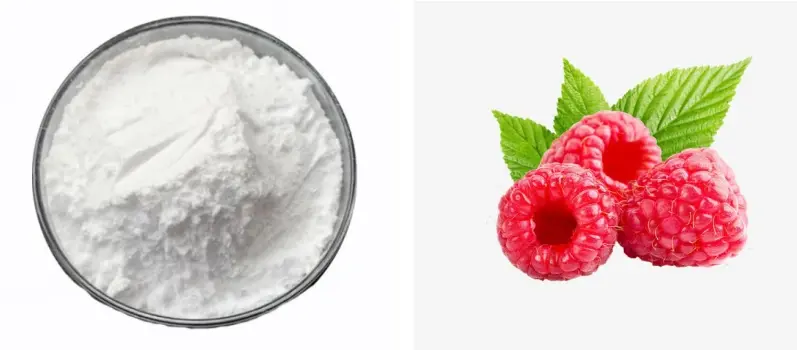
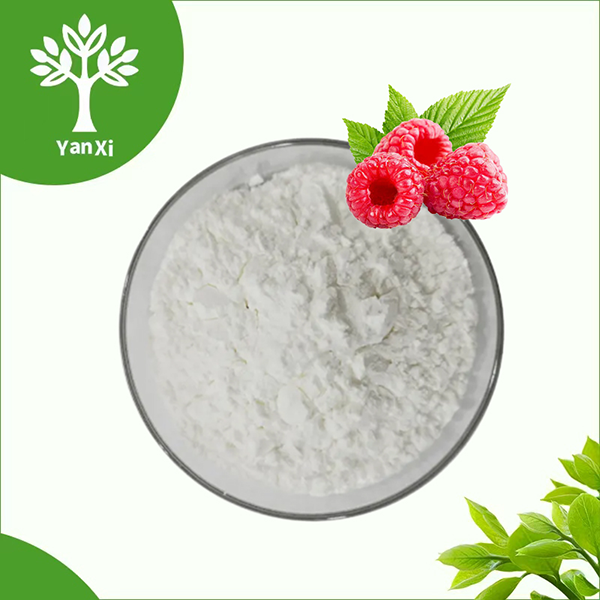
Raspberry Ketone Powder gives flavor and fragrance teams a concentrated source of the sweet, fruity note that defines red raspberry. Its chemical name is 4-(4-hydroxyphenyl)butan-2-one. A small dose can carry a clear raspberry character in beverages, confectionery, dairy, and scented personal care products. Our 99% grade is a white fine powder from Rubus idaeus, supplied with ISO, HACCP, FDA Registration, Kosher, and Halal certificates. This guide explains how the ingredient behaves, how to judge quality, and what to check before you buy, so your R&D, purchasing, and quality teams can move from evaluation to order with confidence.
Understanding Raspberry Ketone Powder in Flavor and Fragrance
What This Aroma Compound Is
Raspberry ketone is the main character-impact compound in red raspberry aroma. Its formula is C10H12O2, and its molecular weight is 164.20 g/mol. The ketone group and the phenol ring give it a sweet, fruity, slightly floral note. Raspberry fruit builds it through a pathway that includes benzalacetone synthase, an enzyme described in raspberry fruit in 1996. Fruit holds very little of it, commonly about 1 to 4 mg per kilogram, so a pure ingredient costs more than most fruit flavors. Odor-threshold work by Larsen and Poll in 1990 ranks it among the key contributors to raspberry smell.
Natural, Synthetic, and Encapsulated Forms
Buyers usually meet three versions: natural-origin material, nature-identical synthetic material, and encapsulated or spray-dried blends. All carry the same molecule, yet they differ in label claims, cost, and handling. Because fruit contains so little, a natural claim needs paperwork, not just a description. Radiocarbon testing under ASTM D6866 flags petroleum-based carbon, which gives quality teams a way to check an origin statement. Encapsulated forms dilute the active, so they suit controlled release in dry mixes. A 99% powder suits teams that want to set the dose themselves. Our product lists Rubus idaeus as its botanical source, and we can discuss origin documents that match your label.
Physical Properties That Affect Formulation
Raspberry Ketone Powder has a melting point of approximately 82–84°C, so it should be kept away from heat sources during storage to maintain its quality. Raspberry Ketone Powder has moderate solubility in ethanol and oils but dissolves poorly in water. For water-based formulations, Raspberry Ketone Powder can first be dissolved in ethanol or a suitable food-grade solvent, such as propylene glycol, before being incorporated into the final product. Our Raspberry Ketone Powder is a fine white powder, with 100% passing through an 80-mesh sieve to support uniform dispersion in dry blends and facilitate dissolution during processing. The loss on drying is no more than 5%, while the ash content is also limited to 5% or less. When properly sealed and stored under appropriate conditions, Raspberry Ketone Powder has a shelf life of 24 months, making it suitable for manufacturers seeking consistent raw material quality and reliable storage performance.
Key Benefits and Performance Aspects for Industrial Use
Strong Aroma Impact at Low Dose
Because raspberry ketone carries the signature note, formulators often need only small amounts to build a recognizable raspberry profile. Flavorists round it out with ionones, fruity esters, and sweet notes such as vanilla. Perfumers use it to give fruity-sweet warmth to floral and gourmand blends. A single defined compound also repeats better from batch to batch than whole-fruit concentrates, because crop year, ripeness, and processing change fruit chemistry. Set the dose through your own bench trials, since the right level depends on the base, the pH, and the target intensity.
Mixing and Stability in Production
Good results start with how you add the powder. Dissolve it in a solvent first, then add the solution late in the process, after high-heat steps, to limit aroma loss. In dry blends, pre-mix the powder with a small portion of carrier before it joins the full batch, which spreads a tiny dose evenly. Store the finished flavor in sealed containers away from light and heat. If your process includes pasteurization or baking, run a trial and compare sensory results before and after heat, because stability depends on the base and the time at temperature.
Safety, Regulatory Use, and Claims
For flavor use, raspberry ketone carries FEMA GRAS number 2588, and flavor doses are low. Still, your own safety review should set the final level. Popular media link raspberry ketone to fat burning. A 2005 Life Sciences study by Morimoto and colleagues reported anti-obesity effects in mice and in rat fat cells, yet human evidence is limited. A 2015 review in Regulatory Toxicology and Pharmacology noted few toxicity data at supplement-level intakes. For flavor and fragrance work, aroma is the goal, so keep health claims out of your marketing unless your regulatory team approves them.
Selecting the Best Raspberry Ketone Powder for Procurement
Natural or Synthetic Sourcing Decisions
Start with the claim on your pack. Clean-label beverage and dairy brands often need a natural-origin statement, while cost-driven applications may accept a nature-identical grade. Ask every supplier for an origin statement, a certificate of analysis, a process flow chart, and an allergen statement. Organic status needs its own certificate, so request it only if your label calls for it. Our listed certificates are ISO, HACCP, FDA Registration, Kosher, and Halal. Matching the grade to the claim protects you during audits and avoids relabeling costs later.
Specifications and Certificates to Verify
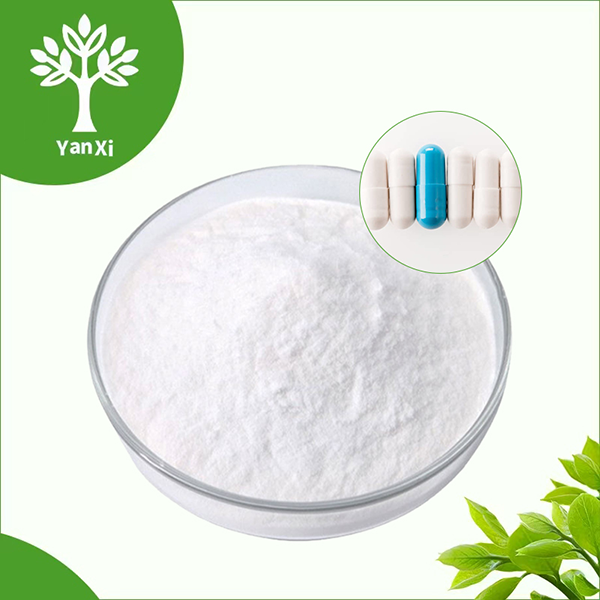
Our Raspberry Ketone Powder is a 99% white fine powder, and the used part is ripe raspberry fruit from Rubus idaeus. The product carries ISO, HACCP, FDA Registration, Kosher, and Halal certificates, and our company holds ISO 22000, HACCP, SGS, Kosher, and Halal certification. ISO 22000 covers food safety management, and HACCP controls hazards at defined process steps. Kosher and Halal open religious-compliant market channels. FDA Registration identifies the facility with the agency under US law, but it is not a product approval. Quality managers should read each certificate for scope and expiry date.
How It Compares with Other Botanical Options
Buyers sometimes weigh raspberry ketone against green tea extract or garcinia cambogia. These ingredients do different jobs. Green tea extract is rich in catechins such as EGCG and brings a bitter, astringent taste. Garcinia cambogia is valued for hydroxycitric acid, which tastes sour. Raspberry ketone is a single aroma molecule with a sweet, fruity note, so it supplies sensory appeal rather than a broad functional profile. Many supplement formulas use these ingredients side by side, not as substitutes, so choose each one for the role it plays in your product.
Practical Procurement Insights for Raspberry Ketone Powder
Supply, Packaging, and Delivery
We pack Raspberry Ketone Powder in 1 kg bags, 5 kg boxes, and 25 kg drums, so you can match the pack to trial, pilot, or production volume. The product is in stock, and delivery time is within 1 to 3 working days after payment. A free sample is available, which lets your R&D and quality teams test the powder before a purchase order. We also provide local warehousing support in Europe and the US, which helps purchasing managers who plan around lead times and need steady replenishment.
Pricing and Bulk Purchasing
Price depends on purity, origin, pack size, order volume, documents, and shipping terms. Ask for quotes at two or three volume tiers, such as 5 kg and 25 kg, and compare cost per finished unit, not only cost per kilogram. A strong aroma ingredient is used at a low dose, so its cost per finished unit can stay small. Long-term supply agreements also help both sides plan production and hold pricing steady. Our integrated approach to raw materials, R&D, and production supports stable supply and consistent quality, which keeps your costs predictable.
Customization and Private Label Support
R&D managers often need more than a standard grade. They ask about particle size, pack format, document sets, and how the powder behaves in a given base. Yanxi Herbs has professional R&D capabilities and offers flexible customization, along with one-stop service from product development to global delivery. Distributors and importers can request export-ready documents with each order. If you need custom packaging or a private label arrangement, send us the details and we will confirm what we can do.
Application Case Studies and Industry Use Examples
Beverage, Confectionery, and Functional Food Example
These examples show typical formulation steps, not named client cases. A beverage developer building a raspberry flavor can pre-dissolve the powder in ethanol or propylene glycol, add it to the flavor base, and then test the finished drink after pasteurization and shelf-life storage. A confectionery team can add the solution to syrup after the cooking temperature drops. Fitness drink blends, supplement capsules, and functional foods use the fine powder in dry mixes, and regulatory staff should review any claims. Sensory panels should compare each trial against the target profile.
Fragrance and Personal Care Example
A fragrance house can use the powder to add a fruity-sweet raspberry facet to a heart note, after dissolving it in ethanol or an oil. A skincare or body care brand can scent a lotion or lip product, then test it for color and odor change over time with its surfactants, preservatives, and packaging. Fragrance use follows IFRA guidance where it applies, along with your own safety assessment. Ask your supplier for the documents your reviewers need before the first pilot batch.
Quality Assurance Checks Before Batch Release
Quality teams can use these three checkpoints when they review each lot:
- Identity and purity: Ask for the 99% assay by HPLC and an identity check such as infrared spectroscopy. Compare the certificate of analysis with a retained sample from your first lot. A consistent chromatogram from lot to lot tells you the aroma will repeat in your product.
- Physical and contaminant limits: Our specification sets loss on drying at 5% or less, ash at 5% or less, heavy metals at 10 ppm or less, and 100% passing through an 80-mesh sieve. Confirm that each certificate reports these values for the lot you receive, not only for a typical batch.
- Microbial limits: Total plate count stays below 1000 cfu/g, and yeast and mold stay below 100 cfu/g in our specification. These limits matter for dry blends and capsules that skip a kill step, so match them to your own release criteria before you approve a supplier.
These checks catch most batch problems before they reach your line, and they give auditors a clear paper trail.
Conclusion
Raspberry Ketone Powder delivers the signature raspberry note from a single compound, 4-(4-hydroxyphenyl)butan-2-one, which fruit contains only in tiny amounts. Origin, whether natural-origin, nature-identical, or encapsulated, shapes cost, labeling, and dose, and radiocarbon analysis can support an origin statement. The 99% white fine powder dissolves best in ethanol, oils, or food-grade solvents, works at low doses, and needs process trials to confirm heat stability. Safety rests on low flavor-level use and your own review, while health claims remain a separate regulatory matter. Buyers do best when they match grade to label claim, verify certificates and batch limits, compare quotes by cost per finished unit, and confirm pack sizes, lead times, and documents before ordering.
FAQ
Is Raspberry Ketone Powder safe in flavor and fragrance products?
Raspberry ketone has FEMA GRAS status for flavor use, and flavor doses are low. Safety still depends on your formula, so complete your own review and ask for current documents.
Can I use the powder instead of an encapsulated form?
Often yes, but dose and handling change. The powder is 99% active, so you add far less and must pre-dissolve or pre-blend it. Run a bench trial before you switch.
Which certificates do you provide?
Our product comes with ISO, HACCP, FDA Registration, Kosher, and Halal certificates. Organic certification is not part of the listed documents for this item.
Can I get a sample before ordering?
Yes. We offer a free sample, and the product is in stock. Delivery time is within 1 to 3 working days after payment.
Request Raspberry Ketone Powder Samples from Yanxi Herbs
Yanxi Herbs has supplied natural ingredients since 2010 to customers in over 100 countries and regions. If you want a Raspberry Ketone Powder supplier with stock on hand, free samples, and ISO, HACCP, FDA Registration, Kosher, and Halal certificates, email info@yanxiherbs.com with your target volume and application. Visit yanxiherbs.com for details, and our team will reply with specifications and a quotation.
References
1. Life Sciences, 2005: Morimoto C. et al., "Anti-obese action of raspberry ketone."
2. Zeitschrift für Lebensmittel-Untersuchung und -Forschung, 1990: Larsen M. and Poll L., "Odour thresholds of some important aroma compounds in raspberries."
3. Plant Physiology, 1996: Borejsza-Wysocki W. and Hrazdina G., "Aromatic polyketide synthases: purification, characterization, and antibody development to benzalacetone synthase from raspberry fruits."
4. Regulatory Toxicology and Pharmacology, 2015: Bredsdorff L. et al., "Raspberry ketone in food supplements – High intake, few toxicity data – A cause for safety concern?"
5. Fenaroli's Handbook of Flavor Ingredients, 2010: Burdock G.A., 6th edition, CRC Press.
6. ASTM International, 2022: "Standard Test Methods for Determining the Biobased Content of Solid, Liquid, and Gaseous Samples Using Radiocarbon Analysis" (ASTM D6866).

Send Inquiry
Related Industry Knowledge
- High Purity Butterfly Pea Flower Extract Powder For Functional Beverage Production
- What Factors Matter When Purchasing Astaxanthin Powder Bulk For Large-Scale Production?
- Chlorophyll Powder Offers Stable Plant-Based Coloring Options For Food And Beverage Manufacturers
- Food Grade Bulk Astaxanthin Powder For Skincare Antioxidant Supplements