
What Makes Bulk Stevia Extract Powder Popular Among Food Producers?
Oct 09, 2026
Bulk stevia extract powder has earned a firm place in modern food manufacturing, and the reasons are straightforward. Derived from the leaves of Stevia rebaudiana Bertoni, this natural zero-calorie sweetener delivers sweetness 200–400 times stronger than sucrose without raising blood glucose levels. As consumer demand shifts toward clean-label, sugar-reduced products, food producers across beverages, dairy, confectionery, and functional foods are turning to stevia extract powder as a practical, science-backed solution that satisfies both regulatory standards and evolving market expectations.
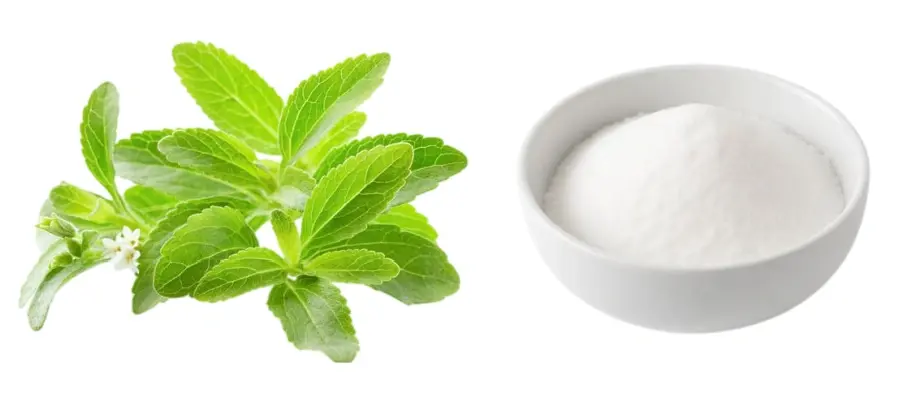
Understanding Bulk Stevia Extract Powder: Composition and Benefits
Now that you know what stevia is made of and how it works, you can see why so many businesses buy it in bulk.
What Are Steviol Glycosides?
The main things that make stevia leaf extract work are Rebaudioside A (Reb A), Stevioside, Rebaudioside D, and Rebaudioside M. More than 95% of the total steviol glycosides (TSG) are generally found in high-purity grades. Ion-exchange chromatography is used to sort these after they are extracted with water or ethanol. Reb M and Reb D are found in nature in smaller amounts, but they have the cleanest taste of sugar, which makes them great for drinks with light flavors like vanilla or citrus.
Nutritional Profile: Zero Calories, Zero Glycemic Impact
Stevia juice has a glycemic index of 0 and no calories. They don't change the amount of glucose and insulin in the blood because the body doesn't use it as energy. Nutrients published a study in 2020 that proved steviol glycosides are safe for people with diabetes to eat. In other words, they can be used in products that are safe for diabetics without any health problems.
Addressing the Aftertaste Problem
Early stevia products had a bitter, licorice-like taste that people didn't like. These days, methods like membrane filtration and recrystallization are used to separate the sweet glycosides from the bitter parts. Different kinds of Reb A or Reb M that are very pure (>97%) now have a balanced taste profile that even the pickiest product development teams can use.
Why Food Producers Prefer Bulk Stevia Extract Powder Over Other Sweeteners?
Food companies rate sweeteners based on how they taste, how much they cost per sweetness unit, how regulated they are, and where they are listed on the label. Stevia always does well in all of them.
Clean-Label Advantage Over Artificial Sweeteners
Artificial sweeteners like aspartame and sucralose are losing popularity among people. Stevia Extract Powder comes from plants, so companies can put "naturally sourced" on their labels. This is in line with the movement toward clean labels. Statistics from SPINS show that over the last five years, the number of "no artificial sweeteners" goods in North American shops has slowly grown.
Comparison With Other Natural Sweeteners
When you look at how much stevia costs per sweetness, it is clearly better than erythritol or monk fruit extract. Sugar alcohols are 200–450 times sweeter than sugar, so they can be used at much lower rates per kilogram of finished product. They need to be mixed with a lot of other things to get the same sweetness as sugar. The same things can be said about monk fruit juice, but it costs more and is harder to get around the world. Stevia lets recipe developers make changes to recipes more easily without raising the costs of the ingredients by a large amount.
Organic and Conventional Options for Diverse Applications
Stevia Extract Powder comes in both regular and organic types that have been approved. This lets the buying teams match the needs of the ingredients to the positioning of the product, whether they're looking for ingredients for a high-end line of organic drinks or a general-market food product that people will find useful. The level of purity and sweetness can stay the same from batch to batch thanks to standardized extraction methods. This is very important for quality managers who are in charge of plans for making a lot of things.
Key Applications of Bulk Stevia Extract Powder in Food Production
Another great thing about stevia for business is that it can be used in many different goods. And these are the main places where food makers use it all the time:
- Beverages: Sugar-free soft drinks, flavored waters, ready-to-drink teas, and protein shakes often use Reb A or Reb M mixes. It can be used in both hot-fill and cold-fill production lines because it dissolves in water and doesn't change when heated.
- Dairy and Dairy Alternatives: Stevia can cut down on the extra sugar in sweetened yogurts, plant-based milk drinks, and ice cream while keeping the sweetness level the same. It goes well with it to round out the taste, like lactose or allulose.
- Confectionery and Bakery: With stevia, you can make some baked goods, hard candies, and gum taste better. Because it doesn't add volume or color like sugar does, stevia is often mixed with bulking agents in baked goods.
- Dietary Supplements: Stevia is often listed as the sweetener in protein powders, meal replacement shakes, and functional gummies. This makes them low in calories and good for the keto diet.
Almost every part of the food and vitamin businesses can use these things. Usually, all that needs to be done to switch from one type to another is to change the rate at which it is used. This helps R&D teams that are in charge of more than one product line at the same time with cross-category formulation.
Procurement Insights for Bulk Stevia Extract Powder: What Food Producers Need to Know?
It's not enough to just compare prices when you're looking for stevia extract. When making a long-term plan to buy something, you should think about things like quality, certification, and how reliable the supply chain is.
Certifications That Matter for Global Distribution
For goods to be sold in international markets, their ingredients must be certified. At the very least, you should look for providers who are ISO 22000, HACCP, Kosher, and Halal approved. Since 2008, steviol glycosides have been allowed by the FDA as GRAS. They can also be used in many foods because they have been approved by the EU under Regulation (EC) No 1333/2008. A Certificate of Analysis (CoA), heavy metal tests, and microbial records for Stevia Extract Powder should be given by suppliers for each batch.
Pricing Factors and Order Planning
The cost of Stevia Extract Powder is based on how much you buy, the purity level, and the glycoside makeup. Reb M with a higher purity level costs more than Reb A because it takes more steps to make. If a supplier has a MOQ, buying managers should find out early on. The MOQ can be anywhere from 25 kg to a full container. Lead times are different for each company, but for most orders from well-known brands, they take between 15 and 30 days.
Building a Reliable Supply Partnership
It's very important for production managers who run plans for ongoing output that supplies stay stable over the long term. You are less likely to have supply gaps if you buy from a seller who grows their own raw materials, does their own research and development, and has a great system for exporting. When you use just-in-time production, suppliers with local warehouses in places like the US or Europe are very helpful because they protect you even more against transportation delays.
The Future Outlook: Trends Driving Demand for Bulk Stevia Extract Powder in Food Industry
Global Sugar Reduction Mandates
Companies that make food and drinks are having to change their recipes more often because of programs run by the governments of the US, UK, and EU to cut down on sugar. The WHO's 2023 rules on non-sugar sweeteners took into account the fact that stevia has been safe for a long time as a plant choice. That means that more natural sugar ingredients are being bought because the government is pushing them to.
Advances in Glycoside Profiling
More of the best-tasting glycoside parts are being made with Reb M and Reb D, which are made through fermentation. There was a problem with supply before this new technology came along. It makes it easier for higher-end products that care about sensory quality to be used.
Sustainability and Traceability Expectations
People who buy things care more about how clear the supply chain is. More and more, supplier qualification processes need to be able to track back to the farm level, use environmentally friendly farming methods, and find ways to extract substances with fewer solvents. This is really important for brands that care about the earth.
Conclusion
Stevia Extract Powder in bulk is no longer merely an interest. You can use it in a lot of different ways, it comes from plants, and it doesn't have any calories. Because of this, food companies can use it to cut down on sugar without making their products less good. As laws that require clean labels and less sugar continue to change the market, there will be a greater need for stevia goods that are very pure. Because of this, companies that make health products will be better able to meet deadlines for reformulation, meet customer expectations, and stay competitive if they build trusting relationships with suppliers now.
FAQ
Is stevia extract powder safe for all food production applications?
Steviol glycosides are, in fact, GRAS by the FDA in the US. They are also GRAS in the EU, which means they can be used as a food additive. Nothing bad can happen when they are added to milk, sweets, vitamins, baked goods, or drinks. A lot of long-term safety studies have shown that both healthy people and people with diabetes can handle them. They have been approved for use in over 60 countries.
How does the sweetness of stevia compare to sugar in formulation?
Stevia Extract Powder ranges in sweetness from 200 to 450, depending on the grade of glycosides. Most of the time, formulators use rates between 0.01% and 0.05% in things that are made. Researchers often mix it with erythritol or inulin, which do add bulk, when shape or volume is important because it doesn't add any bulk on its own.
Where can I source certified organic stevia extract powder in bulk?
You can buy certified organic Stevia Extract Powder from businesses that make sure their growing and processing chains are also certified organic. Make sure that when you look at providers, you ask for both regular food safety certifications and paperwork for organic certifications. If a company gets the raw leaves and then sells the finished extract, they are more likely to be able to track the product and have a steady supply of organic products.
Partner With Yanxi Herbs for Trusted Stevia Extract Powder Supply
Natural plant-based products made by Yanxi Herbs have been sent to more than 100 countries since 2010. All of these groups have approved our Stevia Extract Powder as Kosher, Halal, ISO 22000, and you can ask for full batch information if you need it. We have been selling Stevia Extract Powder for a long time and can offer both Reb A and Reb M grades. Our minimum order quantities are variable, and we have warehouses in both the US and Europe to help with shipping. Please get in touch with us right away at info@yanxiherbs.com or visit yanxiherbs.com to get samples and talk about your making needs.
References
1. Goyal, S. K., Samsher, & Goyal, R. K. (2010). Stevia (Stevia rebaudiana) a bio-sweetener: A review. International Journal of Food Sciences and Nutrition.
2. Ashwell, M. (2015). Stevia, Nature's zero-calorie sustainable sweetener. Nutrition Today.
3. Samuel, P., Ayoob, K. T., Magnuson, B. A., et al. (2018). Stevia leaf to stevia sweetener: Exploring its science, benefits, and future potential. The Journal of Nutrition.
4. Yadav, A. K., Singh, S., Dhyani, D., & Bhatt, P. S. (2011). A review on the improvement of stevia (Stevia rebaudiana). Canadian Journal of Plant Science.
5. Tey, S. L., Salleh, N. B., Henry, J., & Forde, C. G. (2017). Effects of aspartame-, monk fruit-, stevia- and sucrose-sweetened beverages on postprandial glucose, insulin and energy intake. International Journal of Obesity.
6. World Health Organization. (2023). WHO guideline: Use of non-sugar sweeteners. World Health Organization.

Send Inquiry
Related Industry Knowledge
- Why Do Food Manufacturers Choose Freeze-Dried Lemon Powder Over Fresh Citrus Ingredients?
- High Purity Butterfly Pea Flower Extract Powder For Functional Beverage Production
- What Factors Matter When Purchasing Astaxanthin Powder Bulk For Large-Scale Production?
- Chlorophyll Powder Offers Stable Plant-Based Coloring Options For Food And Beverage Manufacturers
_1787033972542.webp)