
What Makes Butterfly Pea Flower Extract Powder Ideal for Clean Label Food and Drink Applications?
Sep 16, 2026
Butterfly Pea Flower Extract Powder, derived from the dried petals of Clitoria ternatea, has become one of the most sought-after botanical colorants in the clean label movement. Standardized to contain 3%–20% total anthocyanins, it delivers intense, stable blue pigmentation at remarkably low dosage levels. Its pH-sensitive color-shifting property, thermal stability, and fully plant-based origin make it a compelling replacement for synthetic dyes in beverages, functional foods, and nutraceuticals. For manufacturers navigating tightening label regulations and growing consumer scrutiny of ingredient lists, this extract addresses multiple formulation challenges simultaneously.
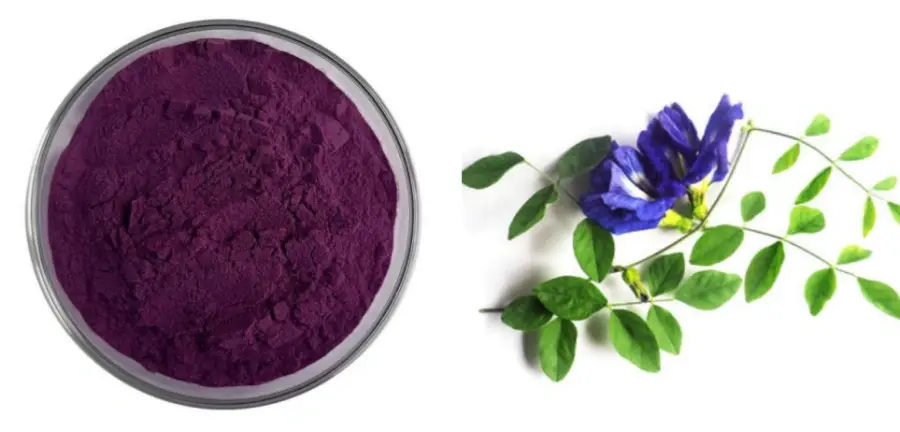
Understanding Butterfly Pea Flower Extract and the Clean Label Movement
People in the United States have had very different expectations over the last ten years. People now read labels to see what's in things, and they don't like drugs whose names they don't know. The trend of "clean label" is no longer a fad; food and drinks that want to compete need to follow it.
This place looks good with butterfly pea flower extract. Clotrimazole petals that have been dried are used to make the ingredient. You use water or hydro-ethanol to get the petals out of the flower, and then you spray them dry to make a fine, concentrated powder. If you compare this extract to man-made colors like FD&C Blue No. 1, this one has a name that people know and trust. You can find it on any product label as a botanical ingredient. It only comes from plants and doesn't have any chemicals added to it.
As of 2021, the U.S. Food and Drug Administration (FDA) stated that butterfly pea flower extract in water did not need to be certified under 21 CFR 73.69 for certain uses in food and beverages. This regulatory development helped establish Butterfly Pea Flower Extract Powder as a practical natural blue color option for the U.S. market. For manufacturers and ingredient suppliers, Butterfly Pea Flower Extract Powder provided an additional pathway for developing naturally colored food and beverage products. The recognition of butterfly pea extract also made it easier for companies using Butterfly Pea Flower Extract Powder to formulate and market products that meet applicable regulatory requirements.
Core Benefits for Food and Beverage Manufacturers
More than just its color, this plant product looks good. The people who make it and put it on assembly lines always talk about how useful it is for many things.
It's important to know these major scientific and practical benefits before you decide to buy:
- pH-responsive chromatic shift: The extract maintains a vivid blue at pH 4.5–8.0 and transitions to purple or pink as acidity increases. This property enables interactive, color-changing beverages without any chemical manipulation — a commercially valuable feature for craft beverages, RTD teas, and cocktail mixers.
- Thermal stability for processing: Unlike spirulina blue, which degrades rapidly under heat and in acidic conditions, butterfly pea anthocyanins (specifically ternatins) retain color integrity through pasteurization. This makes the extract viable for heat-processed products such as baked goods and dairy beverages.
- Antioxidant and functional health properties: Research published in peer-reviewed journals has documented the antioxidant, anti-inflammatory, and neuroprotective activity of ternatin anthocyanins. These properties align with growing demand in the functional food and nutraceutical sectors.
- Extremely low effective dosage: At a concentration of E3 specification, a usage rate of 0.01%–0.1% delivers strong coloration, reducing per-unit ingredient costs significantly compared to other natural colorants.
Because of these advantages, butterfly pea flower extract is a good and cheap choice for people who make a wide range of clean label products.
Quality Standards and B2B Sourcing Criteria
It can be very risky to choose where to get plant-based products if quality standards aren't made clear. Here are the product specs that buying managers and quality control teams should look for in an industrial-grade stock that they can trust.
This is what scientists say about Yanxi Herbs' Butterfly Pea Flower Extract Powder (Specification E3):
It comes from a plant called Clitoria ternatea and has something in it called anthocyanins that makes it work. The pieces are small enough to fit through an 80-mesh sieve every time. It looks like purple powder. About 5% of its weight is lost when it dries, and it has about 5% ash in it. There are no more than 10 parts per million of heavy metals. The yeast and mold counts are both less than 100 cells/gram, and the plate count is less than 1,000 cells/gram. The item will last 24 months if it is packed and kept in the right way. It comes in 25 kg drums, 5 kg boxes, and 1 kg bags. It has ISO, HACCP, and FDA registration.
Practical Application Insights for Formulators
It's just as important to know how to use this extract as it is to know why to use it. This makes it simple to mix the powder with water. It can then be used in drinks, dairy products, gel-based sweets, and vitamin pills.
For use in drinks, an inclusion rate of 0.02% to 0.05% of Butterfly Pea Flower Extract Powder can generally produce an attractive blue color that changes when acidic ingredients such as orange juice are added, creating an appealing visual effect for consumers. When used in beverages, Butterfly Pea Flower Extract Powder can be incorporated into formulations where color stability and pH response are important considerations. Some encapsulation methods can help improve the stability of Butterfly Pea Flower Extract Powder during extended cooking at temperatures above 150°C, making these approaches useful for applications such as baking and candy production.
The extract powder provides a more accurate amount and more stable anthocyanin content than dried flowers or drinks that have been infused with them. It is very important for large production lines to have this level of consistency. If there are color differences between batches, it would be hard to keep track of quality and cost money to do extra work.
Anthocyanins from butterfly peas can be found in serums and emulsions that are used in cosmetics to help fight aging and soothe the skin. This makes the ingredient better for personal care brands that want to use natural ways to make their products.
How It Compares to Other Natural Colorants
A lot of teams that buy things look at spirulina blue, red cabbage extract, gardenia blue, and butterfly pea extract all at the same time. Each is useful for different things, but butterfly pea is the only one that stands out in a competitive sense.
If the pH is less than 4.5, spirulina blue won't stay stable. This means it can't be used in most fizzy or citrus-based drinks. It has a wider pH range, but it leans more toward colors that are reddish-purple than blue. For brands that want to use blue, this makes it less useful. It's harder to find and costs more to buy gardenia blue.
It's been hard for a long time to find a plant-based blue that works well in acidic forms and doesn't change when heated. Butterfly pea extract fixes this problem. It costs less when used in large amounts because the effective dose is lower. This is important for procurement managers who are in charge of managing the budgets for ingredients for big production runs.
Conclusion
Clean-label formulation no longer requires choosing between attractive product appearance and clear ingredient positioning. Butterfly Pea Flower Extract Powder is a plant-based ingredient that offers antioxidant activity, a vibrant pH-responsive color, and suitability for applications that must meet applicable regulatory requirements. For food, supplement, and cosmetic manufacturers seeking a natural blue colorant for large-scale production, Butterfly Pea Flower Extract Powder can be a versatile option across different product categories. Its established use in various formulations makes Butterfly Pea Flower Extract Powder a practical ingredient for companies looking for natural color solutions, while suppliers with ISO and HACCP-certified production systems can provide additional quality and supply-chain assurance.
FAQ
Is butterfly pea flower extract safe for regular food use in the U.S.?
The FDA granted this extract color additive exempt status under 21 CFR 73.69 in 2021, permitting its use in specific food and beverage categories. A properly certified extract with heavy metals below 10 ppm and microbial counts within specification poses no documented safety concerns at standard usage rates.
Does the extract affect product flavor?
High-quality extract carries a mild, herbal note comparable to light green tea. At standard inclusion rates of 0.01%–0.1%, this characteristic is easily masked by citrus, sweeteners, or other flavor components.
What storage conditions protect potency over time?
Store in sealed packaging away from direct light and humidity. Under these conditions, shelf life is 24 months. Elevated temperature or moisture exposure accelerates anthocyanin degradation and color fading.
Can it be used in baked goods?
It shows moderate bake stability. Color retention occurs in cookies and cakes, though temperatures consistently above 150°C may cause fading. Encapsulation techniques notably improve heat resistance for these applications.
What is the minimum order quantity available?
Packaging options include 1kg/bag, 5kg/box, and 25kg/drum. Free samples are available for evaluation prior to bulk ordering.
Partner With Yanxi Herbs — Your Trusted Butterfly Pea Flower Extract Powder Supplier
Companies from all over the world have bought plant goods from Yanxi Herbs since 2010. All of our production lines are registered with FDA, HACCP, ISO 22000, Kosher, and Halal because we are a skilled company that makes Butterfly Pea Flower Extract Powder. It takes one to three business days for our E3 specification extract to ship after payment is confirmed. You could get some for free. Email us at info@yanxiherbs.com or go to yanxiherbs.com to get bulk prices, custom specs, or a free sample.
References
1. Phytochemistry, 2021 — "Anthocyanin composition and antioxidant activity of Clitoria ternatea flower extracts."
2. Food Chemistry, 2020 — "Thermal stability and pH-dependent color behavior of butterfly pea flower pigments in beverage systems."
3. Journal of Agricultural and Food Chemistry, 2019 — "Neuroprotective properties of ternatin anthocyanins from Clitoria ternatea."
4. U.S. Food and Drug Administration, 2021 — "Final Rule: Listing of Color Additives Exempt from Certification; Butterfly Pea Flower Extract." Federal Register, 21 CFR Part 73.
5. LWT – Food Science and Technology, 2022 — "Application of natural blue colorants in functional beverages: stability and consumer perception."
6. Molecules, 2020 — "Biological activities and phytochemical profiles of Clitoria ternatea extracts and their relevance in nutraceutical formulation."

Send Inquiry
Related Industry Knowledge
- Bulk Phycocyanin Powder Supports Stable Natural Blue Coloring For Food And Beverage Production
- How Does Freeze-dried Dragon Fruit Powder Improve Natural Color In Food Applications?
- How Can Purple Yam Powder Enhance Color and Texture in Food Product Development?
- Food Grade Bulk Astaxanthin Powder For Skincare Antioxidant Supplements
_1787033972542.webp)