
Why Do Manufacturers Choose Stevia Extract Powder for Formulations?
Sep 22, 2026
Manufacturers across the food, beverage, supplement, and cosmetic industries consistently turn to Stevia Extract Powder because it solves one of the most persistent formulation challenges: delivering intense sweetness without calories, synthetic additives, or glycemic impact. Derived from the leaves of Stevia rebaudiana Bertoni, this botanical sweetener contains steviol glycosides — including Rebaudioside A, Reb D, and Reb M — that are 200 to 400 times sweeter than sucrose. For brands navigating clean-label mandates and sugar-reduction regulations, it represents a scientifically grounded, commercially viable, and consumer-accepted solution.
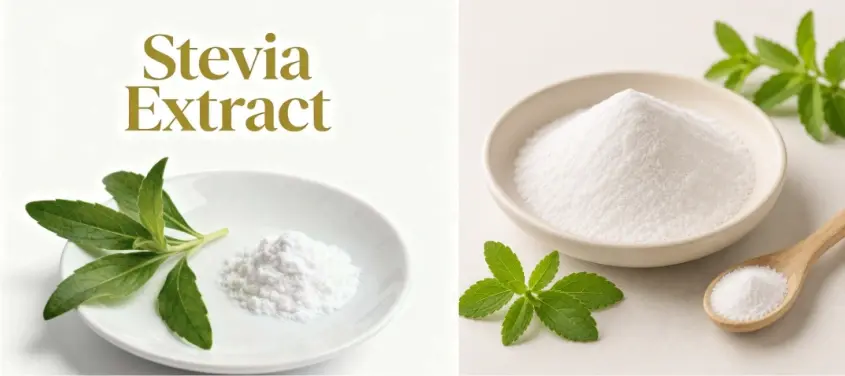
Understanding Stevia Extract Powder and Its Role in Formulations
From Plant Leaf to High-Purity Ingredient
The stevia plant comes from Paraguay and has been used as a natural sugar for a very long time. Ion-exchange filtration, membrane cleaning, and steeping in water or ethanol are the steps that professionals use today to get their products. To clean the extracts, this method separates some steviol glycosides from the bitter, licorice-like compounds that are usually present. A powder that is more than 95% pure in Total Steviol Glycoside (TSG) is what has been made. It can blend well with light flavors like vanilla dairy products or lemon drinks without adding any extra notes that you don't want.
Older versions of stevia-based ingredients had problems with having an aftertaste, but modern extraction technology has mostly fixed those problems. The new type of Reb M formulas and the very pure Reb A (>98%) both taste round and sweet, which is good for both customers and R&D.
Nutritional Profile and Clean-Label Relevance
Stevia glycosides can go through the body without being turned into energy. They don't raise or lower blood sugar or add calories. If the product is said to be low in calories, good for diabetics, or follow the keto diet, then this ingredient naturally fits with those claims. When purchasing managers look for ingredients with "clean labels," Stevia Extract Powder meets the claims of being of natural origin, not containing GMOs, and not containing allergens. All of these things play a big role in the U.S. and international markets right now.
Core Advantages That Drive Manufacturers to Choose Stevia Extract Powder
Sweets made with stevia are popular for more than just the fact that they don't have any calories. It's a popular choice in many business areas because of these key pros:
- Zero-calorie and non-glycemic profile: Stevia glycosides are better for you than sugar alcohols like erythritol because they don't make you sick and don't have many calories. In other words, they can be used in products for diabetics, keto dieters, and people who want to lose weight without having to worry about other ingredients.
- Formulation stability across temperatures and pH: Other sweeteners break down in hot recipes and drinks with a lot of acid, but Stevia Extract Powder stays solid. It stays as sweet as it was before it was processed.
- Regulatory acceptance in key export markets: The European Food Safety Authority (EFSA) and the U.S. Food and Drug Administration (FDA) both say that high-purity steviol glycosides are safe to use within certain limits set by the ADI. There are also forms on the market that have been approved as organic and non-GMO, which helps with premium labeling.
- Bulk procurement economics: They only need a lot less stevia for each batch because it is 200–400 times sweeter than sucrose. Because it has a high concentration, this drug doesn't cost as much to store, ship, or make one unit.
Following the rules, keeping prices low, and keeping up with customer health trends are the biggest problems in procurement. All of these benefits work together to solve those problems. They see stevia extract as an important long-term ingredient rather than a quick fix for getting stable supply chain access.
Comparing Stevia Extract Powder to Other Sweetening Solutions
Powder vs. Liquid Stevia in Industrial Applications
When making a lot of something, Stevia Extract Powder is definitely better than liquid stevia. It is easier to get the right amount, it lasts longer, it weighs less, and it is easier to add to dry-blend processes. For smaller amounts or drinks that are ready to use, liquid stevia works well. But it can mess up products that need to stay fresh for a long time because of the water activity.
Stevia vs. Monk Fruit, Erythritol, and Sugar
For each zero-calorie sugar, there are different trade-offs when it comes to how it is used. As well, monk fruit extract has a clean label. However, it costs more per unit, so it can't be used in SKUs that care about price. Erythritol makes things bulkier and tastes better, but too much of it can make your stomach hurt, and it has a lot of calories for how sweet it is. Conventional sugar still tastes great, but it doesn't meet the standards for clean labels, diabetes, or calories that are now expected in many product categories.
Stevia Extract Powder is one of the few natural options that strikes the best balance between sweetness and price. It also meets the standards for organic, non-GMO, Kosher, and Halal certifications.
Organic vs. Standard Stevia Powder
More and more, high-end vitamin and functional food brands want stevia powder that has been certified organic. It costs more, but it lets you sell your goods in natural food shops to people who care about their health. Team leaders in charge of buying things should think about the people they want to sell to, where they want to put the label, and what kind of licensing paperwork they need to send.
How to Source the Best Stevia Extract Powder for Your Manufacturing Needs
To find good Stevia Extract Powder, you need to do more than just look at price lists. The providers you can trust must offer batch-consistent Certificates of Analysis (COA), show that they follow good manufacturing practice (GMP), and show proof that the raw leaf was used to make the final extract.
These should be the first things that buying managers think about when they are looking for Stevia Extract Powder sellers:
- Certification portfolio: To sell your goods in other countries, you need to have at least ISO 22000, HACCP, Kosher, Halal, and organic certifications.
- Purity specification transparency: For each batch, providers should present the glycoside profile, which includes the Reb A percentage, TSG content, and moisture levels. As long as the manufacturer has a lot of experience, they can change the particle size, purity grade, and packing standards to fit your brand and the way you make the product.
- Logistics and warehousing infrastructure: Suppliers with warehouses in the U.S. or Europe can cut wait times by a lot and make it less likely that a supply will fail.
It is normal to ask for a sample before shipping, along with full COA paperwork. This helps make sure that quality claims are true before placing large orders.
Real-World Cases and Future Prospects of Using Stevia Extract Powder
Two big drink companies, PepsiCo and Coca-Cola, have added stevia glycosides to their low-sugar lines to attract customers who care about their health. They reformulated their products, and the results show that the new formula is good for customers and makes a lot of money. This shows that Stevia Extract Powder works well in high-volume industrial settings.
The U.S., EU, and Asia-Pacific governments want to cut back on sugar (Grand View Research, 2023). This is what made the global stevia market worth about USD 714 million in 2022. It's projected to keep growing at a rate of 8.2% per year until 2030. Stevia can now be used in more types of recipes that need covering agents because of new ways to separate Reb D and Reb M glycosides, which taste the most like sugar.
Stevia is a strong and versatile ingredient that can be found in many food, drink, supplement, and personal care products. It can be used with organic and plant-based ingredients, as well as with supply chains that care about the environment and customers who want clear labels.
Conclusion
Stevia Extract Powder meets a real need in the production of almost all consumer-facing goods. It is a good choice for companies that want to cut back on sugar and make new "clean label" products because it comes from nature, has no calories, is authorized by the government, and is very sweet. As more people care about their health and the government puts more pressure on added sugars, this plant-based product will be even more valuable.
FAQ
Is stevia extract powder safe for all consumer groups?
High-purity steviol glycosides have been approved by both the FDA and the EFSA. In the US, they are said to be GRAS. It is thought that people with diabetes, children, and women who are pregnant are safe as long as they follow the acceptable daily intake (ADI) rules. Some people who are allergic to ragweed are told to be careful with stevia, though, because it comes from the same plant family as ragweed.
What is the difference between stevia powder and liquid stevia for manufacturing?
That being said, Stevia Extract Powder is easier to blend dry, comes in more precise amounts, and stays stable for longer. There are times when liquid stevia is used in drinks or wet processes, but it changes how water responds to it. When making big amounts of something, powdered formats work best.
How do I ensure batch consistency when purchasing stevia in bulk?
For each package, ask for a COA that shows how much TSG, Reb A, moisture, and heavy metals were found. Companies that are GMP-certified and use standard extraction methods can be more sure that all of their production runs are as pure as they can be.
Partner with Yanxi Herbs — Your Trusted Stevia Extract Powder Supplier
Through Yanxi Herbs, verified plant ingredients have been made and sent to more than 100 countries since 2010. It is Kosher, Halal, ISO 22000, and HACCP approved, so our Stevia Extract Powder is safe to use. You can also pick between OEM and private label to make sure it fits your exact production needs. If you need large quantities, exact purity standards, or help with your project, our procurement team is ready to help. Send us an email at info@yanxiherbs.com or visit yanxiherbs.com right away to get a quote.
References
1. Geuns, J.M.C. — Stevioside, Phytochemistry, 2003.
2. Carakostas, M.C. et al. — Overview: the history, technical function and safety of rebaudioside A, Food and Chemical Toxicology, 2008.
3. European Food Safety Authority (EFSA) — Scientific opinion on the safety of steviol glycosides for the proposed uses as a food additive, EFSA Journal, 2010.
4. Grand View Research — Stevia Market Size, Share & Trends Analysis Report, 2023.
5. Kroyer, G. — Stevioside and stevia sweetener in the food industry: application, function and safety, Journal für Verbraucherschutz und Lebensmittelsicherheit, 2010.
6. U.S. Food and Drug Administration (FDA) — Agency Response Letter: GRAS Notice for High-Purity Steviol Glycosides, 2008.

Send Inquiry
Related Industry Knowledge
- How Does Freeze-dried Dragon Fruit Powder Improve Natural Color In Food Applications?
- Freeze-dried Dragon Fruit Powder for Vibrant Natural Color and Clean Label Formulations
- How Can Beet Powder Be Used In Natural Color And Sports Nutrition Product Development?
- Organic Chaga Mushroom Extract Powder For Immune Boosting Latte
_1787033972542.webp)