
100% Natural Lemon Powder for Salad Bressing Making
Sep 20, 2026
When food manufacturers look for a reliable citrus ingredient that delivers consistent flavor, clean-label compliance, and long shelf life, Freeze-Dried Lemon Powder stands out as the professional choice. Produced through vacuum lyophilization from whole fresh lemons, this fine 60-mesh light yellow powder retains natural vitamin C, authentic citrus aroma, and bright acidity without any additives or preservatives. For salad dressing production specifically, it dissolves instantly, blends uniformly into emulsions, and replaces fresh lemon juice with measurable precision — giving R&D and procurement teams a stable, traceable ingredient they can count on season after season.
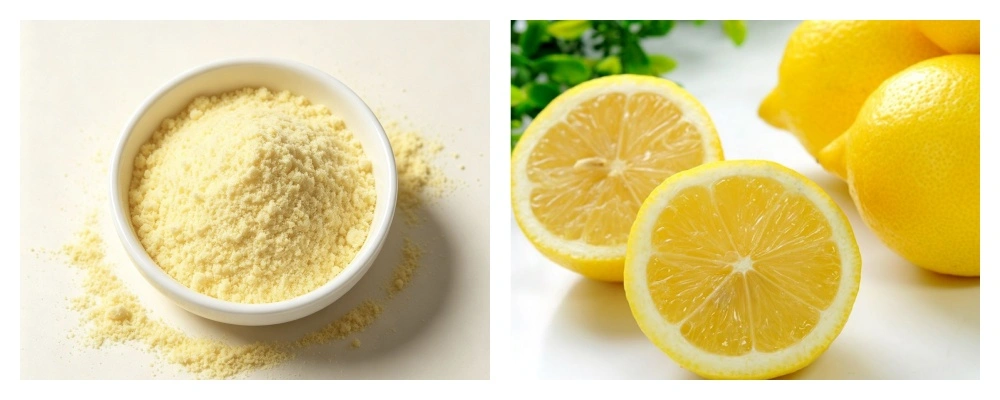
What Is Freeze-Dried Lemon Powder and Why Choose 100% Natural?
The Science Behind Lyophilization
Sublimation, not heat, is used in freeze-drying, which is also called vacuum lyophilization, to get the water out of fresh lemons. So that the fresh lemon peel and pulp don't melt, they are put under controlled vacuum pressure. This skips the liquid process and goes straight from the ice to the air. Ascorbic acid (vitamin C) and essential citrus oils are two things that break down easily in heat and are badly damaged by spray-drying or drum-drying. This low-temperature method protects them. The end product is a fully formed, very porous powder that quickly rehydrates and smells and tastes like lemon juice that has just been squeezed.
Why 100% Natural Matters for B2B Buyers
There has been a big shift in the US food market toward more "clean label" goods. The 2023 Food & Health Survey from the International Food Information Council found that more than 70% of American customers read ingredient labels and like goods that have natural ingredients that are easy to spot. This orange powder is 100% pure and doesn't contain any maltodextrin, fake flavors, or anti-caking fillers. It helps food companies promote non-GMO and clean labels.
It tastes better than lemon juice concentrate, dehydrated lemon powder, or lemon zest after being freeze-dried. It is a brighter pale yellow color and can be kept in a cool, dry place for up to 24 months. These traits mean that the recipe doesn't need to be changed as often, there is less waste, and the product is more stable from batch to batch. Buying and quality managers who are in charge of large-scale production care a lot about these things.
Benefits of Using Freeze-Dried Lemon Powder in Salad Dressing Production
Consistency, Solubility, and Clean-Label Alignment
They have to be consistent if you want to make industrial salad dressing. Different types of fresh lemon juice can have different levels of acidity and microbial risk, while many lemon extracts may also contain sweeteners or binders. Using Freeze-Dried Lemon Powder can help address both needs by providing a more consistent lemon ingredient for large-scale formulations. For manufacturers seeking better control over flavor, acidity, and processing, Freeze-Dried Lemon Powder offers a practical alternative to variable fresh juice, while Freeze-Dried Lemon Powder can also simplifying storage, handling, and ingredient dosing.
The main useful things this item adds to the process of making dressing are:
- Standardized acidity delivery: With a reconstituted pH ranging from 2.0 to 3.0 and a citric acid content of approximately 5–7%, each batch contributes a predictable tartness level. R&D teams can dial in acidity targets without relying on seasonal fruit variation.
- Instantaneous cold-water solubility: At 60 mesh fineness, the powder disperses evenly into oil-based and aqueous dressing matrices without clumping or leaving bitter residue — a notable advantage over coarser lemon zest or lemon fiber ingredients.
- Extended product shelf life: Because the powder introduces no free moisture into the finished dressing, it reduces water activity concerns and supports a longer product lifespan on retail shelves.
- Clean-label compliance: No preservatives, no artificial flavors, no carrier agents — the ingredient list stays short and consumer-friendly, which is a direct competitive advantage in U.S. and European retail channels.
Acidity supply that is standardized: each batch adds the same amount of sourness, with a pH range of 2.0 to 3.0 and a citric acid level of 5–7%. To set acidity goals, R&D teams don't have to wait for fruit to change every year.
The powder dissolves instantly in cold water and evenly into oil-based and water-based dressing matrices at a fineness of 60 mesh. It doesn't stick or leave a bitter residue. The fact that it's thinner than lemon zest or fiber ingredients is a big plus.
It keeps the product on store shelves longer because the powder doesn't add any free wetness to the finished sauce. This means you don't have to worry about water activity.
Clean labels mean that there are no artificial scents, preservatives, or carrier agents. This means that the list of chemicals is short and easy for customers to understand, which gives the company a clear competitive edge in retail outlets in the U.S. and Europe.
How to Use 100% Natural Freeze-Dried Lemon Powder for Salad Dressing Formulations
Recommended Dosage and Application Guidance
There are not many changes needed to commercial sauce lines to incorporate Freeze-Dried Lemon Powder as a natural lemon ingredient. For light dressing formulations, a starting level of 1% to 3% by weight can provide a balanced citrus profile, while creamy lemon-herb soups may require 3% to 5% by weight for a stronger citrus taste. When Freeze-Dried Lemon Powder is reconstituted with water, a powder-to-water ratio of approximately 1:7 to 1:8 can be used, helping formulators compare the resulting acidity with fresh lemon juice standards. For consistent production and easier ingredient dosing, Freeze-Dried Lemon Powder also provides a convenient option for commercial food manufacturers.
For Caesar or lemon-tahini dressings that are emulsified, mixing the powder with water first makes sure it is fully hydrated and stops flavor pockets from forming in some places. This step also helps the R&D team make sure that all of the large batches have the same pH level.
Storage and Handling Best Practices for Bulk Procurement
As long as it is handled correctly, Freeze-Dried Lemon Powder can still perform well when it reaches the factory. Because Freeze-Dried Lemon Powder readily absorbs moisture, exposure to damp air can cause it to clump and gradually lose its flavor quality. Procurement and storage teams should keep large drums in controlled areas below 20°C and below 50% relative humidity. For bulk buyers, sealed 25 kg drums with moisture-resistant covers are a common packaging option for Freeze-Dried Lemon Powder. Smaller 1 kg bags and 5 kg boxes are also available for small production runs, formulation trials, or product testing.
Selecting the Right Freeze-Dried Lemon Powder Supplier for Your Business
Key Evaluation Criteria for B2B Procurement
You can't just pick any orange powder; companies that make food and supplements have to be careful when they pick a source. A good natural lemon powder supplier should be able to do the following things before a long-term deal is considered:
- Certification portfolio: Look for ISO 22000, HACCP, FDA Registration, Kosher, and Halal certifications as a minimum. These credentials signal both process discipline and readiness for international market compliance.
- Batch consistency documentation: Request Certificates of Analysis (CoA) for multiple production lots. Key parameters to verify include Loss on Drying (≤5%), Ash Content (≤5%), Heavy Metals (≤10 ppm), Total Plate Count (<1,000 cfu/g), and Yeast & Mold (<100 cfu/g).
- Sample policy: Reputable suppliers offer free samples before bulk commitment. This allows R&D and quality teams to run application trials and sensory evaluations independently.
- Customization capability: For brands pursuing private label or proprietary formulations, the ability to adjust mesh size, packing format, or co-process with complementary botanical extracts adds meaningful value.
When dealing with people to buy a lot of lemons, supply chain transparency is just as important as technical specs. To do this, you need to know where the lemons come from, how the batches are kept track of, and how long the wait time usually is.
Conclusion
From a technical and business point of view, Freeze-Dried Lemon Powder is a practical natural ingredient for producing salad sauces. For both retailers and end customers in the U.S. and international markets, Freeze-Dried Lemon Powder can provide consistent acidity, authentic citrus flavor, and support clean-label formulations. An experienced botanical ingredient supplier can help food manufacturers, supplement producers, and ingredient distributors source approved, traceable citrus powder that meets their formulation requirements. Using Freeze-Dried Lemon Powder from a reliable source can reduce formulation risks and improve production consistency. By working with the right supplier, buyers can verify certifications, confirm product specifications, and manage the supply chain more effectively.
FAQ
How long does freeze-dried lemon powder last in bulk storage?
Twenty-four months if it is packed well and kept cool (below 20°C) and dry (below 50% relative humidity). The best way to keep track of long-term inventory is in bulk 25 kg drums that come in packaging that keeps moisture out.
Can this powder be used in skincare or cosmetic formulations?
Yes. Because it has vitamin C and flavonoids in it naturally, freeze-dried orange powder can be used as an active ingredient in skincare products that make the skin shine, scrub, and fight free radicals. The people who work on makeup research and development should make sure that the particle sizes work with the ways they apply the items.
How does freeze-dried powder affect acidity compared to fresh lemon juice?
When mixed with water in a 1:7 ratio, the acidity level is about the same as newly squeezed juice, with a pH of 2.0 to 3.0. The pH of the powder, on the other hand, stays more stable than that of fresh juice, which changes with the season, where it comes from, and how ripe it is.
Does the powder contain peel or only juice?
Yanxi Herbs uses whole lemon pulp with peel to make Freeze-Dried Lemon Powder. In other words, it has more fiber and vital oils than juice-only forms. This makes sauces taste fuller and more like real lemons.
Partner With Yanxi Herbs for Premium Freeze-Dried Lemon Powder
More than 100 countries have bought verified botanical products from Yanxi Herbs since 2010. We are a trusted company that makes Freeze-Dried Lemon Powder. We offer free trials, flexible packaging (1 kg–25 kg), and delivery in 1–3 working days. Our goods are approved by ISO, HACCP, FDA, Kosher, and Halal. We're ready to help you whether you need a lot of something or help with a weird recipe. Send an email to info@yanxiherbs.com or visit yanxiherbs.com to find out more and get prices.
References
1. International Food Information Council. Food & Health Survey. 2023.
2. Ratti, C. "Hot air and freeze-drying of high-value foods: A review." Journal of Food Engineering. 2001.
3. Wojdyło, A., Figiel, A., & Oszmiański, J. "Effect of drying methods with the application of vacuum microwaves on the bioactive compounds, color, and antioxidant activity of strawberry fruits." Journal of Agricultural and Food Chemistry. 2009.
4. Bhattacharya, S. Handbook of Food Powder: Processes and Properties. Woodhead Publishing. 2013.
5. Oey, I., Lille, M., Van Loey, A., & Hendrickx, M. "Effect of high-pressure processing on colour, texture and flavour of fruit and vegetable-based food products: A review." Trends in Food Science & Technology. 2008.
6. U.S. Food & Drug Administration. Guidance for Industry: Acidified Foods. FDA. 2021.

Send Inquiry
_1787033972542.webp)