
Butterfly Pea Flower Powder for Natural Color Applications in Beverage Manufacturing
Nov 21, 2026
Butterfly Pea Flower Powder gives beverage manufacturers a plant-based way to create natural blue, violet, and color-changing drinks without synthetic dyes. It is made from dried Clitoria ternatea flowers. Their anthocyanin pigments look blue in near-neutral drinks and shift toward purple or pink as acidity rises. That behavior suits teas, lemonades, mocktails, smoothies, ready-to-drink (RTD) products, and powdered mixes. Results still depend on pH, dosage, heat, light, and particle size, so testing and a clear specification matter. At Yanxi Herbs, we supply this ingredient to beverage brands and distributors worldwide.
Below, I cover the botanical basics, color behavior, format comparisons, sourcing checks, and a lab-to-launch plan. Your R&D, purchasing, and quality teams can use it to judge fit quickly.
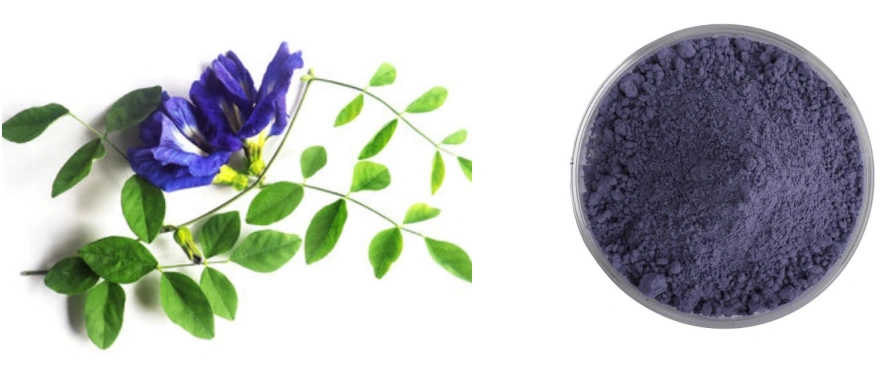
What Butterfly Pea Flower Powder Is and Why Beverage Brands Use It
Botanical Identity and Powder Formats
Butterfly pea comes from Clitoria ternatea, a legume native to tropical Asia. Southeast Asian kitchens have long used its blue petals to color foods and drinks. Our butterfly pea powder is 100% pure ground dried butterfly pea flowers. Format matters. Whole flowers and tea-cut material suit infusion. Concentrated extracts deliver stronger color. Powder offers direct botanical solids that blend easily into dry mixes. Most of the blue comes from ternatins, a group of acylated delphinidin-based anthocyanins described in Frontiers in Plant Science (2021). Color strength varies with cultivar, growing conditions, harvest timing, drying, and milling, so compare lots before you commit.
Clean-Label Appeal for Beverage Formulas
Shoppers read labels, and many US brands want plant-derived color in place of synthetic blue dyes. Butterfly pea powder lets a developer color a drink with a recognizable botanical. It works in botanical teas, lemonades, cocktail and mocktail mixers, smoothies, plant-based milks, wellness drinks, and instant mixes. Regulation deserves attention. The FDA listed butterfly pea flower extract as a color additive exempt from certification in 2021 and expanded permitted uses in 2025. That listing names the extract, so ask your regulatory team how the powder is classified for your product category and label.
Flavor and Positioning
Because it tastes mild, earthy, and a little vegetal, Butterfly Pea Flower Powder is a great ingredient that doesn't usually take away from the main flavor of a food or drink. Lemon, berries, tropical fruits, cocoa, and tea all go well with Butterfly Pea Flower Powder. If a company wants to make bright drinks, functional drinks, or specialty foods, this gives them more choices. Instead of health claims that aren't backed up by evidence, people who want to buy Butterfly Pea Flower Powder should pay attention to marketing claims about the powder's natural color and where the ingredients come from. In the lab, butterfly pea petals have been shown to be antioxidants. In 2020, one of these studies was published in Food Research International. But these results don't back up claims that a finished drink with Butterfly Pea Flower Powder is healthy. Eco-friendly claims need strong evidence to back them up, like farming records, information on how to keep track of raw materials, and information on how to package things. Yanxi Herbs grows its own materials and then makes things from them. This helps the company keep track of its Butterfly Pea Flower Powder supply and make it better. It also lets food and drink companies buy in bulk.
How Butterfly Pea Flower Powder Works as a Natural Beverage Color
pH Response: From Blue to Purple to Pink
The pigments act like a natural pH indicator. In near-neutral water or tea, the drink looks blue. Add lemon juice, citric acid, malic acid, or fruit concentrate, and the shade moves toward violet, then purple, then pink as acidity rises. Neutralizing the liquid can move it back toward blue. The final shade depends on pH, dosage, buffering capacity, and the whole formula, so two lemonades with similar tartness can look different. Record pH beside every color result. Measure color with a colorimeter instead of judging by eye.
Heat, Light, Oxygen, and Dispersion
Anthocyanins fade with heat, light, oxygen, and time. Butterfly pea pigments are no exception, although acylation makes them more stable than many other anthocyanins. Powder also brings plant fiber, which can cause haze, sediment, or a vegetal note when particle size and mixing are poorly controlled. Our powder is extra fine sifted, and 100% passes an 80 mesh sieve, which has openings of about 177 microns. Grades up to 200 mesh, about 74 microns, are also available. Hydrate the powder in warm water first, then filter if you need a clear drink. Always test under real processing and storage conditions.
Beverage Applications and Pilot Testing
Powder fits many formats. Hot or cold blue tea is the simplest. Citrus-driven color-changing drinks and sparkling lemonades show the pH shift right at the table. Berry and tropical beverages, smoothies, plant-based milk drinks, and cocktail premixes also work, and single-serve powdered mixes suit foodservice. RTD drinks, concentrates, and dry mixes each need different tests for dissolution, sediment, dosage consistency, carbonation, and packaging. A simple pilot starts with three or four dosage levels, which usually sit in the fractions of one percent by weight. It records pH and color, checks flavor and sediment, and then runs accelerated and real-time stability studies.
Butterfly Pea Flower Powder Compared with Other Color and Tea Formats
Powder vs. Tea Bags
People are used to steeping tea bags, and you don't need any extra tools to do it. This makes them a convenient choice for traditional teas. The maker decides how strong the coffee is, so each cup may have a different color. If they use Butterfly Pea Flower Powder, they can control the amount by weight, mix it into dry mixes, and make sure that the color stays the same from batch to batch. Tea bags are still a good choice for businesses that want to make their own tea products. But Butterfly Pea Flower Powder is best for ready-to-drink (RTD) drinks, premixes, and quick drinks that need to be dosed more precisely. Butterfly Pea Flower Powder can also be added to customized tea mixes. This lets companies make one-of-a-kind goods that still look good. They do this to reach more people and meet the needs of a wider range of customers. Many businesses use both tea bags and Butterfly Pea Flower Powder in a number of different product lines.
Powder vs. Spirulina and "Blue Matcha"
Spirulina blue comes from phycocyanin, a protein-based pigment. It usually gives a greener, cyan-leaning blue and tends to lose color with heat and in acidic drinks. Butterfly pea offers a bluer-to-violet range and a visible pH shift, which some brands want as a product feature. The term "blue matcha" needs care. It is generally a marketing name for butterfly pea or another blue botanical, not green tea matcha from Camellia sinensis. Check the botanical name on the specification sheet so your label wording matches the ingredient.
Powder vs. Liquid Extracts
Liquid extracts can deliver stronger color and better clarity, which helps in clear sparkling water or bottled tea. They also add water weight to shipments. Powder stores simply, ships compactly, and suits dry blends. The trade-off is insoluble plant material, which needs filtration when clarity matters. Choose by target color, flavor, dosage control, processing line, labeling, and cost per finished unit, not by ingredient price alone. Some teams qualify both formats and assign each to the products where it performs best.
Choosing, Qualifying, and Buying Butterfly Pea Flower Powder
Specification and Documents to Review
Start with botanical identity, then check the numbers. This is our current specification:
| Item | Specification |
|---|---|
| Botanical Source | Clitoria ternatea |
| Appearance | Blue fine powder |
| Active Ingredients | Anthocyanins |
| Mesh | 80-200 mesh; 100% pass through 80 mesh |
| Loss on Drying | ≤5% |
| Ash Content | ≤5% |
| Heavy Metals | ≤10 ppm |
| Total Plate Count | <1000 cfu/g |
| Yeast & Mold | <100 cfu/g |
| Shelf Life | 24 months, sealed and properly stored |
Also request a certificate of analysis for each lot, traceability records, and shelf-life data. This product carries ISO, HACCP, FDA Registration, Kosher, and Halal certificates. If you need extra tests, tell us early so approval does not delay your launch.
Common Pitfalls to Avoid
Four mistakes show up often. Some buyers assume natural color is automatically shelf-stable, but it needs stability testing. Others use cosmetic-grade material in a drink, so confirm food-grade documentation every time. A third mistake is picking by name alone, because cultivar, harvest, drying, and milling change color strength. The fourth is ignoring particle size, which drives haze, sediment, and flavor. Judge suppliers on total cost, including failed trials and reformulation, not only the per-kilogram figure. Measurable quality limits written into the specification prevent most of these problems.
Bulk Procurement and Supplier Selection
Match the pack to the project stage. Use 1 kg bags for trials, 5 kg boxes for pilot runs, and 25 kg drums for production. Our powder is in stock, free samples are available, and delivery takes place within 1-3 working days after payment. When you compare a direct manufacturer, a distributor, and a trading company, look at technical support, batch traceability, inventory depth, and flexibility. Yanxi Herbs, part of Yanxi Biotech, has operated since 2010 and exports to over 100 countries and regions. We also keep local warehousing in Europe and the US. We discuss customization such as specifications, packaging, and private-label needs. Ask any supplier about MOQ, lead time, complaint handling, and replacement policy.
From Laboratory Trial to Commercial Production
Define Targets and Run Bench Trials
If you want to get a taste of Butterfly Pea Flower Powder, you should think about what kind of drink you want to make, who you want to sell it to, what color you want, any legal requirements, and how much color, flavor, stability, and cost you are willing to pay. Then, test it on a bench by adding different amounts of Butterfly Pea Flower Powder and changing the pH, mixing order, hydration time, and filtration conditions. This will show how well it works. Before you mix Butterfly Pea Flower Powder with acids, sweeteners, and flavorings, make sure that the mix is right for your product. Write down the pH levels and color results for each test very carefully. These will help you do more when you need to. Before deciding to buy Butterfly Pea Flower Powder, Yanxi Herbs gives away free samples so that your R&D team can see how well it works for color, how well it dissolves, how well it works with flavors, and how well it fits into formulations.
Pilot Runs and Stability Studies
Pilot-scale runs should copy your plant: heating, shear, filling, cooling, carbonation if used, and final packaging. Then track color, flavor, microbial quality, sedimentation, and package integrity over time. Accelerated tests give early warning, while real-time tests confirm shelf life. Light-blocking packaging and low oxygen headspace often help anthocyanins hold their color, so compare packaging options during this stage. Record any shade drift. It tells you whether the dosage needs a safety margin.
Batch Release and Supplier Monitoring
Before launch, approve a written raw-material specification, a batch-release process, a retained-sample program, and a supplier-monitoring plan. Compare each incoming lot's certificate of analysis with the approved specification, and keep a sample for color checks. Quality managers can then trace a color complaint to a specific lot. Yanxi Herbs works under ISO 22000, HACCP, Kosher, and Halal standards, so we can provide the documents your quality team needs for audits and import clearance.
Conclusion
Butterfly Pea Flower Powder gives beverage manufacturers a plant-based blue colorant whose anthocyanins move from blue to violet and pink as pH drops. This suits teas, lemonades, mocktails, smoothies, RTD drinks, and dry mixes. Performance depends on pH, dosage, heat, light, oxygen, and particle size, so bench and pilot testing with stability studies remain necessary. Compared with tea bags, spirulina, and liquid extracts, the powder offers dosage control and simple storage, while extracts may deliver stronger color or clarity. Buyers should verify botanical identity, specifications, certificates of analysis, regulatory status, packaging, and delivery terms before approving a supplier. A written specification and a batch-release plan keep color consistent from the first trial through commercial production.
FAQ
How does pH change the color of Butterfly Pea Flower Powder?
It looks blue in near-neutral drinks and moves toward violet, purple, and pink as acidity rises. Adding lemon juice or citric acid shows the shift, and neutralizing the drink can move the shade back toward blue. Final color still depends on dosage and the full formula, so run a bench test first.
What are the shelf life and storage requirements?
Our powder has a 24-month shelf life when sealed and stored properly. Keep it dry, away from light and moisture, and close opened bags tightly to protect color and flow.
Which packaging and delivery options are available?
We pack 1 kg bags, 5 kg boxes, and 25 kg drums. The powder is in stock, free samples are available, and delivery takes place within 1-3 working days after payment.
Which certificates support this product?
The product is supported by ISO, HACCP, FDA Registration, Kosher, and Halal certificates. Ask for current copies and a certificate of analysis for your lot. Your regulatory team should confirm that the powder fits your product category and label.
Request Free Samples of Butterfly Pea Flower Powder from Yanxi Herbs
Looking for a Butterfly Pea Flower Powder manufacturer for your blue tea, lemonade, or powdered drink? Yanxi Herbs offers free samples, in-stock supply, and delivery within 1-3 working days after payment. Send your target color, pH range, annual volume, and destination to info@yanxiherbs.com, or visit yanxiherbs.com for details. Our team will reply with specifications, certificates of analysis, and packaging options.
References
1. Frontiers in Plant Science (2021): Anthocyanins from Clitoria ternatea flower: biosynthesis, extraction, stability, antioxidant activity, and applications.
2. Journal of Food Science and Technology (2021): Extraction methods of butterfly pea (Clitoria ternatea) flower and biological activities of its phytochemicals.
3. Phytochemistry (2003): Flavonoid composition related to petal color in different lines of Clitoria ternatea.
4. Food Research International (2020): Clitoria ternatea L. petal bioactive compounds display antioxidant, antihemolytic, and antihypertensive effects.
5. Federal Register (2021): Listing of Color Additives Exempt From Certification; Butterfly Pea Flower Extract.
6. FDA Constituent Update (2025): FDA approves new natural color additives, including expanded uses of butterfly pea flower extract.

Send Inquiry
Related Industry Knowledge
- What Manufacturing Applications Can Bulk Rose Powder Serve in Food and Personal Care Products?
- What Skin Care Products Can Manufacturers Formulate with 100 Pure Kojic Acid Powder?
- Bulk Rose Powder for Natural Flavor, Color, and Botanical Positioning in Private Label Products
- Can Bulk Rose Powder Add Botanical Appeal to Tea Blends and Natural Cosmetic Formulations?