
Butterfly Pea Flower Powder for Natural-Colored Frosting and Icing
Oct 17, 2026
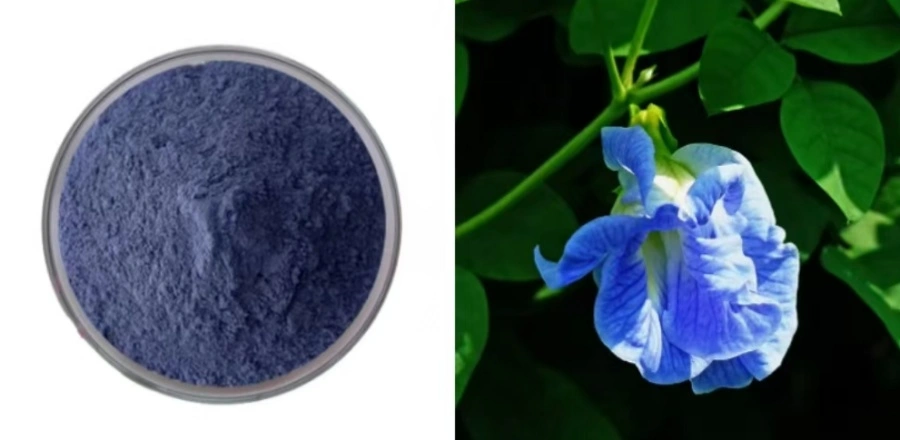
If you work in confectionery or food manufacturing, you already know how hard it is to find a natural blue colorant that actually performs under production conditions. Butterfly Pea Flower Powder—derived from dried Clitoria ternatea petals—delivers a clean, vivid blue pigment sourced entirely from botanical material. Its anthocyanin-based color shifts from blue to purple or pink depending on pH, giving formulators real creative range. This guide walks through everything a B2B buyer needs to know: performance, formulation, procurement, and supplier selection.
Understanding Butterfly Pea Flower Powder and Its Benefits for Frosting and Icing
Origin and Production Standards
To make Butterfly Pea Flower Powder, whole Clitoria ternatea flowers are dried out at low temperatures and then jet-milled into a fine blue powder at 80–200 mesh. Not only does this method not change the chemicals, but it also keeps the active pigment colors, especially ternatins. In the end, an ingredient is made that only comes from plants and doesn't have any man-made carriers added to it.
Nutritional and Functional Profile
Ternatin anthocyanins give the powder its color and make it a good antioxidant. A study in the journal Food Chemistry (2019) says that these chemicals protect neurons and lower inflammation. Functional food companies can use it as a clean-label ingredient more easily than dyes that are only used for looks because it looks nice and is good for you.
Why It Matters for Frostings and Icings
Colorants used in candy need to be stable while they are being mixed, poured, and heated for a short time in an oven. Because it doesn't break down at temperatures above 45°C, the anthocyanin color in this powder stays brighter when baked at up to 120°C. When you're making a lot of frosting, being able to handle heat really speeds things up.
How Butterfly Pea Flower Powder Transforms Natural-Colored Frosting and Icing
The Problem with Existing Alternatives
More and more people in the U.S. market and government are paying attention to synthetic dyes like FD&C Blue No. 1. You can use spirulina and blue carmine, but they don't stay stable at high temperatures and don't taste as good.
The pH Color Range Advantage
The fact that it changes with pH is one of the best things about C. ternatea extract. It won't change the taste or texture of buttercream, royal icing, or fondant, so you can use it in those things. When the pH level is between 6 and 7, the frosting is blue. To bring the pH below 5, add some lemon juice or citric acid. This will change the color to pink or violet. You can make a whole line of colors with this one item, which helps your buying team understand SKUs better.
Adoption in Commercial Bakery Operations
In the past three years, several confectionery OEMs in the U.S. and Europe have added this natural blue color to high-end cake lines and other baked goods. Standardized Brix and spectrophotometric tests have shown that each batch of the color is the same. Because of this, it can be used instead of manufactured materials for large-scale design projects.
Selecting the Right Butterfly Pea Flower Powder for Your Frosting and Icing Needs
Quality Grade and Specification Criteria
Particle size directly impacts how evenly the color spreads when used in frosting and icing. A normal 80-mesh sieve that lets everything through gets rid of grit that could make piped work less smooth. ≦5% ash should be used to make sure the color stays the same and doesn't fade while it dries. An ICP-MS test should show that the amount of heavy metals is less than 10 parts per million (ppm).
Powder vs. Dried Flowers vs. Liquid Extract
Dried whole flowers on a large scale are more work and don't always turn out the same. Liquid extracts are easy to dose, but they can mess up the way water works in frostings that are made with fat. As long as the powder is very fine (80–200 mesh), it can be mixed right into powdered sugar bases and fat-based systems without any extra steps. Because of this, it is the best form for businesses that bake.
Supplier Certification and Traceability Requirements
People who want to buy ingredients for the U.S. market need to have papers that fit their compliance strategy. At the very least, look for certificates that say the food is Kosher, Halal, or registered with the FDA or ISO 22000. You can find the botanical source and get details like the country where the plants came from and proof that says they are real for each lot. This helps with the paperwork and quality checks that are needed for shipping.
Practical Guide: How to Use Butterfly Pea Flower Powder for Natural-Colored Frosting and Icing
Preparing a Stable Concentrate for Frosting
Dissolve 2–5 grams of the powder in 30–50 ml of warm water (below 60°C) to create a concentrated liquid. Stir until fully dispersed, then allow to cool before adding to your frosting base. This pre-dissolution step prevents dry clumping in fat-rich systems like buttercream. For royal icing, the powder can be sifted directly with powdered sugar at 0.1–0.5% by total weight.
pH Adjustment for Color Targeting
Here are the practical pH reference points for color targeting in frosting applications:
- Blue (pH 6–7): No acid addition; use with plain buttercream or Swiss meringue base
- Violet/Purple (pH 4–5): Add 0.1–0.3% citric acid or a small amount of cream of tartar
- Pink/Lavender (pH 3–4): Increase acid addition; works well in lemon or berry-flavored frostings
These ranges give your R&D team a repeatable, data-backed method for color standardization across production batches. Once you lock in the acid level for each shade, results are consistent from run to run.
Storage and Handling at Production Scale
Store sealed drums in a cool, dry area away from direct UV light. Anthocyanin degradation accelerates with heat, moisture, and light exposure. Under proper sealed storage conditions, shelf life is 24 months. For large-volume lines, portion into working quantities and reseal remaining stock to limit oxidation. Avoid metal contact during mixing, as iron ions can alter anthocyanin color.
Purchasing Butterfly Pea Flower Powder: A B2B Buyer's Decision Guide
Evaluating Supplier Reliability for Bulk Orders
People who sell general ingredients don't have as much control over quality as people who sell plants directly to specialized markets. Make sure you know the minimum order size, wait time, and whether or not the seller keeps safety stock before you choose them as your Butterfly Pea Flower Powder supplier. When a supplier says they will deliver within one to three business days of getting paid, it means they are well-run and have good inventory management.
What Yanxi Herbs Offers B2B Clients
Company Yanxi Biotech has sold natural plant-based goods to businesses in more than 100 countries since 2010. More than 1,000 cfu/g of Butterfly Pea Flower Powder that we sell, along with less than 100 cfu/g of yeast and mold, and less than 10 ppm of heavy metals. We can package things in 1 kg bags, 5 kg boxes, and 25 kg drums for both R&D tests and full sales runs.
The business has ISO 22000, HACCP, FDA registration, Kosher, and Halal certifications, which are all things that most U.S. and European regulatory frameworks need records for. Samples are free for qualified buyers, and if standard grades don't meet their needs, they can ask for a custom design.
Conclusion
There are more and more people in the U.S. who are buying natural color frostings and icings. Butterfly Pea Flower Powder is a good answer that doesn't have any bad ingredients and can be used in real production settings. It doesn't change color when baked, the pH can be changed to any color, and all of this can be recorded for food safety purposes. Procurement and research teams that want to move from synthetic blue dyes to something more natural should really think about this plant-based ingredient. It won't change the structure of the batch or make it harder to work with.
FAQ
Is butterfly pea flower powder safe for food-grade use?
Yes. The FDA approved butterfly pea flower extract as a color additive for specified food applications. It is also Generally Recognized as Safe (GRAS) by major international regulatory bodies. Our product carries FDA registration, ISO 22000, and HACCP certification.
How does pH change the color in frosting?
The anthocyanins in Clitoria ternatea act as natural pH indicators. At neutral pH (6–7), the color is blue. Dropping to pH 4–5 with citric acid shifts it to purple. Further reduction toward pH 3 moves it to pink or lavender. This behavior is fully reversible.
What is the recommended usage rate for icing?
A dosage of 0.1%–0.5% by total weight is sufficient for most frosting and icing formulations. Higher concentrations increase color depth but may introduce a mild woody note, which flavoring agents at normal use levels can mask.
What is the shelf life and how should it be stored?
Shelf life is 24 months under sealed, cool, and dry storage conditions away from UV light. Open containers should be resealed after each use to prevent anthocyanin oxidation and moisture absorption.
Partner with Yanxi Herbs for Bulk Natural Blue Colorant Supply
Vitamin, food, and drink companies in the U.S. and around the world buy Butterfly Pea Flower Powder from Yanxi Herbs, which you can trust. You can choose from different pack sizes of certified-grade powder, and we'll send free samples to people who are interested. We also give you all the paperwork you need to export. Please visit yanxiherbs.com or email us at info@yanxiherbs.com to get a sample or a price quote for a large order right away.
References
1. Oguis, G. K., et al. "Butterfly Pea (Clitoria ternatea), a Cyclotide-Bearing Plant with Applications in Agriculture and Medicine." Frontiers in Plant Science, 2019.
2. Paengkoum, P., et al. "Anthocyanins from Butterfly Pea Flower: Composition, Stability, and Application." Food Chemistry, 2019.
3. Sandhu, A. K., et al. "Functional and Nutritional Properties of Natural Plant Pigments in Food Applications." Journal of Food Science, 2021.
4. Campos, F. M., et al. "Stability of Anthocyanins Extracted from Clitoria ternatea Under Different pH and Temperature Conditions." LWT – Food Science and Technology, 2020.
5. Siti Azima, A. M., et al. "Phenolics, Flavonoids, and Antioxidant Activities of Aqueous Extracts of Clitoria ternatea Flower." Asian Pacific Journal of Tropical Biomedicine, 2017.
6. U.S. Food and Drug Administration. "Color Additives Permitted for Use in Human Food: Butterfly Pea Flower Extract." FDA Food Additive Regulations, 2023.

Send Inquiry
Related Industry Knowledge
- What Manufacturing Applications Can Bulk Rose Powder Serve in Food and Personal Care Products?
- Bulk Rose Powder Supports Scalable Botanical Ingredient Sourcing for Beauty and Wellness Product Manufacturing
- Instant Green Tea Powder for Ready-to-Mix Beverages, Tea Blends, and Functional Drink Manufacturing
- What Results Can Hydrolyzed Keratin Powder Deliver in Advanced Hair Care Product Development?
_1787033972542.webp)