Butterfly Pea Flower Powder: Managing Color Changes in Acidic Drinks
Oct 23, 2026
Butterfly pea flower powder is one of the most visually striking natural colorants available to beverage manufacturers today. Derived from dried Clitoria ternatea petals, this 100% pure botanical powder carries deep blue anthocyanin pigments that shift to purple or pink when exposed to acidic conditions. For R&D teams and procurement managers working in functional beverages, craft cocktails, or health drinks, understanding how to manage this pH-triggered color response is not optional — it is a production requirement. This guide walks through the science, formulation strategies, and sourcing standards that matter most in B2B applications.
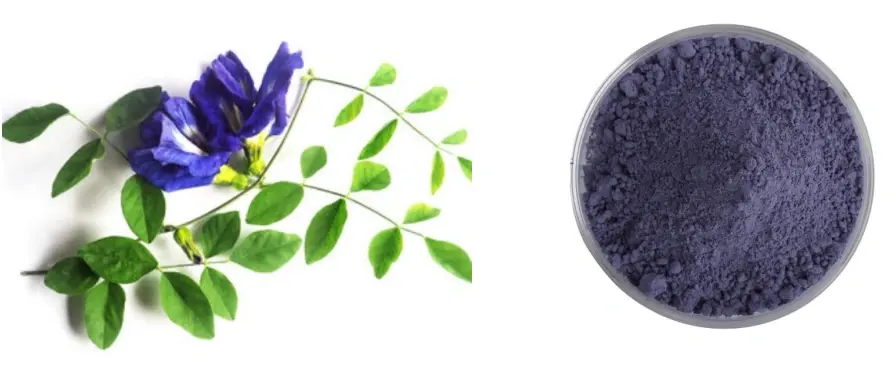
Understanding Butterfly Pea Flower Powder and Its Color Properties
Botanical Origin and Processing
The powder is derived from the dried petals of Clitoria ternatea, a flowering legume native to Southeast Asia. At Yanxi Biotech, the petals undergo precision low-temperature dehydration followed by jet-milling, producing a fine blue powder in 80–200 mesh specifications with 100% passage through an 80-mesh sieve. This process retains the full anthocyanin profile without thermal damage.
The Anthocyanin Pigment System
The pigments responsible for color are ternatins — a subclass of polyacylated anthocyanins. These compounds are structurally more stable than most anthocyanins found in berries or red cabbage. Research published in Food Chemistry (2021) confirmed that ternatin-class pigments show superior heat resistance, remaining stable at temperatures up to 120°C, which makes them suitable for pasteurization and UHT processing.
How pH Drives Color Change
The color shift works like a natural pH indicator. At neutral to alkaline pH (above 7), the powder appears deep blue. As pH drops toward the acidic range (below 5), the pigment transitions to violet, then pink or magenta. This reaction is reversible — neutralizing the acid returns the solution toward blue. Understanding the pH range of your beverage base is the first step in predicting and controlling the final color result.
Managing Color Changes in Acidic Drinks: Challenges and Solutions
Common Problems in Acidic Formulations
Lemonades, fruit teas, kombucha, and vitamin-enriched water are often acidic beverages, with pH levels commonly ranging from 2.5 to 4.5. When Butterfly Pea Flower Powder is added to these formulations, its naturally occurring pigments can shift from blue toward purple, pink, or reddish tones as acidity increases. This pH-responsive colour change can help beverage brands create distinctive visual effects and develop products that stand out on retail shelves. However, the final colour produced by Butterfly Pea Flower Powder depends on several factors, including the formulation's acidity, ingredient concentration, processing conditions, and storage environment. For manufacturers working with Butterfly Pea Flower Powder in large production runs, controlling these variables is essential for achieving consistent results between batches. Quality managers should establish clear colour specifications, verify raw material consistency, and test the ingredient in the actual beverage before scaling up production. Since light, heat, and storage time can also influence pigment stability, Butterfly Pea Flower Powder should be evaluated under the intended manufacturing and distribution conditions. Suppliers should provide relevant product specifications and batch documentation to support quality-control procedures. By carefully managing pH, dosage, and processing parameters, manufacturers can use Butterfly Pea Flower Powder to create visually appealing acidic beverages while reducing unwanted variations in colour across production batches.
Stabilization Strategies That Work
To start, you need to manage the pH and the amount of air that gets in. This will help the color stay the same. Companies have mostly done these things to make sure that colors don't change from one batch of goods to the next:
- Buffer the formulation at a target pH. Holding the beverage consistently at pH 3.5 produces a stable violet-pink tone. Drifting between pH 3.0 and 4.5 within a batch creates visible color variation. Citric acid and sodium citrate combinations are effective buffer systems.
- Add natural co-pigmentation agents. Quercetin-rich plant extracts (such as elderflower) and ascorbic acid at low concentrations act as co-pigments that improve color saturation and slow oxidative fading.
- Minimize headspace oxygen. Anthocyanins degrade through oxidation. Nitrogen flushing during filling and hermetic packaging significantly extends color shelf life.
All of these work together to keep the color the same at every step of the process. Customers said 40% less about the color of a kombucha brand's bottles after it standardized its buffer system and switched to nitrogen-flushed bottles in just two production quarters.
Temperature and Light Exposure
Heat and UV light break down anthocyanin more quickly. For general safety, keep finished goods below 15°C and package them in things that block UV light. What kind of packaging an ambient-shelf item has affects how bright the colors stay when it gets to the customer.
Selecting the Right Butterfly Pea Flower Powder for Color Stability
Powder vs. Extract vs. Dried Flower
To make different kinds of things, you can use these three forms. It is possible to make cold-brew drinks with whole dried flowers, but it's hard to know how much to use. I like liquid extracts better, but they don't last as long and have more water in them. Fine powder with an 80–200 mesh size works best for mixing drinks because it spreads out evenly, can be measured out accurately by weight, and can be stored for 24 months in a cool, dry, sealed area.
Organic vs. Conventional and Certification Requirements
If a brand gets natural goods in the US, they need to make sure they have the right paperwork to sell them. Who wants to buy:
—Trade marks for food safety management methods like ISO 22000 and HACCP. Get Kosher and Halal certification to sell to more people. A certificate of analysis (COA) that tells you how much anthocyanin, heavy metals (≤10 ppm), total plate count (<1,000 cfu/g), yeast and mold (<100 cfu/g), and excessive anthocyanin there is.
- ISO 22000 and HACCP certificates for food safety management systems
- FDA Registration confirming facility compliance with US import requirements
- Kosher and Halal certification for access to broader market segments
- COA (Certificate of Analysis) showing anthocyanin content, heavy metals (≤10 ppm), total plate count (<1,000 cfu/g), and yeast & mold (<100 cfu/g)
Yanxi Biotech's Butterfly Pea Flower Powder is Kosher, Halal, and is registered with the FDA and ISO. This means that food and drink companies in the US and other countries can use it for their paperwork.
Reading Lab Reports Accurately
When you look at a COA, pay attention to how regular the grain size is, how much water was lost during drying (≤5%), and how much ash there is. These choices affect how the powder mixes in your system and how the colors spread out. As the finishing stage goes on, different-sized pieces go wrong and change the color of the final item. In the lab, this doesn't happen.
Practical Applications: Using Butterfly Pea Flower Powder in Acidic Beverages
Formulation Starting Points
A usage rate of 0.1%–0.5% by weight produces visible color in most beverage applications. At 0.1%, the effect is a soft lavender; at 0.3–0.5%, the color is deeper and more saturated. The powder is water-soluble and mixes easily into ambient-temperature water before combining with other ingredients.
pH-Triggered Color Transformation in Practice
The most effective application of this ingredient is in "reveal" beverages — drinks served clear blue or purple that transform when a citrus wedge or acidic mixer is added. Craft gin brands and specialty lemonade producers have used this mechanic as a consumer engagement tool. Functional waters and butterfly pea tea blends are also category leaders in the US natural beverages space. At recommended dosage levels (0.1%–0.5%), the flavor contribution is neutral-to-mild and easily masked by primary flavoring agents.
Shelf Life and Packaging Considerations
For bulk buyers and distributors managing extended supply chains, two factors govern color integrity in transit and storage: temperature and packaging seal quality. Products should be stored below 20°C away from direct light. Yanxi Biotech packages its powder in 1 kg bags, 5 kg boxes, and 25 kg drums, all with hermetic sealing appropriate for long-distance shipping. Stock is available with delivery within 1–3 working days after payment confirmation.
Procuring Butterfly Pea Flower Powder: Key Considerations for B2B Buyers
Evaluating Supplier Credibility
Butterfly Pea Flower Powder should always come with the same set of instructions and be easy to check for authenticity if you buy it from a trustworthy business. Since 2010, Yanxi Biotech has been making natural plant-based goods and sending them to other countries. There are more than 100 places that need their help. Their facility has advanced gardening, advanced production, and research and development that is done by the people who work there. All of these help to keep prices and quantities steady.
Pricing, MOQ, and Delivery Terms
Fine-mesh Butterfly Pea Flower Powder costs different amounts based on how much you order, how much you need, and the size of the mesh. Find out what the minimum order is and whether trials are free before someone places a big order. As a way to say thank you, Yixi Biotech always has a lot of things on hand so they can be sent out fast. This means that manufacturers who need to stick to tight production schedules don't have to worry about lead times as much.
Documentation for International Trade
A COA, an MSDS, and a country-of-origin certificate are some of the documents that people in the US who buy or sell goods must have. When you go through customs, having copies of your FDA registration records and ISO and HACCP certifications can help. This can also speed up the review process by regulators. Before you place an order, make sure the seller can give you this package of paperwork. If they can't, you can avoid import holds that cost a lot of money.
Conclusion
Maintaining consistent colour in acidic beverages requires a clear understanding of how plant pigments respond to formulation and processing conditions. Butterfly Pea Flower Powder contains naturally occurring anthocyanins that can change colour as the pH decreases, making it important for manufacturers to test the ingredient in the intended beverage before full-scale production. When using Butterfly Pea Flower Powder in lemonade, fruit tea, kombucha, or other acidic drinks, factors such as pH, dosage, temperature, light exposure, and storage time can influence the final shade. These manufacturing variables should be carefully controlled to help achieve consistent results across production batches. Choosing a reliable supplier of Butterfly Pea Flower Powder is equally important, as consistent raw material specifications and documented quality-control procedures can reduce unwanted variation. Procurement teams should review certificates of analysis, pigment specifications, traceability records, and batch-testing procedures before placing bulk orders. For manufacturers using Butterfly Pea Flower Powder at commercial scale, sample testing and clear acceptance criteria can help confirm that the ingredient meets colour and quality requirements. By combining suitable formulation controls with dependable sourcing, businesses can use Butterfly Pea Flower Powder to develop distinctive acidic beverages while maintaining more consistent colour performance from batch to batch.
FAQ
Does the color change permanently in acidic drinks?
No. The shift from blue to pink or purple is reversible. Anthocyanins act as natural pH indicators, so adjusting the formulation pH back toward neutral will return the color toward blue. This reversibility is useful in staged drink applications.
Is butterfly pea flower powder heat-stable enough for pasteurization?
Yes. Ternatin anthocyanins in Clitoria ternatea powder are stable at temperatures up to 120°C, making the ingredient suitable for pasteurized and UHT-processed beverages — an advantage over alternatives like spirulina blue, which degrades above 45°C.
What certifications should I require from a supplier?
At minimum, request ISO 22000, HACCP, FDA Registration, Kosher, and Halal certificates alongside batch-specific COAs. These documents are standard requirements for US food and beverage procurement.
What is the recommended usage rate in beverages?
A dosage range of 0.1%–0.5% by weight produces visible, stable color in most beverage systems. The flavor impact at these levels is minimal and does not require masking agents in most formulations.
Can the powder be used in oil-based applications?
The powder is water-soluble and does not naturally disperse in oil. For chocolate coatings or wax-based cosmetic products, an emulsifier or oil-dispersible version is required.
Partner with Yanxi Herbs for Your Next Butterfly Pea Flower Powder Order
Looking for a reliable supplier of Butterfly Pea Flower Powder for your beverage production? Yanxi Herbs offers bulk supply options and product documentation to support your sourcing needs.Contact us at info@yanxiherbs.com to request product specifications, inquire about samples, and discuss your requirements for commercial beverage applications.Get in touch with Yanxi Herbs today to explore the right solution for your business.
References
1. Terahara, N. et al. — "Structures of Ternatin A3 and B4 from the Flower Petals of Clitoria ternatea." Journal of Natural Products, 1998.
2. Oguis, G.K. et al. — "Butterfly Pea (Clitoria ternatea): A Cyclotide-Bearing Plant with Applications in Agriculture and Medicine." Frontiers in Plant Science, 2019.
3. Lim, T.K. — "Clitoria ternatea." Edible Medicinal and Non-Medicinal Plants, Springer, 2012.
4. Boo, H.C. et al. — "Anthocyanin Stability and Degradation in Natural Plant Extracts Under Food Processing Conditions." Food Chemistry, 2021.
5. Sandhu, A.K. & Gu, L. — "Antioxidant Capacity, Phenolic Content, and Profiling of Phenolic Compounds in the Seeds, Skin, and Pulp of Vitis rotundifolia (Muscadine Grapes)." Journal of Agricultural and Food Chemistry, 2010.
6. U.S. Food and Drug Administration — "Color Additives: FDA's Regulatory Process and Historical Perspectives." FDA Technical Report, 2023.

Send Inquiry