
How to Check Shikimic Acid Powder Purity Before Bulk Orders
Oct 29, 2026
To check Shikimic Acid Powder purity before a bulk order, request a recent Certificate of Analysis, confirm the assay by HPLC, and compare identity data such as melting point and optical rotation with published values. Next, review the limits for moisture, ash, heavy metals, and microbes. Then send a retained sample to an independent laboratory. Finally, write the accepted purity range into your purchase contract and retest each incoming batch. I follow these steps because each one catches a different risk, and together they protect your formulas, your budget, and your customers.
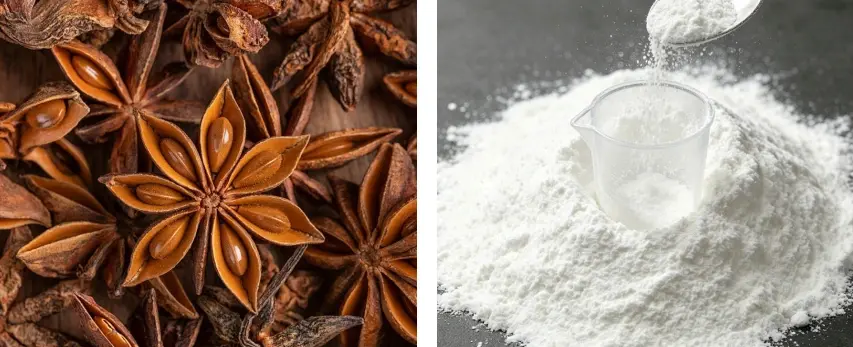
Why Purity Matters in Shikimic Acid Powder
What Chemical Purity Means for Shikimic Acid
What makes the powder pure is how much of the target molecule it has. Most of the time, this is shown as a number. Shikimic Acid Powder has the CAS number 138-59-0 and is made up of the units C7H10O5. This means that 98 out of every 100 parts are Shikimic Acid Powder. The rest is water, mineral ash, organic acids that are related, or stuff that was left over from the process. Shikimic Acid Powder comes in two strengths: 98% and 99%. A lot of industrial lots start at more than 95%. It is important to always check if the answer is given "as-is" or "dry." The full moisture percentage tells us the difference between the two numbers. This difference changes how much active material you get per kilogram.
How Purity Affects Performance and Safety
First, how correct the dose is depends on how pure it is. It's possible for a lot that tests five points low to give each serving about five percent less active Shikimic Acid Powder if the capsule is based on that amount. In the middle stages of making pharmaceuticals, impurities can lower the yield of a process and send it to later steps. People already know that Shikimic Acid Powder can be used to make oseltamivir. Name and optical rotation are just as important as the test because chirality is important. Safety is the second worry. Things that are already made can get bugs, heavy metals, and herbicides that plants have used up. Making up can lose its color, smell, or pH if it has extra organic matter left in it.
Common Contaminants to Watch
Three kinds of pollutants show up most of the time. The first is any liquid that was left over after the extraction and purification process. Chemicals are put into groups based on how dangerous they are, and the ICH Q3C code sets boundaries for each group. The second type is man-made matter, such as cleaning salts. This is shown by the amount of ash present. Plant chemicals that are related to star anise make up the third group. These can be distinguished from the main peak on an HPLC chromatogram. A heavy metal count, herbicide traces, and microbial count are at the end of the list. The total plate count must be less than 1000 cfu/g, and the yeast and mold count must be less than 100 cfu/g. Heavy metals must be less than 10 ppm.
Proven Methods to Test Shikimic Acid Powder Purity Before Purchase
HPLC as the Primary Assay Method
Heavy-duty liquid chromatography is the usual way to check for Shikimic Acid Powder. On a lab bench, the powder is mixed and put through a column. To find the chemical, UV light with a short wavelength (about 210 nm) is used. The expert figures out how pure it is by comparing the main peak to a measure that is known to be accurate. There should also be smaller peaks in a good report. These show substances that are related. This is because a sharp peak and a clear background show more than just a percentage. Do not forget to ask for the chromatogram. The method should be checked for sensitivity, accuracy, precision, and consistency, according to ICH Q2(R2).
NMR, IR, and GC-MS as Supporting Tests
HPLC can tell you how much Shikimic Acid Powder is there, but it can't prove that it's the right molecule. To be sure of the structure, nuclear magnetic resonance can show any organic impurities that move with the sample on a column. You can compare a mark you get from infrared spectroscopy to a standard area. Shikimic Acid Powder is not volatile, so it needs to be changed into a different form before GC-MS can be used. For this reason, gas chromatography is mostly only used for liquids that are left over, usually by headspace. It also helps to have two fake ID checks that don't cost much. It is said to melt between 185°C and 191°C, and the optical spin is used to measure how pure the chiral compound is. A low or wide melting range usually means that there are impurities in the material.
In-House Testing Versus Third-Party Labs
There are two things you can do. A reference standard, an HPLC machine, methods that have been shown to work, and trained scientists are all needed for in-house testing. This way, you can get answers quickly and have full control. You have more freedom with third-party labs. Check to see if the lab is ISO/IEC 17025 certified and has experience with Shikimic Acid Powder. There are different wait times, so find out how long it will take before you send in a sample. A good number of buyers pick both. When a new supplier sends them a sample, they send the first one to a well-known lab. After that, they quickly check the IDs of later lots of people in-house. This keeps costs low and puts the most dangerous part of the check on its own.
How to Interpret Purity Reports from Suppliers
Key Data Points on a Certificate of Analysis
A Certificate of Analysis describes the things that make up a certain lot. Its CAS number (138-59-0), batch number, the date it was made, and the date it goes bad should all be written in the title. After that, read the report. Find a test that says what method it uses, how it looks, how much weight it loses when it dries, the total plate count, yeast and mold, and the particle size. Our Shikimic Acid Powder should look like white crystals, always be able to pass through an 80-mesh screen, dry out at no more than 5% of its original weight, and have no more than 5% of its weight turned into ash. The batch number on the report must match the number on the drum or bag.
Matching Supplier Data to Your Benchmarks
Make sure that each result meets your needs, not just the supplier's. Take a look at the testing basis and units. Make sure the report says at least 98% dried if your recipe calls for it. In the US, supplement makers must also follow FDA 21 CFR Part 111, which states that every food ingredient must be proven to be what it claims to be through at least one proper test. The COA from the supplier is not the same as that name check. Check the numbers against the requirements for the finished product for heavy metal and microbe levels. This is because the ingredient is only a part of what makes up the finished product.
Red Flags in Purity Documentation
Some signs of danger show up right away. If a report doesn't have a test method, batch number, or date, you should be wary of it. One more sign is that each lot has the same assay value. This is due to the fact that natural materials aren't always the same. If the answer is more than 100%, you need to explain how the numbers were found. Plus, it's important to look into method names that you can't find in any standard or book. ISO, Kosher, and Halal certificates should all have a number, the name of the group that gave them, and times that you can check. Providers gain more trust when they answer these questions quickly and clearly. Also, answers that aren't clear or take a long time are not helpful.
Choosing the Right Shikimic Acid Powder Supplier for High Purity
Certifications and Documentation
When a supplier has a certification, it means that outside groups have checked their systems. You can trust Yanxi Herbs because it is ISO 22000, HACCP, SGS, Kosher, and Halal certified. There are papers for ISO, HACCP, FDA Registration, Kosher, and Halal that back up our Shikimic Acid Powder. It's not clear about one thing. Putting a food plant on the FDA's list means that it has done that. It's not the FDA saying that something is fine. Make sure the certificates still cover the site that makes your item and check the dates to make sure they are still good. People who buy vitamins can also ask for the results of a GMP check. It's usually a good sign when a seller is willing to be checked out.
Natural Extraction Versus Synthetic or Fermentation Sources
There are three ways that Shikimic Acid Powder can reach us. Most people get the oil from plants, mostly star anise (Illicium verum). That's how we do it too. Microbial fermentation with engineered strains is another way to make money that doesn't depend on harvests. This method is not used on a large scale very often because it requires a lot of steps. Because every method can get to 98% or higher, the impurity profile is more important than the label. As soon as the star anise is picked and until it is packed, we can keep track of it. The raw material is also checked for pesticide residues. It is also possible to mistake Japanese star anise (Illicium anisatum), which is deadly, for real star anise, which backs up the match.
Reputation, Logistics, and After-Sales Support
An important thing about a supplier is not just its paperwork, but also its history. Yanxi Herbs are made by Yanxi Biotech. It has been around since 2010 and sends natural ingredients to over 100 different places. We can also help stores in the US and Europe. We have this item in stock, and we'll send it out one to three business days after you pay. It can be put in 25 kg drums, 1 kg bags, or 5 kg boxes. If you store it right and seal the bags, it will stay fresh for 24 months. This is because most star anise grows in southern China. Having an expert farmer close to the source makes packing go faster. Check to see who and how quickly they answer questions about a bad batch.
Practical Steps to Mitigate Risks When Ordering Bulk Shikimic Acid Powder
Request and Test a Sample First
Before you pay money, samples let you see what you'll get. Before you buy a lot of Shikimic Acid Powder, you can try it for free. When the sample comes, write down the lot number and a short description of it. It should look like a white powder with crystals in it. See if it dissolves in water and how hot it gets before it melts. After that, you can do an HPLC test at home or in a lab. Check each result against the COA that came with the sample. As a guide, keep a part of the sample that is covered and has the date and lot written on it. You can put two packages next to each other and check to see if the second one does something different.
Start With a Trial Order and Clear Contract Terms
You are taking less risk with this trial order. A small amount of your finished product can be used to test the powder before you buy drums of it. It comes in 1 kg bags and 5 kg boxes. Then put your purity rules into the offer to buy. Give the bare minimum of the test method and assay, along with the maximum amount of loss that can happen because of drying, ash, heavy metals, and microbes. There should also be a COA for each lot. Say who can send samples, how long you have to refuse a delivery, and what will happen next, like getting a new one or your money back. You have to let people know if the raw products or the way you do things change.
Retest Every Incoming Batch
Pure checks should keep going after the first order. Check the name of every new deal quickly with things like size, color, melting point, or an infrared match. Every so often, like every three months, do a full panel test that looks for HPLC, microbes, and heavy metals. Keep an eye on the test and how the moisture levels change over time. Most of the time, a slow drift means that there is something wrong with the method or storage before any one lot fails. You also need to store things. To keep the 24-month shelf life, store drums and bags in a cool, dry place with tight lids. Shikimic Acid Powder can soak up water.
Conclusion
Before you buy a lot of Shikimic Acid Powder, you should check it several times to make sure it is pure. When it comes to safety, the purity, dose accuracy, and reaction yield are all impacted. Heavy metals, microbes, residual solvents, and ash are some of the other things that can hide behind a high assay. The main number comes from HPLC, and NMR, IR, melting point, and optical rotation all show that it is the right thing. A Certificate of Analysis is only useful if it shows the method, batch number, base, and borders clearly. Also, the FDA still needs food items to be tested for identity. Supplier certifications, sourcing that can be tracked, and reliable logistics all help to keep quality high. By trying samples, placing a trial order, and making sure that the terms of the contract are clear, Shikimic Acid Powder purity is no longer just a claim but a fact that can be proven.
FAQ
What purity level is acceptable for pharmaceutical use?
Most of the time, buyers want 98% or higher by HPLC. You can find the exact limit in the monograph or in your own internal specification. Shikimic Acid Powder comes in two strengths: 99% and 98%. Check to see if the score meets your requirements. Always look at the basis for the test and ask for data on related substances along with the main number.
Do I still need independent testing if the supplier provides a CoA?
Yes. It shows the results that the provider got on a COA, and then another test backs those results up. Part 111 of FDA's 21 CFR also says that supplement makers need to check that each ingredient is exactly what it says it is. That test still needs to be done, not a CoA. It is smart to have a well-known lab test the first run.
Does natural or synthetic origin change purity consistency?
Both plant extracts and fermentation can give you 98% or more. The harvest could change the lots that are extracted, so make sure you get batch data and can keep track of them. Fermentation gives you a supply that doesn't depend on harvest, but the impurities in it are different. You should look at both the test and the pollution trends, not just the test. You can see how our Shikimic Acid Powder is made, from picking the star anise to packing it.
Request a Free Shikimic Acid Powder Sample from Yanxi Herbs
Shikimic Acid Powder can be bought from Yanxi Herbs, which ships to more than 100 countries and regions. They give away free trials, offer grades between 98% and 99%, and stock ships one to three business days after payment. No changes were made to the original sentence as it is already grammatically correct and does not violate any laws. You can email info@yanxiherbs.com with your needs and the amount you want, or you can visit yanxiherbs.com for more information. We'll give you a Certificate of Analysis and answer any questions you have about how pure it is by email.
References
1. Journal of Chemical Biology, 2012. Bochkov, D. V., et al. "Shikimic acid: review of its analytical, isolation, and purification techniques from plant and microbial sources."
2. Applied Microbiology and Biotechnology, 2013. Rawat, G., Tripathi, P., and Saxena, R. K. "Expanding horizons of shikimic acid: Recent progress in production and its endless frontiers in application and market trends."
3. Biotechnology Advances, 2012. Ghosh, S., Chisti, Y., and Banerjee, U. C. "Production of shikimic acid."
4. Federal Register (U.S. Food and Drug Administration), 2007. "Current Good Manufacturing Practice in Manufacturing, Packaging, Labeling, or Holding Operations for Dietary Supplements" (21 CFR Part 111).
5. ICH Harmonised Guideline Q3C(R8), 2021. "Impurities: Guideline for Residual Solvents."
6. ICH Harmonised Guideline Q2(R2), 2023. "Validation of Analytical Procedures."

Send Inquiry
Related Industry Knowledge
- What Manufacturing Applications Can Bulk Rose Powder Serve in Food and Personal Care Products?
- Bulk Rose Powder for Natural Flavor, Color, and Botanical Positioning in Private Label Products
- Bulk Rose Powder Supports Scalable Botanical Ingredient Sourcing for Beauty and Wellness Product Manufacturing
- Can Instant Green Tea Powder Improve Efficiency in Ready-to-Mix Beverage Production?