How to Source Astaxanthin Powder Bulk for Dietary Supplement Manufacturing?
Nov 22, 2026
How to Source Astaxanthin Powder Bulk for Manufacturing Dietary Supplements: Begin with a documented specification describing source, potency, format, and target market. Then, evaluate providers on the basis of their production controls, certifications, and batch-specific certificates of analysis. Order samples and test in your own recipe before negotiating volume. Then compare quotes by active astaxanthin concentration and total landed cost, not just by price per kilogram. Yanxi Herbs provides Haematococcus pluvialis powder with astaxanthin contents from 1% to 10%. In this tutorial, we lead you through the actions we propose for U.S. customers, each of which preserves batch consistency and maintains your launch on time.
Why Bulk Astaxanthin Powder Sourcing Requires More Than a Price Check
Several Decisions Are Linked
Source, concentration, carrier system, dispersibility, stability, packaging, and supplier capacity are all interlinked. A greater potency may modify the mixing behavior. The powder’s dispersion in water can be changed by a different carrier. A low-priced ingredient might end up costing you more later on if strength fluctuates from lot to lot, documentation is lacking, or the powder clumps on your line. "Buyers should look at Astaxanthin Powder Bulk as a production input, not a commodity, to keep formulas on spec from pilot batch to full run," he says.
Define Your Requirements Before Contacting Suppliers
Before you ask for samples, prepare an internal specification for the substance. Finished-product format, target market, intended potency, natural/synthetic, carrier system, needed certifications, projected yearly volume, and destination country. This document enables a provider to propose a proper grade, instead of just offering a generic offer. R&D has a performance objective, buying has a foundation for quotations, and quality understands which papers to ask for. I would propose sending the draft out to all three teams before the initial email gets out, since a change in criteria after sampling generally means you start again on the review.
Match Potency to Your Finished Format
Potency influences dose and mixing. A recipe may aim for 4 mg of astaxanthin per serving. To do that, a 2% powder requires 200 mg of ingredient, whereas a 10% powder requires 40 mg. Lower potency might help in weighing and mixing in capsules, tablets, and premixes. Greater potency means greater space for additional actives in a compact capsule. Daily dosages of 4 mg to 12 mg have been utilized in clinical research, so start with your label dose. Then pick the proportion that matches your equipment and fill weight. Also compare powder and oil forms against your process.
Evaluate Astaxanthin Powder Quality and Technical Performance
Natural Haematococcus pluvialis Versus Synthetic Astaxanthin
Haematococcus pluvialis is a freshwater microalga and the primary natural source of astaxanthin. Most of its astaxanthin is the 3S,3'S stereoisomer, and is present mostly as fatty acid esters. Synthetic astaxanthin is a non-esterified combination of three stereoisomers. Published evaluations have shown that the algal and synthetic versions vary in structure and antioxidant activity. Commonly, U.S. supplement companies seeking clean-label positioning use natural algal material. Whichever way you choose, ask the provider to disclose the biological source on the specification sheet and certificate of analysis.
Confirm What the Potency Number Means
Without a way to test it, a percentage on a label means nothing. Is it the total astaxanthin number? Or is it free astaxanthin? Or is it a standardized assay? Ask for the analytical technique and acceptable range. HPLC and spectroscopic techniques might provide distinct numbers; therefore, settle on one procedure before you compare batches. Our Astaxanthin Powder Bulk is offered in 1% to 10% astaxanthin, so you may match the grade to your dosage goal. We also have particle size at 100% through an 80 mesh screen, loss on drying at 5% max, and ash at 5% max in our specification.
Check Stability, Dispersibility, and Carrier Materials
Astaxanthin is sensitive to light, oxygen, and heat; thus, packaging and storage are as important as potency. If packed and stored properly, our powder has a 24-month shelf life. Solubility is worth a deeper look. Standard powder does not dissolve in water. Water-dispersible powders employ carriers to provide a stable suspension in liquids. We have a water-dispersible alternative from 1.5% to 10%, isolated from Haematococcus pluvialis with no synthetic astaxanthin added, for drinks and large-batch functional meals. Ask any supplier for carrier composition, allergy status, and reconstitution data. The carrier also is what determines vegan designation.
Compare Astaxanthin Powder Bulk Suppliers and Verify Documentation
Identify the Type of Supplier
Ascertain if the firm is the original manufacturer, a contract manufacturer, an exporter, or a trade middleman. This impacts traceability, customisation, lead times and price. A direct manufacturer can typically address inquiries concerning cultivation, extraction, and batch records without going via a third party. Ask where the algae is farmed and what facility manufactures the powder. Who checks each batch? Request a brief facility profile and the names of certifications attached to that location. A red flag is if a provider cannot detail their stages in manufacturing.
Match Certifications to the Site and Product
Certificates only work if they’re being used on the right site and product. U.S. customers often want GMP, HACCP, ISO 22000, Halal, Kosher, Organic, and Non-GMO evidence. Our astaxanthin product information includes ISO, HACCP, FDA Registration, Kosher, and Halal. Yanxi Herbs also has SGS and ISO 22000 credentials. Verify issue dates, expiration dates, and the certifying bodies. Finished U.S. dietary supplements must be produced in compliance with current good manufacturing practice as per 21 CFR Part 111; therefore, your quality team will also verify incoming ingredient papers against that guideline.
Request Documents Before Ordering
Request a copy of the technical data sheet, specification sheet, safety data sheet, batch-specific certificate of analysis, stability information, and certification copies. If required by your label, include allergy and non-GMO statements. A suitable COA should include the assay, appearance, moisture, microbiological limits, heavy metals, and the batch number. Our requirement is that heavy metals be at 10 ppm or below, total plate count less than 1,000 cfu/g, and yeast and mold less than 100 cfu/g. Compare the actual batch results to specified limits and validate that the sample, COA, and commercial lot are in agreement. If the endeavor is riskier, send a retained sample to an outside lab.
Compare Pricing, MOQ, and Commercial Terms
Compare Cost per Gram of Active Astaxanthin
The price per kg might be deceptive. A 10% powder has 5x the active as a 2% powder; therefore, compare cost per gram of astaxanthin instead. Add testing, packing, freight, tariffs, and carrying fees to get total landed cost. Depending on origin, extraction process, carrier technology, certifications, personalization, and order volume, a quote might vary. Get all of your suppliers to quote the same potency, packaging, and Incoterm so the figures align. I don't put statistics here since charges vary according to volume and specification, and a formal estimate based on your project requirements would offer the best comparison.
Request MOQs, Packaging, and Lead Times
Ask for MOQs for samples, trial orders, standard orders, bespoke manufacturing, and reorder terms separately. Our Astaxanthin Powder Bulk is available in 1 kilogram bags, 5 kg boxes, and 25 kg drums. Perfect for trial runs and large-scale manufacturing. Free samples are available, and the product is in stock, with delivery within 1-3 working days after payment. Smaller packs enable R&D teams to try out different grades without committing to a drum. Bring up the modification demands early if your recipe requires a potency between regular grades.
Confirm Incoterms and U.S. Delivery Options
A quote should include potency, source, packaging, payment conditions, Incoterm, currency, testing expenses, and validity period. When shipping to the U.S., examine shipping choices including FOB, CIF, and DDP. Each of these terms allocates freight, insurance and customs charges differently. Yanxi Herbs also offers local warehouse support in Europe and the US, which may cut down lead time on repeat purchases. Request export-ready documents such as the commercial invoice, packing list, and certificate of origin to prevent delays with customs clearance.
Build a Sampling and Approval Process, and Avoid Common Pitfalls
Run Sample Trials in Your Formula
Use a sample of the same specification you are going to purchase. Record batch number, potency, carrier, look, odor, and packing condition upon delivery. Then try it in your real formula. Test for dispersion, flowability, mix homogeneity, color consistency, encapsulation or tableting behavior, and compatibility with other ingredients. The astaxanthin imparts a dark red tone, so be sure the hue is suitable for your end product. Do a quick stability check in the final formulation under your desired storage circumstances. Our free samples enable R&D teams to go through these experiments before you place a big purchase.
Set Acceptance Criteria and a Quality Agreement
Acceptance criteria will be established prior to the arrival of the first commercial lot. Typical characteristics include assay, moisture, microbiological limits, appearance, particle size, and package integrity. The supplier quality agreement should also describe the attitude of both parties toward deviations, out-of-specification batches, change control, remedial measures, and complaints. Why is change control important? Because if the carrier, extraction process, or manufacturing location changes, the performance may change – even if the label percentage does not. Request written notification prior to any such modification. The initial batch is inspected on arrival, and you have a recorded baseline for your quality management to compare to later.
Avoid Three Frequent Buying Mistakes
Most sourcing difficulties are created by three assumptions. First, natural is not always better. Check the biological source, mode of production, and active substance. Second, a 10% powder is not necessarily better than a 2% product, particularly if it does not mix well in your equipment. Third, manufacturing runs are disrupted by unsubstantiated water-solubility claims and inadequate COAs. Total cost of ownership includes delays, failed batches, reformulation, additional testing, and compliance risk, so choose vendors on that basis. A cheap batch that passes entering inspection might be more expensive in the end than a well-documented source.
Select the Right Solution and Follow a Procurement Workflow
Choose the Grade by Application
Match the grade with the product. Standard powder is typically fine for capsules, tablets, and premixes. A lower potency makes dosing easier, while a greater potency saves space in premium capsules. Powdered drinks, eye-care drinks, and water-based solutions need a water-dispersible powder with reconstitution and suspension data. Private label and OEM projects generally include demands for unique potency, carrier choice, packaging, and regulatory paperwork. Check that your supplier has export expertise and can provide the documentation needed for each country you are targeting for worldwide distribution.
What Yanxi Herbs Supplies
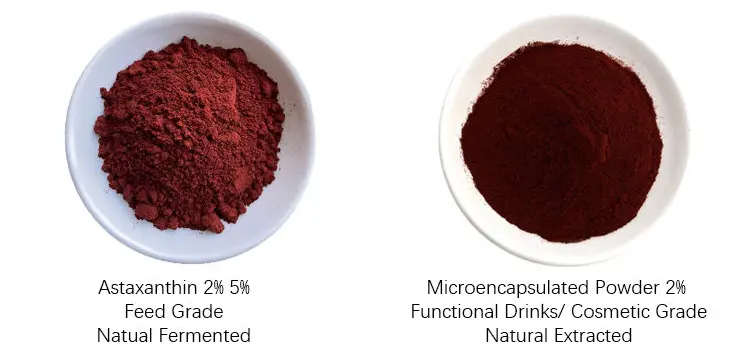
Yanxi Herbs was founded in 2010, and now sells natural ingredients to more than 100 countries and regions. Our Astaxanthin Powder Bulk is extracted from Haematococcus pluvialis. The plant component employed is a microalga. The powder is dark crimson to purple-red and contains 1% to 10% astaxanthin. It is supplied in 1-kilogram bags, 5 kg boxes, and 25 kg drums. Free samples are available, and stock is available for delivery within 1 to 3 working days following purchase. Certificates: ISO, HACCP, FDA Registration, Kosher, Halal. Shelf life: 24 months when sealed and stored properly.
A Five-Step Qualification Workflow
This is the process I advocate for B2B international projects. Step one: draft the internal spec. Step two: select suppliers by manufacturing competence, documentation, and export experience. Step three: test samples in your formulation. Step four: confirm pricing, MOQ, lead time, Incoterms, packaging, quality agreement, and change control. Step five: check the first commercial batch, introduce independent testing where applicable, and monitor batch consistency, delivery, paperwork correctness, and complaint response. This approach avoids the push of technical issues by commercial deadlines.
Conclusion
Sourcing Astaxanthin Powder Bulk for supplements works best when technical checks come before price talks. A written specification defines source, potency, format, and market. Natural Haematococcus pluvialis powder differs from synthetic astaxanthin in isomer profile and esterification, and a potency figure helps only when the assay method is clear. Stability, carrier choice, and dispersibility decide whether a powder performs in capsules, tablets, or beverages. Supplier type, site-specific certificates, and batch-specific COAs support traceability, while cost per active gram and total landed cost give fairer comparisons than price per kilogram. Sample trials, acceptance criteria, quality agreements, and incoming inspection protect batch consistency. Together, these steps reduce rework, rejected lots, and compliance risk.
FAQ
What is the difference between 2% and 10% astaxanthin powder?
A 10% powder holds five times the active content of a 2% powder per gram, so it needs a smaller inclusion rate. A 2% powder can be easier to weigh and blend. Choose by dose, fill weight, and equipment.
How should I store astaxanthin powder?
Keep it sealed and away from light, oxygen, and heat. Our powder has a 24-month shelf life under sealed and proper storage.
What packaging and samples are available?
Free samples are available. Commercial packs include 1 kg bags, 5 kg boxes, and 25 kg drums.
Can astaxanthin powder go into beverages?
Standard powder does not dissolve in water. Our water-dispersible option, offered from 1.5% to 10%, suits drinks, but we request suspension data for your formula.
Which documents should I request before buying?
Request the specification sheet, technical data sheet, safety data sheet, batch-specific COA, stability information, and certificate copies.
Request Astaxanthin Powder Bulk Samples and a Quote from Yanxi Herbs
Looking for an Astaxanthin Powder Bulk supplier that answers technical questions quickly? Yanxi Herbs offers free samples, in-stock material, and delivery within 1 to 3 working days after payment, with ISO, HACCP, FDA Registration, Kosher, and Halal documentation. Send your target potency, format, and annual volume to info@yanxiherbs.com, or visit yanxiherbs.com for product details. Our team will reply with specifications, COAs, and packaging options.
References
1. Marine Drugs (2014), Astaxanthin: Sources, Extraction, Stability, Biological Activities and Its Commercial Applications—A Review.
2. Nutrafoods (2013), Synthetic Astaxanthin Is Significantly Inferior to Algal-Based Astaxanthin as an Antioxidant and May Not Be Suitable as a Human Nutraceutical Supplement.
3. Critical Reviews in Food Science and Nutrition (2006), Astaxanthin: A Review of Its Chemistry and Applications.
4. Molecular Nutrition & Food Research (2011), Potential Health-Promoting Effects of Astaxanthin: A High-Value Carotenoid Mostly from Microalgae.
5. Phytotherapy Research (2019), Astaxanthin: How Much Is Too Much? A Safety Review.
6. U.S. Food and Drug Administration (2007), Current Good Manufacturing Practice in Manufacturing, Packaging, Labeling, or Holding Operations for Dietary Supplements, 21 CFR Part 111.

Send Inquiry
Related Industry Knowledge
- What Manufacturing Applications Can Bulk Rose Powder Serve in Food and Personal Care Products?
- What Products Can Manufacturers Develop with Purple Sweet Potato Powder?
- Can Bulk Rose Powder Add Botanical Appeal to Tea Blends and Natural Cosmetic Formulations?
- Can Instant Green Tea Powder Improve Efficiency in Ready-to-Mix Beverage Production?