
Wheat Grass Juice Powder Bulk for Smoothie and Juice Blends
Oct 10, 2026
If you source ingredients for functional beverages or green supplement formulas, wheat grass juice powder bulk is one ingredient worth serious attention. Unlike whole-leaf wheatgrass powders, this concentrated extract delivers higher nutrient density, full solubility, and consistent color — exactly what commercial smoothie and juice blend manufacturers need. Whether you are developing a new RTD greens drink or scaling an existing product line, understanding how this ingredient performs at the formulation level can shape better sourcing decisions.
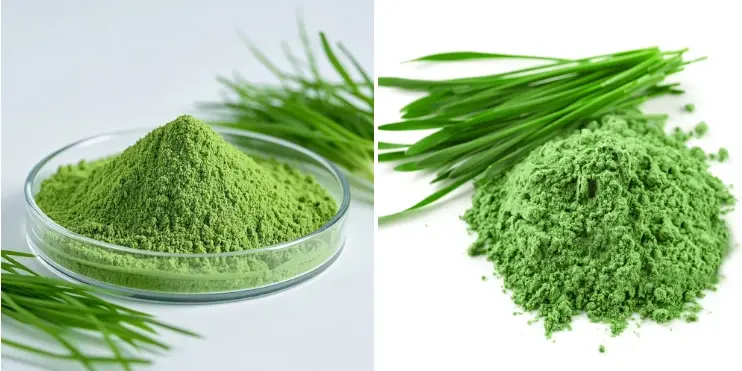
Understanding Wheat Grass Juice Powder Bulk
What Sets It Apart from Whole-Leaf Powder
Young shoots of the Triticum aestivum plant are cold-pressed while they are still green to get rid of the cellulose fiber that the plant doesn't need. This is how wheat grass juice powder is made. It is either spray-dried or freeze-dried after the juice is dried. This makes an extract that is very strong, usually between 20:1 and 30:1. It mixes well with water and doesn't feel rough like choices with whole leaves. The people who make drinks care a lot about how the drink feels in your mouth and how easy it is to dissolve.
Key Nutritional Components
Bioactive chemicals are often broken down in whole-leaf powders that are safe for food. This means that these chemicals stay whole during the concentration process. On every Certificate of Analysis (COA), you should find the following important things:
- Chlorophyll: HPLC-verified levels confirm authentic juice extraction and provide the signature deep emerald color. High chlorophyll content signals antioxidant activity and gives green blends their market-ready appearance.
- SOD (Superoxide Dismutase): Enzymatic assays measure SOD activity, a marker for raw processing integrity. This enzyme is heat-sensitive, so its presence confirms the powder was not over-processed.
- Vitamins and minerals: Young wheatgrass contains vitamin C, vitamin K, iron, and magnesium in forms that are more bioavailable after fiber removal compared to whole-leaf presentations.
Packaging and Shelf-Life Standards
There is a thing called "SOD" that stands for it. Enzyme tests look for SOD activity, which tells us how well the raw materials were handled. This enzyme is present, which means the powder wasn't over-processed since it doesn't like being hot.
The body can use vitamin C, vitamin K, iron, and magnesium better when the fiber is taken out of young wheatgrass than when the fiber is still in the grass.
Health and Functional Benefits for Smoothie and Juice Blends
Detoxification and Antioxidant Support
Research into chlorophyll-rich plant products suggests that they may support the liver’s natural detoxification processes, as chlorophyll can bind to certain compounds and potentially reduce their absorption. For green drink brands promoting wellness benefits on their labels, Wheat Grass Juice Powder Bulk offers a plant-based ingredient option that can support a science-informed product positioning for health-conscious consumers.
Energy and Immune System Support
This squished grapefruit juice has iron, calcium, and B vitamins that help cells use energy. A lot of research on green superfood blends has shown that people who eat them every day might feel less tired. Plus, everyone knows that antioxidants are good for your health. Because of this, it's a great main ingredient for RTD drink lines that focus on health.
Formulation Guidance and Safety Notes
Every serving of most store-bought juices and smoothies has between 1 and 3 grams of extra sugar. More than 5 grams of sugar can make some people sick or make it hard for them to handle food. This is something to think about when marking things. People who are allergic to gluten can eat wheatgrass that has been picked before the grain head forms. This is true because the amount of gluten is less than 20 parts per million, as shown by ELISA studies.--- Foods that are organic in the EU and the US.
Bulk Procurement Considerations for B2B Buyers
Organic vs. Non-Organic Certification
Many shops and supplement companies need to be recognized as organic before they can sell their goods in the US and Europe. It costs 20–35% more than regular wheatgrass drink powder most of the time. People who want to sell supplements to customers or in natural food stores should get them from organic sources. People who sell mixes under their own brands, on the other hand, may find that non-organic grades help them make more money.
Powder vs. Tablet Format
It's clear that shakes and drinks work better with powder. It mixes well with liquids and doesn't need any extra ingredients to hold it together. It also comes in different sizes and with different doses per unit. You can also choose how to package it. The cost goes up and the enzymes may not work as well because of all the extra work that goes into making pills, like granulating, compressing, and covering. When you want to buy things for green drink powder, juice powder is the best place to start.
Pricing, MOQ, and Logistics
You can order Wheat Grass Juice Powder Bulk in quantities ranging from 25 kg to 500 kg, depending on your requirements. Lead times are typically 15 to 30 days for most plants in China or India. However, US-based wholesalers may offer shorter lead times because they maintain local inventory. Before placing an order, buyers should confirm that the quoted price includes essential documents such as certificates of origin, MSDS, and COA, which are necessary for quality inspections and customs clearance.
How to Identify Trusted Wheatgrass Juice Powder Suppliers
Certifications to Require
Those who sell bulk wheatgrass juice powder should at least have an ISO 22000 or HACCP certification. This shows that they have plans in place to keep food safe. This ingredient can be bought by many because it is organic (USDA NOP or EU) and gluten-free (ELISA). It is also Kosher and Halal. Before you agree to work with a seller, make sure you get COAs for each batch from an ISO 17025-certified lab. General specs are not enough.
Supplier Audit and Due Diligence
Need to hire a new service provider? Ask for a factory audit report or use a video tour to check them out from afar. Make sure the provider can give you ICP-MS results for mercury, arsenic, lead, and arsenic so that the heavy metal screening results are in line with USP and California Prop 65. Find out what the LC-MS or GC-MS test results are for pesticide residues. People in your target market who have bought from brands in the past can give you more proof and make it less risky to join.
Private Label and Custom Formulation Capability
If you are an OEM or private-label buyer sourcing Wheat Grass Juice Powder Bulk, ask the seller if they can adjust the particle size, blend it with other green powders (like spirulina, barley grass, or moringa), or supply it in retail-ready packaging instead of large drums. This can speed up time to market and reduce the R&D work required afterward. Working with a supplier that provides technical documentation, application testing data, and regulatory support is more beneficial than choosing one that only sells raw materials.
Maximizing ROI: Integrating Green Juice Powder into Your Product Line
Aligning with Consumer Demand Trends
The world market for green superfoods should have grown at an annual rate of 8.9% by 2030 (Grand View Research, 2022). In 2022, it was worth about 1.1 billion USD. Every day, more and more people in the US buy plant-based foods that have clear labels and come from known brands. Adding real wheatgrass juice extract to a drink or juice meets that need right away.
Product Differentiation Through Labeling
You can make a juice stand out from the rest by putting labels on it that say where it came from, how it was processed, and that it is organic. In the market for natural goods, green mixes that don't say how good their ingredients are on the front of the package don't sell nearly as well.
Long-Term Supply Strategy
People who buy things in stores and the government want them to be easy to watch and come from sources that don't hurt the earth.
Conclusion
Wheat Grass Juice Powder Bulk is a practical ingredient option for manufacturers developing smoothies, juice blends, ready-to-drink beverages, and green superfood products. Compared with whole-leaf wheatgrass powder, juice powder offers better water dispersibility and a smoother texture, making it easier to incorporate into beverage formulations. Key quality indicators such as chlorophyll content, SOD activity, nutrient profile, and batch consistency can help manufacturers evaluate raw material suitability.
For B2B buyers, successful sourcing involves more than comparing prices. It is important to review batch-specific Certificates of Analysis (COAs), food safety certifications, heavy metal and pesticide testing, packaging specifications, minimum order quantities, and delivery schedules. Buyers seeking differentiated products can also explore organic grades, custom blending, and private-label packaging to match their target markets.
By selecting a qualified supplier and verifying product specifications before bulk purchasing, beverage brands can improve formulation consistency, manage sourcing risks, and build a more reliable supply chain for their smoothie and juice blend product lines.
FAQ
What is the standard MOQ for wheatgrass juice powder in bulk?
Most certified suppliers set MOQs between 25 kg and 100 kg for initial orders. Larger-scale production runs typically start at 500 kg. Some suppliers offer sample quantities of 100–500 grams for formulation trials before a commercial commitment.
How long does bulk wheatgrass juice powder stay shelf-stable?
Properly packaged in vacuum-sealed, oxygen-barrier drums or foil bags and stored below 25°C, the powder maintains potency and color stability for 24 to 36 months. Humidity control is critical — moisture accelerates chlorophyll degradation and microbial growth.
Is wheatgrass juice powder genuinely gluten-free?
Yes, when harvested before the grain head forms at the jointing stage, the plant contains no gluten protein. Reputable suppliers verify this with ELISA testing confirming below 20 ppm, which meets FDA gluten-free labeling standards.
Can the powder be custom-blended with other green ingredients?
Yes. Many suppliers offer contract blending services, combining wheatgrass juice powder with spirulina, barley grass, or moringa for ready-to-formulate greens blends. Always request a blended COA to confirm that individual ingredient ratios and quality markers are maintained.
What certifications should I require from a bulk supplier?
Require ISO 22000 or HACCP, USDA Organic (if applicable), Kosher, Halal, and third-party heavy metal and pesticide residue testing from an ISO 17025-accredited lab.
Partner with Yanxi Herbs for Premium Wheatgrass Juice Powder Supply
Looking for a reliable Wheat Grass Juice Powder Bulk supplier for commercial smoothies, juice blends, or green beverage formulations? Yanxi Herbs supports ingredient buyers with botanical raw materials and sourcing options for different production needs.
Whether you are developing a new beverage, scaling up an existing product, or exploring private-label and custom-blended solutions, our team can help you discuss product specifications, review quality documentation, and plan your bulk supply requirements.
Contact Yanxi Herbs at info@yanxiherbs.com to request a sample, obtain product details and COA documentation, or discuss a supply solution tailored to your business.
References
1. Grand View Research. (2023). Green Superfood Market Size, Share & Trends Analysis Report. Grand View Research.
2. Bar-Sela, G., Tsalic, M., Fried, G., & Goldberg, H. (2007). Wheat grass juice may improve hematological toxicity related to chemotherapy in breast cancer patients. Nutrition and Cancer, 58(1), 43–48.
3. Padalia, S., Drabu, S., Raheja, I., Gupta, A., & Dhamija, M. (2010). Multitude potential of wheatgrass juice. Chronicles of Young Scientists, 1(2), 23–28.
4. United States Pharmacopeia. (2023). USP–NF: General Chapters on Botanical Extracts and Heavy Metal Limits. USP Convention.
5. Kothari, S., Singh, S., & Singh, S. K. (2011). Evaluation of the antioxidant activity of wheatgrass. Journal of Pharmacognosy and Phytochemistry, 3(2), 110–114.
6. Food and Drug Administration (FDA). (2020). Guidance for Industry: Gluten-Free Labeling of Foods. U.S. Department of Health and Human Services.

Send Inquiry
Related Industry Knowledge
- How Does Freeze-dried Dragon Fruit Powder Improve Natural Color In Food Applications?
- Organic Chaga Mushroom Extract Powder For Immune Boosting Latte
- Freeze-Dried Lemon Powder Helps Brands Develop Natural Citrus Products with Extended Storage Flexibility
- Food Grade Bulk Astaxanthin Powder For Skincare Antioxidant Supplements
_1787033972542.webp)