Black Ant Extract Powder for Joint Support Supplement Formulations
Nov 26, 2026
After evaluation of the species, extraction ratio, marker compounds and safety data, Black Ant Extract Powder can be used as a general wellness ingredient in joint support supplements. It is a powder derived from Polyrhachis vicina Roger and is rich in ATP, zinc and amino acids. You’ll find it in drinks, capsules, tablets and sachets. To succeed, ensure the grade is suitable for the dosage form, test for microbes and heavy metals, and use claims acceptable for the US market. This guide shows how I assess the ingredient, from selecting the supplier to making and checking the quality.
Understanding Black Ant Extract Powder for Joint Support Products
What Black Ant Extract Powder Is?
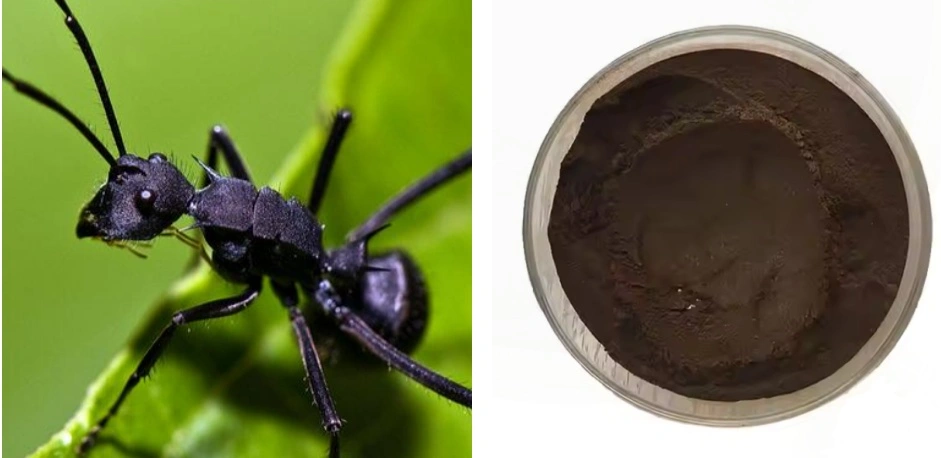
Black Ant Extract Powder is a concentrated nutritional supplement obtained from Polyrhachis vicina Roger, a species of black ant that has been employed for a long time in traditional Chinese medicine. The producers ensure the raw ants are authentic, then they extract certain compounds, concentrate the liquid and dry it to make a stable powder. The final product typically contains protein, over 20 different amino acids, minerals such as zinc and selenium, and ATP, although the quantities vary depending on the batch and processing method. In my experience, buyers get the best results when they first ask for 4 things: the scientific name of the species, where it came from, the ratio of extraction, and any carriers that were used. These details differentiate a clear ingredient from a vague one. Bulk powder also gives formulators more freedom than finished capsules, as it can be used in tablets, sachets, drinks and functional foods.
Extract Versus Ground Ant Powder
They look the same but they work differently. Ground ant powder is made from whole ants dried and ground up. With an extract it goes one step further. For example, to produce 1 kg of finished powder, about 20 kg of raw materials are required. This gets rid of a lot of the chitin (a tough fiber in the insect shell) and concentrates nutrients like zinc and ATP. This makes whole powder, water extract, concentrated extract and standardized extract all different in my eyes. They have a different taste , dissolve and cost per serving and the size of serving . So get your supplier to write the ratio down. You cannot have a 10:1 extract and a 20:1 extract at the same dose. Protect your formula and your margin by comparing grades on cost per serving, not just by weight.
What the Evidence Can Support?
There is a lot of evidence of traditional use. Folk practices in China use insects as medicine, and ants are one type that has been studied. The Food and Agriculture Organization also recognizes insects as a healthy food source. Records kept in the past, on the other hand, are not clinical proof. Before you write anything about joints, look at studies that were done on humans using the exact extract and dose you want to use. Until that proof comes along, I think of the ingredient in terms of general mobility, an active lifestyle, and nutritional support. I try to stay away from labels and websites that use words like arthritis, pain relief, or anti-inflammatory treatment. Taking this careful approach helps regulators and smart buyers trust your product.
Formulation and Quality Control for Black Ant Extract Powder
How the Powder Is Made and Authenticated?
Quality control for Black Ant Extract Powder begins before extraction. I ensure that only Polyrhachis vicina Roger enters the process through DNA barcoding or microscopic identification, as using other species may change the nutrient profile. The raw materials are then cleaned and dried before extraction with water or ethanol, followed by filtration and concentration of the liquid. At Yanxi Herbs, the extract is dried under low-temperature vacuum conditions, with odors reduced through filtration. Mild heat helps protect heat-sensitive components, such as enzymes. Each lot must receive a batch number and a sampling record, with release criteria linked to the written specification. Any changes to the raw material source, solvent, or drying method should be documented and communicated to the buyer in advance. These records allow your quality team to trace the raw materials used in each finished capsule.
Quality Control Tests to Request
I make these checks on all of the specs.
-
Species and Heavy Metals: Request DNA barcoding or microscopic identification and ICP-MS testing for lead, arsenic and cadmium. Typical targets are lead <2.0 ppm, arsenic <1.0 ppm and cadmium <1.0 ppm. Ants live in the soil so testing for metal should be a high priority on each batch. Ask for the raw report, not just a summary.
-
Potency markers: Request 3rd party results for zinc by ICP and total protein by Kjeldahl method (AOAC Official Methods of Analysis). These two integers provide useful proxies for concentration and authenticity. Compare them with the amino acid profile on the COA and flag any batch that falls outside the agreed range.
-
Microbes and solvents: Total plate count <1,000 cfu/g E. coli Not detected Salmonella Not detected For extracts (ethanol) ask for GC-MS testing and ensure residual ethanol is less than 0.05%. These limits are consistent with food safety expectations in the United States and Europe and provide your auditors with clear pass/fail criteria.
These tests turn what the supplier says into information that your team can check.
Dosage Forms and Ingredient Pairings
Depending on the grade, choose the dosage form first. Capsules mask the earthy taste, good for most private label programs. Tablets should have good flow and compressibility. Strong solubility is required for Sachets and drink mixes. Try black ant extract with glucosamine, chondroitin, collagen, turmeric, boswellia, MSM, hyaluronic acid, vitamins and minerals. Many joint support products contain more than one ingredient. Watch each blend for pH change, oxidation, moisture pickup and sensory clashes. A supplier's serving suggestion should only be used as a guide and not as gospel. Then do a test batch first to see how stable it is, how much it weighs, how evenly it blends, how hard the tablets are, how they taste and smell.
Solubility, Odor, and Storage
First, people who make drinks and sachets should ask about solubility. Energy shots and health tonics can use grades that dissolve in cold water, but you should still ask for test conditions like water temperature, concentration, mixing time, pH, and observation period. Tell the difference between real dissolution and simple suspension. If you use pasteurization or UHT in your process, ask for data from that step. The next thing to worry about is the smell. The extract smells earthy, but low-temperature vacuum drying and deodorization during filtration make it less strong. The powder can cake because it absorbs water and has a lot of protein and amino acids. Aluminum foil bags that are sealed with heat and won't let water in should be kept in a cool, dry place away from light. Ask for data on stability to back up the shelf life that was given.
Sourcing Black Ant Extract Powder from a Qualified Supplier
Supplier Qualification and Documents
Find out whether you are buying from a direct manufacturer, a trading company, or a formulation provider to begin with. Check the company's legal status, production site, capacity, and history of exporting. Certifications like GMP, HACCP, ISO 22000, and ISO 9001 can be important, but only if they are up-to-date, were given to the right company, and cover the production site. Ask for a batch COA, a specification sheet, a technical data sheet, a traceability statement, allergen and GMO statements, and records of how long the product will last. In the US, FDA rule 21 CFR Part 111 says that companies that make dietary supplements must make sure that each ingredient is what it says it is. The paperwork from the supplier helps you do that duty, but it doesn't take the place of your own testing.
Samples, MOQ, and Custom Services
A good inquiry for Black Ant Extract Powder can save weeks of work. Include details about your application, target market, dosage form, annual volume, technical specifications, and packaging requirements. Before purchasing, request a sample of the same grade and produced using the same manufacturing method. Then test it for identity, solubility, taste, compatibility, and preliminary stability. Check minimum order quantities for samples, pilot runs, full production, custom packaging, and different pallet and container options. Calculate the total cost based on cost per serving, usable yield, marker content, and testing, packaging, and delivery terms. Many buyers also need private label support for capsules, tablets, beverage premixes, label design, and formulation, so ask about these services early in the process.
Pilot Testing and Approval
I work in steps. First, look over the documents and make sure they match up with the specification. Next, test a sample that is typical of the whole. Third, make a pilot formulation and check it against the approved sample to see how it looks, how uniform the blend is, how consistent the fill-weight is, how much it yields, and how it tastes. When the purchase volume or risk calls for it, add an on-site or remote audit. Pick out two or three suppliers that are technically similar, and then rate them on things like quality systems, testing, documentation, capacity, minimum order quantity (MOQ), lead time, and customization. Before commercial orders start, you should sign a quality agreement that spells out requirements, testing responsibilities, how to handle changes, and what should be done to fix problems. After getting approval, keep an eye on batch conformity, delivery reliability, complaints, and the accuracy of the documents. Also, make sure that important suppliers are requalified on a regular basis.
Compliance, Risks, and Market Fit
Claims Language in the United States
The Dietary Supplement Health and Education Act of 1994 allows a supplement to make a structure/function claim, such as helping with joint pain or mobility, as long as the claim is truthful and can be substantiated. Companies must notify the FDA within 30 days of first marketing the claim. And they also have to have the standard disclaimer that it has not been evaluated by the FDA. Supplements are not allowed to make any claims about treating or preventing any disease like arthritis. Also, determine whether the ingredient is subject to a new dietary ingredient notification. It is contingent upon how it has been sold in the US in the past. Before launching, I would recommend that buyers discuss this with a regulatory consultant. Clear claim rules are just as safe for your brand as the formula.
Allergen, Labeling, and Dietary Notes
Black Ant Extract Powder is derived from insects which are animals, so it is not vegan or vegetarian. If you say that it is an insect-derived extract, then customers will know what they are getting. People allergic to dust mites or shellfish can have reactions to insect proteins. Include allergen information and request the allergen statement from your supplier. If you are pregnant, nursing, taking medicine or have a medical condition, ask a doctor before use. I think that should be on the label. These steps are also important because many Americans are still learning about eating bugs, and clear labeling builds trust.
Common Risks and How to Reduce Them
The six main types of problems are unclear species, incomplete origin data, inconsistent extraction strength, undeclared carriers, contamination, and claims that can't be backed up. An interruption in the supply can add a seventh. These risks can be lowered by using scientific names, being able to track batches, having marker and protein specifications with acceptable ranges, and getting written permission before making any changes to the material or process. For big purchases or first-time purchases, it makes sense to have a third party test it. Moisture is also a real risk: hygroscopic powder that is left in weak packaging cakes and stops flowing. Ask for foil bags with desiccants and check the seals when they arrive. In case your shipment is late, keep some extra stock on hand so that your filling line doesn't stop.
Conclusion
Black Ant Extract Powder can be used in supplements for joint pain or general health if the buyer checks what’s in the bag. The extract differs from ground ant powder in that it is more concentrated, and the chitin has been removed. The evidence available supports positioning around nutrition and mobility not disease treatment. Heavy metal and microbial limit, Zinc and protein tests and solvent checks can prove the quality of Polyrhachis vicina Roger. Powder works or doesn't work in capsules, tablets and drinks, based on how well it dissolves, how it smells and how well it controls moisture. Sourcing risk is reduced by a quality agreement, supplier documents and staged approval. In the US, the picture is rounded out by clear insect-based labeling and structure/function language that follows the rules.
FAQ
What is the difference between the extract and ground ant powder?
The extract is very strong. For example, 20 kg of raw materials are needed to make 1 kg of powder. A lot of the chitin is taken out during the process, which also concentrates nutrients like ATP and zinc. Whole ants that have been ground up into a powder.
How do you manage the earthy odor?
During the filtration process, we use low-temperature vacuum drying and deodorization. This lowers the earthy note without breaking down enzymes that are sensitive to heat. Pills can hide it even more.
Is it vegan or vegetarian?
No, it comes from insects, so call it an insect-based extract to make it clear what to expect.
Does the powder clump during storage?
Yes, it can because it can hold water. To keep it from clumping, store it in aluminum foil bags that are sealed with heat and don't let moisture in.
How can I verify potency?
Ask a third party to do tests on your zinc using ICP and your total protein using the Kjeldahl method. Both are standard industry terms for concentration and authenticity.
Request Black Ant Extract Powder Samples from Yanxi Herbs
You can get Black Ant Extract Powder samples, specifications, and a batch COA from Yanxi Herbs. This powder is made from Polyrhachis vicina Roger. As a supplier of Black Ant Extract Powder, we talk to brands and contract manufacturers about bulk orders, private-label options, and shipping to other countries. You can email info@yanxiherbs.com with your dosage form, target market, and annual volume, or you can go to yanxiherbs.com for more information. Our team will get back to you with technical information for your pilot test.
References
1. Edible Insects: Future Prospects for Food and Feed Security, Food and Agriculture Organization of the United Nations, 2013
2. Research and Utilization of Medicinal Insects in China, Entomological Research, 2009
3. Entomotherapy, or the Medicinal Use of Insects, Journal of Ethnobiology, 2005
4. Current Good Manufacturing Practice in Manufacturing, Packaging, Labeling, or Holding Operations for Dietary Supplements (21 CFR Part 111), U.S. Food and Drug Administration, 2007
5. Regulations on Statements Made for Dietary Supplements Concerning the Effect of the Product on the Structure or Function of the Body, Federal Register, 2000
6. Official Methods of Analysis of AOAC International, 21st Edition, AOAC International, 2019

Send Inquiry
Related Industry Knowledge
- How Can Bulk Fo-Ti Extract Powder Help Brands Expand Plant-Based Ingredient Product Portfolios?
- Hyaluronic Acid Powder Bulk Helps Cosmetic Manufacturers Develop Hydrating Serums, Masks, and Anti-Aging Product Lines
- Why Do Manufacturers Choose Stevia Extract Powder for Formulations?
- What Makes Chaga Mushroom Extract Powder Suitable for Beverage and Powder Blend Applications?