
Bulk Lycopene Powder for Beverage Formulations: Specifications and Supplier Selection
Nov 24, 2026
Bulk Lycopene Powder works best in beverages when the delivery system, potency, and documentation match the drink. Lycopene is a fat-soluble tomato carotenoid, so a beverage needs a water-dispersible, emulsified, or encapsulated powder to stay evenly red without sediment. Check the HPLC potency, particle size, stability data, and certificates before you scale up. Then choose a supplier that can show batch records, offer samples, and ship on a steady schedule. I wrote this guide for R&D, purchasing, and quality teams who need clear specifications and a practical way to compare suppliers.
What Bulk Lycopene Powder Is and Where It Fits in Beverages
Lycopene Basics and Tomato Origin
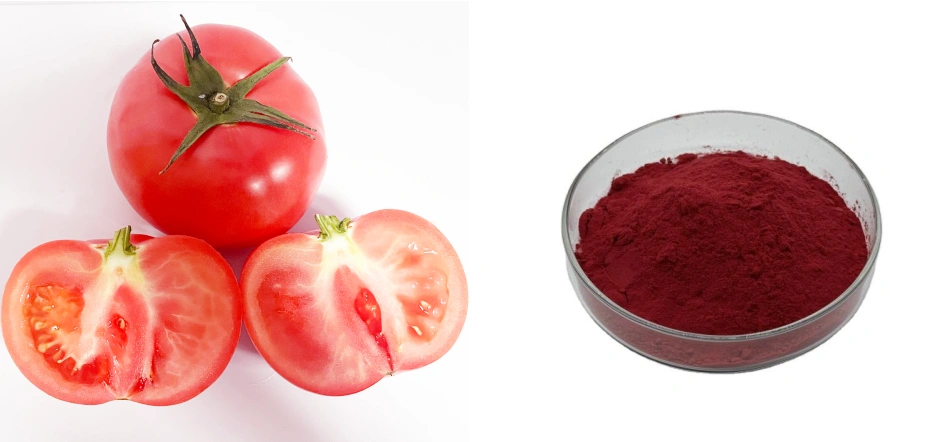
Lycopene is a red carotenoid pigment found mainly in ripe tomatoes. Watermelon and pink grapefruit also contain it, but tomatoes remain the main commercial source. Our Bulk Lycopene Powder comes from the ripe fruit of Lycopersicon esculentum. It ships as a red to deep red fine powder in 5%–20% lycopene grades, measured by HPLC. A 1989 laboratory study found lycopene to be a very efficient singlet oxygen quencher among carotenoids. Buyers often see terms such as natural, non-GMO, and clean label. Each term needs supporting paperwork, so ask for documents before you print any claim on a label.
Beverage Formats That Use Lycopene
Lycopene appears in several drink types. Juices and functional waters use it for red color and antioxidant positioning. Powdered drink mixes and sports blends use dry powders that disperse when the consumer adds water. Dairy drinks, plant-based beverages, and nutrition shakes contain fat, so they often handle oil-based or emulsified lycopene better. Wellness shots need a small dose in a small volume, which makes potency a priority. Each format places different demands on pH, fat content, and heat treatment. Write down your format, serving size, and shelf-life goal before you request samples, because those three details narrow the choice quickly.
Natural Tomato Lycopene vs. Synthetic Lycopene
Food-grade lycopene comes from tomatoes, from fermentation with the fungus Blakeslea trispora, or from chemical synthesis. Tomato-derived lycopene supports a tomato-origin story on the label, which many clean-label brands want. Synthetic or fermentation material can offer standard potency and steady availability for some uses. Source alone does not decide performance, though. The carrier, the encapsulation method, and your processing conditions matter just as much. Compare cost per effective serving instead of cost per kilogram. A higher-potency grade can lower the dose you need, and processing losses and testing should enter the calculation too.
Key Bulk Lycopene Powder Specifications for Beverage Formulation
Yanxi Herbs Specification Overview
The table below lists the specification for our Bulk Lycopene Powder.
| Item | Specification |
|---|---|
| Used part | Ripe tomato fruit |
| Lycopene | 5%–20% (HPLC) |
| Particle size | 100% pass through 80 mesh |
| Loss on drying | ≤5% |
| Ash | ≤5% |
| Heavy metals | ≤10 ppm |
| Total plate count | <1000 cfu/g |
| Yeast and mold | <100 cfu/g |
| Shelf life | 24 months, sealed and properly stored |
These limits give your quality team clear acceptance criteria for incoming lots. Packaging options are 1 kg bags, 5 kg boxes, and 25 kg drums.
Water-Dispersible, Oil-Soluble, and Encapsulated Systems
Pure lycopene does not dissolve in water. When a supplier says "water-soluble," the term usually describes dispersion, not true molecular solubility. Water-dispersible powders use carriers, emulsifiers, or encapsulation to spread tiny lycopene particles through a liquid. Oil-soluble products suit fat-based drinks. Spray-dried systems turn an emulsion into a free-flowing powder that mixes into dry blends. These systems are not interchangeable. The wrong choice can cause sedimentation, a ring at the bottleneck, or uneven color. We offer our Bulk Lycopene Powder in a water-dispersible form, and I recommend you confirm the carrier composition on the technical data sheet before testing.
Potency, Particle Size, and Dose Calculation
Dose follows potency. If a serving needs 5 mg of lycopene, a 10% powder supplies it with 50 mg of powder, while a 5% powder needs 100 mg. Use the HPLC assay value on the certificate of analysis, then add an overage if your process loses active content. Particle size affects dispersion and mouthfeel. Our powder passes 100% through an 80-mesh sieve, which suits dry blending and many wet mixing steps. Odor and taste matter as well, because tomato notes can show up in clear or lightly flavored drinks. Test the powder in your actual base before approval.
Stability and Format Selection for Beverage Processing
What Reduces Lycopene Stability
Lycopene has a long chain of conjugated double bonds. That structure gives it color and antioxidant activity, and it also makes the molecule sensitive. Oxygen, light, heat, and metal ions can oxidize it, and heat and light can shift it from the all-trans form to cis isomers. A 2010 review in Critical Reviews in Food Science and Nutrition describes these factors for carotenoids in foods. Acidity, moisture, and oxygen-permeable packaging add more risk. Fading color is usually the first sign of loss. Pasteurization, hot filling, high-shear mixing, and homogenization each apply stress, so list every process step when you brief a supplier.
Matching the Powder to the Beverage
Water-dispersible or encapsulated powders usually fit powdered drinks, functional waters, sports beverages, and acidic formulas. Oil-soluble or emulsified systems often work better in dairy drinks, plant-based alternatives, and nutrition shakes, where fat helps carry the pigment. Check clarity, haze, reconstitution time, sedimentation, and emulsion stability. Carbonated, acidic, and heat-processed drinks need application data from similar conditions, not data from a different product. If a supplier cannot share such data, plan your own pilot trial. Our team can discuss your beverage format and suggest a grade from our 5%–20% range before you order a sample.
Testing Finished Beverages
A powder that performs well in water on the bench may behave differently in your finished drink. Run stability tests at room temperature, under refrigeration, under accelerated heat, and under light exposure. Add a transport simulation if your product ships long distances. At each time point, record lycopene retention, color, sedimentation, phase separation, flavor, and microbial quality. Choose barrier packaging, such as opaque containers with low oxygen permeability, and match it to your shelf-life target. Our powder has a 24-month shelf life under sealed, proper storage, but your finished beverage needs its own data.
Quality, Compliance, and Documentation for Bulk Lycopene Powder
Reading a Certificate of Analysis
A useful certificate of analysis is current and tied to a specific lot. It should list the lycopene assay and method, appearance, loss on drying, heavy metals, microbial counts, test limits, and the batch number. Our specification sets loss on drying and ash at 5% or lower, heavy metals at 10 ppm or lower, total plate count below 1000 cfu/g, and yeast and mold below 100 cfu/g. Request a COA for each lot you receive, and compare it with the limits in your purchase agreement. Generic or outdated certificates do not prove that the shipment in front of you meets your needs.
Certifications and U.S. Regulatory Points
Our Bulk Lycopene Powder carries ISO, HACCP, FDA Registration, Kosher, and Halal certification. At company level, Yanxi Herbs also holds ISO 22000 and SGS credentials. For the U.S. market, the FDA lists tomato lycopene extract and tomato lycopene concentrate as color additives exempt from certification under 21 CFR 73.585. Your regulatory team should still confirm the permitted use and labeling for your specific beverage. Health-related wording falls under separate rules, so review any claim with your compliance advisor. Ask every supplier for current certificate copies and check the validity dates.
Traceability and Change Control
Traceability lets you follow a lot back to its raw material. Ask how the supplier records tomato lots, extraction, drying, and packing, and ask about contaminant control and steps that prevent adulteration. A formal change-notification process matters because a switch in carrier or drying method can alter performance while the label potency stays the same. Put this requirement in a quality agreement so your quality manager hears about changes before a shipment arrives, not after. Our team can share COAs and certificates on request to support your audit file.
Supplier Selection and Procurement Steps
How to Choose a Dependable Supplier
Start by asking whether the company manufactures the ingredient or only trades it. Manufacturers can usually explain extraction, drying, and encapsulation in detail and trace their lots. Review production capacity, laboratory equipment, export experience, and willingness to adjust specifications. Request a full quotation that states potency basis, MOQ, packaging, lead time, payment terms, delivery terms, and shipping documents. Ask for technical data, application guidance, and stability support as well. Experience with regulated markets such as the United States and Europe shortens documentation reviews. Yanxi Herbs was founded in 2010, and our products have reached more than 100 countries and regions.
Step-by-Step Procurement and Supplier Scorecard
I suggest four steps. First, define your beverage type, pH, process, package, serving size, shelf-life goal, potency, and forecast volume. Second, shortlist suppliers and request samples, COAs, technical data sheets, SDS files, and certificates. Third, run lab and pilot tests for dispersion, color, taste, sedimentation, and active retention. Fourth, qualify the supplier, agree on terms and a quality agreement, and set incoming inspection and periodic requalification. To compare vendors fairly, build a weighted scorecard covering technical performance, quality documents, commercial terms, supply capacity, and service. Judge price per active unit, so total value wins over the lowest first quote.
Common Mistakes and How We Support Buyers
Buyers often choose the lowest price per kilogram, then find that potency, dose, and process losses raise the real cost. Others treat water-dispersible and oil-soluble powders as equal, which can cause sedimentation or phase separation. Some rely on old certificates, skip tests under real processing conditions, or forget to confirm MOQ, lead time, and safety stock. Yanxi Herbs addresses these points directly. Our Bulk Lycopene Powder is in stock, free samples are available, and delivery takes 1–3 working days after payment. We also offer local warehousing support in Europe and the US, plus customization help from our R&D team.
Conclusion
Choosing Bulk Lycopene Powder for beverages comes down to matching the product to the drink and proving the match with data. Tomato-derived lycopene is fat-soluble, so water-dispersible, emulsified, or encapsulated systems decide whether a beverage stays evenly colored. Potency, particle size, and dose should come from HPLC assay results, and cost should be judged per effective serving. Oxygen, light, heat, and acidity reduce stability, which makes finished-product testing under real conditions necessary. Batch-specific certificates, valid certifications, traceability, and change control support quality and U.S. regulatory review. A weighted scorecard covering technical, quality, commercial, and supply factors, followed by pilot testing, gives buyers a sound basis for supplier approval.
FAQ
Is Bulk Lycopene Powder water-soluble?
Lycopene itself is fat-soluble. Water-dispersible grades use carriers or encapsulation to spread it through water. We offer a water-dispersible form, and I recommend testing it in your own beverage base.
What lycopene content do you offer?
Our Bulk Lycopene Powder ranges from 5% to 20% lycopene by HPLC. Choose the grade from your target dose per serving and the batch assay result.
Can I get a sample, and how fast does an order ship?
Free samples are available. Our product is in stock and ships within 1–3 working days after payment.
Which documents come with an order?
We can provide COAs, certificates (ISO, HACCP, FDA Registration, Kosher, Halal), and technical documents on request. Confirm the exact document set for your project with our team.
Request a Bulk Lycopene Powder Quotation from Yanxi Herbs
Looking for a Bulk Lycopene Powder supplier that can match your beverage project? Yanxi Herbs offers tomato-derived lycopene in 5%–20% grades, in stock, with free samples and delivery within 1–3 working days after payment. Our certifications, R&D support, and warehousing in Europe and the US help you plan supply with confidence. Email info@yanxiherbs.com with your beverage type, target potency, and annual volume, or visit yanxiherbs.com for details.
References
1. Archives of Biochemistry and Biophysics, 1989 – "Lycopene as the Most Efficient Biological Carotenoid Singlet Oxygen Quencher"
2. Critical Reviews in Biotechnology, 2000 – "Lycopene in Tomatoes: Chemical and Physical Properties Affected by Food Processing"
3. Critical Reviews in Food Science and Nutrition, 2010 – "Factors Influencing the Chemical Stability of Carotenoids in Foods"
4. Annual Review of Food Science and Technology, 2010 – "An Update on the Health Effects of Tomato Lycopene"
5. EFSA Journal, 2010 – "Scientific Opinion on the Re-evaluation of Lycopene (E 160d) as a Food Additive"
6. Code of Federal Regulations, Title 21, Section 73.585, U.S. Food and Drug Administration, 2024 – "Tomato Lycopene Extract; Tomato Lycopene Concentrate"

Send Inquiry

Related Industry Knowledge
- How Can Bulk Fo-Ti Extract Powder Help Brands Expand Plant-Based Ingredient Product Portfolios?
- Hyaluronic Acid Powder Bulk Helps Cosmetic Manufacturers Develop Hydrating Serums, Masks, and Anti-Aging Product Lines
- Why Do Manufacturers Choose Stevia Extract Powder for Formulations?
- Stevia Extract Powder Helps Create Clean-Label Food and Beverage Products