
Bulk Milk Thistle Extract Powder: Comparing Silymarin Content and Suppliers
Nov 28, 2026
How to compare bulk Milk Thistle Extract Powder? Check four things: how much verified silymarin each product contains, how that amount was measured, what it costs per kilogram of active silymarin, and what paperwork the company can provide you with. A higher grade, say 80% might mean that you need to add less to a formula, but that isn’t always the best choice. Good suppliers also provide batch specific test reports, unambiguous specifications, reliable lead times and technical support. I will go through each point here.
Introduction: Why Silymarin Content Matters in Bulk Procurement?
Where Milk Thistle Extract Powder Is Used?
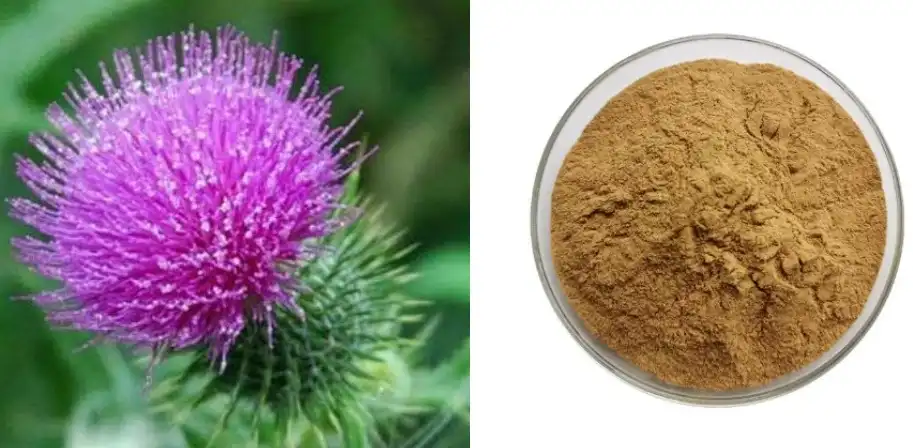
Milk Thistle Extract Powder is extracted from the seeds of Silybum marianum. It is found in some skin care products, functional foods, drinks and dietary supplements. Different needs for each use. A capsule maker checks the amount of medicine in each serving and a beverage maker checks the taste and how well it spreads. That’s why I think you have started with the finished product and not the price list.
Why Price Alone Is Not Enough?
Even if two quotes look the same, they can still mean different things. There may be times when you need to add more silymarin to a cheaper powder because it has less of it. Buyers should also look at consistent batches, solubility, documentation, certifications, and how well the product fits with regulations. FDA current good manufacturing practice rules can be found in 21 CFR Part 111. This is what supplement makers in the US must do.
Raw Seed Powder vs. Standardized Extract
Raw milk thistle seed powder is simply the milled seeds. It contains a bit of silymarin, and fiber, and oil. A regular extract is strengthened and standardized to a silymarin level. If you mix up these terms you will get wrong doses and batches rejected. This guide compares strength and quality, suppliers, uses, business terms and verification steps for long term supply planning.
Understanding Milk Thistle Extract Powder and Silymarin Standardization
What Silymarin Contains?
Milk thistle plant seeds contain a group of flavonolignans known as silymarin . The most important are silybin A and B, isosilybin A and B, silychristin and silydianin. Most of the time, the mixture is mostly silybin. A good specification will list silymarin as a marker of quality and describe how it was measured.
Raw, Concentrated, and Standardized Are Not the Same
Active content and extraction ratio are not the same thing. It tells you how much seed was used to make one part of extract. It doesn't say how much silymarin it has. The active level and the test method are written on a standard extract. If you want to compare quotes, never switch one number for the other.
Reading 50%, 70%, and 80% Claims
Method is important here. On the other hand, HPLC often shows a lower number, like 50% to 60%, while UV-VIS often says 80% silymarin. You can't directly compare these results because they talk about different measurements. Find out what method the COA uses and ask for the chromatographic data. Before giving the go-ahead, you should also look over the carrier materials, ingredient lists, vegan and non-GMO status, and the whole technical file.
Comparing Bulk Milk Thistle Extract Powder by Silymarin Content
When 80% Makes Sense?
If the grade is 80% you can use less powder per serving. Makes sense for small pills and capsules where space is a premium. Of course, it’s not always the perfect match. For blends where taste, color or formula balance are more important than precise dosing, a not-as-high grade may be better. The grade should be appropriate to the dose, dosage form and label.
Compare Price per Kilogram of Active Silymarin
To compare the active ingredient cost of Milk Thistle Extract Powder, divide the price by its silymarin fraction. A 40% powder contains only half as much silymarin per kilogram as an 80% powder. Although it may cost more per kilogram, it could be cheaper per unit of active ingredient. Always use the same test method for each calculation to ensure a meaningful comparison.
Other Specifications That Change Real Value
Check assay tolerance, moisture, carrier content, taste, color, flowability and dispersibility. If the tolerance is set too low the batch will most likely be rejected. This makes encapsulation slower. I suggest getting at least three quotes based on the same set of requirements, so you know what you are getting in terms of price, performance and risk.
Choosing the Right Form for Different Product Applications
Supplements: Capsules, Tablets, and Sachets
The first thing is standardized potency, because supplement companies need to be able to provide consistent serving sizes. Powder can be found in capsules, tablets, sachets and powder blends. You should test the flow, bulk density and particle size with your own tools as these things affect the fill weight and hardness of the tablets. A sample run catches any problems before a full order is sent out.
Foods, Beverages, and Skincare
Food & drink teams often need instantized or water soluble grades which are easy to disperse and have good flavor, color, pH stability and heat tolerance. Silymarin flavonolignans are not very water soluble and not easily absorbed by the body. You need to test each grade in your own base. People who want to buy skin care products should ask for cosmetic grade documents and check the smell, color, particle size and compatibility. Don't make medical claims without evidence.
Powder, Capsules, Tinctures, and Raw Powder
Powder lets you control the dose and make it in a variety of ways. It also ships and stores well if you keep it dry. Brands that want less work can use finished capsules. When you ship tinctures, they are heavier and contain more alcohol. It's easy to make raw seed powder, but its strength varies. Pick the format that works best for your production line and how much you want to make.
Bulk Quality Comparison: What to Request from Each Supplier
Technical Specification Details
Ask what the plant is called, what part of the plant it is coming from, how it was extracted, what solvents were used, the silymarin test, the range of specifications, the amount of moisture, the ash, the particle size, the look, the smell, how long it will last, and how it should be stored. If a supplier can answer all of these questions, it’s a good sign of process control. It also makes it easy to compare two things side by side.
Testing and Quality Documents
Ask for an up-to-date COA that includes identity testing, chromatographic assay data, microbiology, heavy metals, pesticide residues, residual solvents (if needed), allergen statements, and information on stability. U.S. laws say that supplement makers have to set standards and make sure the identity of ingredients. So, keep full records on your suppliers to back up your own compliance files.
Certifications, Traceability, and Shipping
Review information on GMP, organic, non-GMO, HACCP and ISO. Ensure they are current and include the site where your product is made. Check: traceability, lot coding, packaging, export documents, transport conditions. You have to ask for evidence, not just claims. Good records will protect you during audits and customs checks.
Comparing Milk Thistle Extract Powder Suppliers
Types of Suppliers
Extract factories and manufacturers are responsible for the production and often can change specifications. Traders and distributors may sell smaller lots from stock, and they may not have much information about the process. Finished goods arrive from contract manufacturers and private label suppliers. The price, MOQ, customization, technical support, traceability, production capacity and export experience are different for each type.
Capabilities to Assess
Look at the manner in which the products are created, how uniform the batches are, the quality of the responses, the sample policy, the lead times and the yearly capacity. Ask if the supplier can offer custom grades or water-soluble grades. Ask for data from more than one recent batch as one good result does not tell you how steady the production is.
Total Landed Cost
The total landed cost of Milk Thistle Extract Powder includes the product, documentation, testing, freight, customs, storage, and any formulation changes. These additional expenses can quickly increase what initially appears to be a low quote. Request formal quotations from every supplier based on identical specifications. This ensures they are all responding to the same requirements and allows your team to compare their offers fairly.
A Practical Procurement Process for Bulk Milk Thistle Extract Powder
Define the Need and Build a Shortlist
Set goals for the finished product, its dosage form, its target market, its annual volume, its silymarin range, its certifications, and its labeling requirements. Then send the same document to all the candidates as an inquiry. Ask for certificates, samples, COAs, and specifications. A standard question saves time and makes sure that answers are all the same.
Test Samples and Verify Terms
Verify identity, appearance, odor, flavor, flowability, dispersibility and process compatibility of each sample. Then get written confirmation of MOQ, price, lead time, packing, payment terms, storage conditions and delivery terms. Samples demonstrate how it works and written terms avoid any surprises later on.
Approve and Requalify
For final approval there should be a list of contractual requirements, rules for change control and a process for people to make complaints. Regular audits of all suppliers. When a supplier changes the process, production site or test results it is important to re-qualify them. This guaranties that the quality will be the same for years to come and not just the first order.
Common Procurement Mistakes and How to Avoid Them
Buying on Price Alone
If you pick the cheapest quote without taking silymarin content into account, it could lead to higher inclusion rates and worse economics for the finished product. Find out how much each unit of active first costs. Also, don't believe a claim about potency that doesn't come with a current COA and a named analytical method. Data that isn't clear creates risks for labeling and verifying.
Skipping Application Tests and Regulation Checks
Specifications from a lab do not guaranty that your product will work. In your own formula, test how well it dissolves and how it works when it's processed. Before you launch, look over the destination-market rules. In the US, the FDA controls the labels and claims on dietary supplements, so stay away from labels and websites that make medical claims that aren't allowed.
Ignoring Supply Risk
Since milk thistle is grown as a crop, the availability of seeds can change depending on how the crop is harvested. Ask each supplier how it plans to buy raw materials and keep extra on hand as a safety net. Think about dual sourcing for product lines that are strategically important. If one source runs out, a second approved supplier will keep production going.
Recommended Supplier Scorecard for B2B Buyers
Quality Criteria
Silymarin Mark the correctness, identity, purity, control of contaminants, moisture, particle size, solubility, performance in applications, and completeness of documents. The most important thing to me is quality because mistakes in this area are the most expensive to fix.
Commercial Criteria
Rate all of the following attributes: price, minimum order quantity (MOQ), volume discounts, lead time, packaging, shelf life, payment terms, total landed cost. Use the same units and guidelines for all suppliers so numbers are easy to compare.
Service Criteria
Rate how well they communicate technical information, offer sample support, help with formulation, offer OEM or private-label options, allow customization, handle complaints, and remain responsive over time. Give each team (purchasing, quality, and R&D) its own score, and then look at the totals. Choose the supplier that offers the best mix of quality that has been checked, usability, dependability, and overall value.
Conclusion
When you are looking for a bulk Milk Thistle Extract Powder supplier, you should compare more than price or strength. Also look at the verified silymarin content, the test method, and the cost per unit of active. Raw powder, concentrated extract and standardized extract are used for different purposes. The best option depends on the end product and the audience you want to reach. Full instructions, testing for applications, certifications, packaging, minimum order quantity (MOQ), and lead time impact real value. A disciplined process, a scorecard, attention to total landed cost and supply continuity all help to reduce procurement risk and maintain quality over time.
FAQ
What is the difference between raw milk thistle powder and standardized extract powder?
The raw powder is ground seed with a variable amount of silymarin. Standardized extract is more potent and a certain level of silymarin is adjusted by a named test method.
When is 80% silymarin appropriate, and how do I verify it?
An 80% grade is good for formulae where each dose does not take up much room. Check against the chromatographic data, the batch-specific COA, and the analytical method that was stated. A separate lab can check the results.
What should I know about MOQ, private label, and storage?
MOQ varies by grade and supplier so make sure you get it in writing. Many suppliers offer private label and customization options, but be sure that they are real by checking with a good supplier. Store the powder in sealed containers in a cool, dry place as directed by the supplier.
Request a Bulk Milk Thistle Extract Powder Quotation from Yanxi Herbs
Yanxi Herbs is happy to hear from buyers who are looking at different Milk Thistle Extract Powder suppliers. Send your desired silymarin percentage, the use, the dosage form, the estimated volume, the market you want to reach, the certification requirements, and any requests for packaging or private labeling. After that, we can talk about samples, specification sheets, most recent COAs, MOQ, lead time, and a formal quote. Get a quote for your project by emailing our team at info@yanxiherbs.com. You can find out more at yanxiherbs.com.
References
1. Phytotherapy Research, 2010. "Milk Thistle in Liver Diseases: Past, Present, Future."
2. Phytotherapy Research, 2018. "Milk Thistle (Silybum marianum): A Concise Overview on Its Chemistry, Pharmacological, and Nutraceutical Uses in Liver Diseases."
3. Drug Metabolism and Disposition, 2008. "Pharmacokinetics and Metabolic Profile of Free, Conjugated, and Total Silymarin Flavonolignans in Human Plasma after Oral Administration of Milk Thistle Extract."
4. Biomedical Papers of the Medical Faculty of the University Palacký, Olomouc, 2005. "Silybin and Silymarin – New Effects and Applications."
5. Code of Federal Regulations, Title 21, Part 111, 2007. "Current Good Manufacturing Practice in Manufacturing, Packaging, Labeling, or Holding Operations for Dietary Supplements."
6. National Center for Complementary and Integrative Health, 2020. "Milk Thistle."

Send Inquiry
Related Industry Knowledge
- How Can Bulk Fo-Ti Extract Powder Help Brands Expand Plant-Based Ingredient Product Portfolios?
- Hyaluronic Acid Powder Bulk Helps Cosmetic Manufacturers Develop Hydrating Serums, Masks, and Anti-Aging Product Lines
- Why Do Manufacturers Choose Stevia Extract Powder for Formulations?
- What Makes Chaga Mushroom Extract Powder Suitable for Beverage and Powder Blend Applications?