
Bulk Phycocyanin Powder for Natural Blue Coloring in Beverages and Confectionery Production
Nov 19, 2026
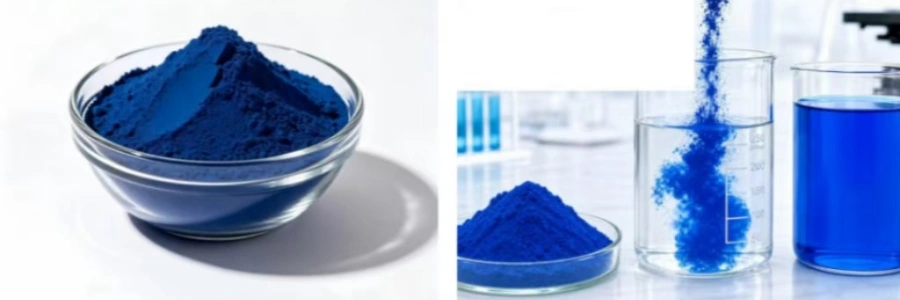
Bulk Phycocyanin Powder is a blue colour that comes from plants. Companies that make drinks and sweets can use it instead of man-made dyes like Brilliant Blue FCF. This colour comes from spirulina and is simple to remove from water. People like to put it in frostings, drinks, sweets, and gummies. When you match the colour value (E3 to E25) to the dose, pH, and heat exposure, you can get good results. Make sure the match is good with pilot tests. This ingredient is safe to use because Yanxi Herbs offers it with COAs, free samples, and export documents. This way, your R&D, purchasing, and quality teams can be sure.
Introduction: Why Food Manufacturers Are Switching to Bulk Phycocyanin Powder?
Clean-Label Pressure on US Brands
In the US, people pay close attention to the lists of ingredients. To get rid of synthetic dyes, many brands have changed their recipes. It's hard to find another blue colour because clean blue water isn't easy to find in nature. These days, a lot of people answer with spirulina powder. The FDA says in 21 CFR 73.530 that spirulina extract is a colour additive that does not need to be certified. The FDA gave its OK in 2013 for use in candy and gum. Later, changes were made that let even more kinds of food in. This makes it legal for R&D teams to make a blue that comes from plants. Before the product goes on sale, buyers should still check to see if their type of food is covered by the rule.
What Buyers Evaluate Beyond Color?
Just because the swatch looks good doesn't mean the order is good. Your team checks a lot of different things. In R&D, managers look at the colour, the way it spreads, and how well it mixes with flavours and sweeteners. People in charge of buying things look at how much each finished batch costs, how long it takes to make, and how it is packed. Licenses, batch records, heavy metal limits, and microbe data are all looked over by managers who are in charge of quality and rules. To make long-term deals with customers in the food, supplement, and cosmetics industries, we look at the same factors: the strength of the pigment, how consistent it is from lot to lot, and how long the supply will last.
What This Guide Covers
We will begin by discussing what phycocyanin is and how it is created. After that, we check out how well drinks and sweets work, how stable they are, grade choice, source checks, price, and a pilot-testing process. All the way through, we use our own product's specs, so you see real numbers instead of vague claims. When results depend on your formula, we let you know and tell you that the next step is to test samples.
What Is Bulk Phycocyanin Powder and How Is It Made?
Definition and Source
Proteins called phycocyanin, which are blue, are found in spirulina (Arthrospira platensis). It's blue because of phycocyanobilin, which is also the element we asked for. In its whole form, spirulina powder is a green-blue colour and has coloured minerals, protein, and other things in it. The blue part is separated by phycocyanin powder, which colours things without making them taste nasty like raw spirulina does. A fine blue powder that we make from whole spirulina plants is what we sell. It works in drinks, desserts without dairy, supplements, and some beauty products since it breaks down in water.
Production Steps
People who make spirulina usually wash some kinds of it with water to get rid of the colour. You can filter or centrifuge the liquid to get rid of the solids, and then dry and concentrate it to turn it into a powder. After that, the powder is screened, checked, and put into bags. When you use water for extraction, very little chemical fluid is left behind, which supports the clean-label position. Each step changes the final product: drying slowly protects the colour, keeping the moisture level stable extends the shelf life, and sieving controls the particle size. All of our powder gets through an 80-mesh sieve, which helps it spread out evenly. Buyers shouldn't need to know anything secret, but they should find out how a source handles each step.
Yanxi Herbs Specifications
You can find out more about the E3, E6, E18, and E25 grades of Bulk Phycocyanin Powder from Yanxi Herbs. The blue is stronger when the number is higher. The technical limits are 5.5% loss during drying, 5.5% ash, 10.0% heavy metals, a total plate count of 1000 cfu/g, and a yeast and mould count of 100 cfu/g. It will last 24 months if you store it properly and seal it up. We have what you need in stock, deliver within one to three business days of getting paid, and are ISO, HACCP, FDA, Kosher, and Halal approved.
Bulk Phycocyanin Powder Benefits and Stability for Beverages and Confectionery
Beverage Performance
Things should melt fast, settle down slowly, and stay the same colour when making drinks. It can be used in smoothies, sports drinks, plant-based drinks, blue tea, and dried mixes because it dissolves in water. It works best in systems that are neutral to slightly acidic because it is made up of proteins. We write in our scientific notes that the most stable range is between pH 5.0 and 7.5. As the pH level drops below 4.0, the protein may settle. Sour drinks need a test and a format that is stabilised or microencapsulated. Before adding heat, putting the powder in cool water helps it stay together, and after adding heat, it keeps the shade safe.
Confectionery and Dairy Alternatives
People who make sweets can also change the temperature at which they cook, the amount of sugar they use, how water and gel systems work, and how much light they are exposed to. When it comes to candy, sweets, hard candies, frosting, icing, and toppings, there are different ways to draw attention to the colour. When food is cold and low in heat, like vegan ice cream, phycocyanin works well. When you're baking, add the colour last, after the food has cooled. Pick the grade that matches the colour you want to make. For instance, E25 gives a stronger blue at a smaller dose, and lower grades can work with pale colours. You can be sure of your choice before going big with a pilot batch.
Heat, Light, and pH Limits
Heat is not good for phycocyanin. Our technical advice says that it starts to break down above 60°C. There have been studies done on temperature, pH, and preservatives, like the one in Process Biochemistry (2012). These studies show that heat and light make colour loss worse. Next, choose a container that blocks light, use cold filling, or add the powder after the food has been pasteurised. Finally, keep the final goods out of direct light. You still need to test the shelf life both quickly and in real time, since stability changes with grade and formula.
How to Choose Bulk Phycocyanin Powder and Evaluate a Supplier?
Match the Grade to the Application
Figure out what you want to achieve, who you want to reach, the colour, the amount of clarity, the dose, and how long you need the glue to last. Make rules about the food's colour, how much water it has, how much heavy metal it has, how much allergen it has, how much GMO it has, and how it should be kept. But E3 and E6 can only fit lighter colours, and E18 and E25 can only fit darker blues at lower inclusion rates. This also means that they can't make a big difference in the flavour. There are different forms for materials that are food-grade, supplement-grade, and cosmetic-grade, so don't use them interchangeably. For OEM clients, the ability to make changes is important. For wholesalers, the packaging choices and wait time are important.
Supplier Checks
There are three types of sellers for Bulk Phycocyanin Powder: those who make the goods, those who buy directly from the plant, and those who buy from more than one producer. Ask for COAs that are up-to-date, specification sheets, batch tracking, ways to file complaints and recalls, and proof that the supply will keep going. Check each certificate's issuing body, scope, site, product category, and expiration date. Yanxi Herbs has been in business since 2010 and sends goods to over 100 different areas and countries. We're certified by ISO 22000, HACCP, SGS, Kosher, and Halal as a business, and we have offices in each of these places. Our team can give you COAs and export documents if you ask.
Common Buying Mistakes
There are some mistakes that keep showing up in buy files. People pick phycocyanin powder based only on price, believe that all of it is stable, mix up food, supplement, and cosmetic grades, or don't check the colour additives to make sure they are right for the market. The per-kilogram savings are lost if a cheaper powder with less colour is used to raise the amount. It's not possible for specs and pictures to be used instead of tests in your recipe. First, put the samples through real processing. Then, look at the label to make sure that the uses that are allowed are matched with any nutrition or vitamin claims that are made for the US market. There won't be any batches that are turned down or costs for re-labeling.
Price, MOQ, and a Practical Approval Workflow
Price and MOQ Factors
The price is based on the value of the colour, the number of things that need to be tested, the packaging, the order amount, Incoterms, freight, insurance, customs, and the contract terms. Look at the cost per finished batch and cost per finished unit instead of the price per kilogram. A stronger grade like E25 might cost more per kilogram, but you only need a little of it. The MOQ and wait time may be different for stock grades, special specs, and private-labelpackaging. In your RFQ, you should list the type of use, grade, yearly volume, location, package size, certificate needs, Incoterms, and delivery date. If you give us all the information we need, we'll give you a correct quote right away.
Step-by-Step Approval Workflow
This is the three-step process we recommend for groups making sweets and drinks.
- Lab tests: Rate how long they spread, how dark they are, how well they settle, how they taste, and how they smell. You should test them on a small scale with your acids, minerals, flavours, sweeteners, sugars, gel systems, or acids. When you want to find the best result again, write down the dose and pH. Just in case, keep a test sample that hasn't been touched.
- Test flights: You should mix, cook, fill, cool, and pack on a test line before you do them in real life. Note down the amount, the pH, the temperature, the hold time, the movement, and the spot where the colour changes. After the pasteurisation step, if the line lets you, add the powder. Most of the time, this keeps the shade safe. Compare the test data with those from each sample batch.
- To test the shelf life, put finished samples in the right containers and store them in the right way so they can be stored, shipped, and sold. Every so often, use instruments to check the sample's colour, sedimentation, smell, and microbiology. You can store the data in real time and run tests faster. Make sure the colour will last the whole shelf life before giving the supplier the go-ahead. Getting enough light is important.
You can be sure there won't be any surprises when you start mass production if you choose a supplier based on their technical performance, documents, consistency, and total cost.
Packing, Stock, and Delivery
Managers who buy things need to know how everything will work. We put Bulk Phycocyanin Powder in 1 kg bags for tests and small runs. We use 25 kg drums for large batches and 5 kg boxes for medium-sized batches. Both work well. There is stock, and shipping takes one to three business days after payment is received. This is what our team can do: make export papers for other markets. We also have offices in both Europe and the US to help with faster shipping within those areas. Place sealed boxes somewhere cool, dry, and dark. Our science notes say to keep it below 20°C to protect the 24-month shelf life.
Conclusion
Bulk Phycocyanin Powder is a blue colour made from spirulina that can be used in some recipes for drinks and sweets instead of artificial dyes. What was found is based on the pH level, the amount of heat, light, and the colour value (E3 to E25). The pH range between 5.0 and 7.5 is the most stable. Putting the powder on after the shade has been heated keeps it safe. Prices per kilogram aren't the only things that matter. Grade choice, certificates, COAs, group uniformity, and cost per final batch are also very important. Before the product is approved, it is put through pilot tests and shelf-life tests to make sure it works right. The buying, R&D, and quality teams can use these checks to find a grade and provider that works for their plan, product, and market.
FAQ
How does Bulk Phycocyanin Powder handle heat?
It begins to denature above 60°C. Use cold filling, or add the powder after thermal treatment, to keep the blue color intact.
Is it stable in acidic beverages?
Below pH 4.0, the protein may precipitate. For acidic drinks, test a stabilized or micro-encapsulated format and run a pilot batch first.
What are the shelf life and storage conditions?
Shelf life is 24 months when sealed and stored properly. Keep it cool (below 20°C), dry, and dark, because light degrades the pigment.
What is the difference between E18 and E25?
The number shows the color value. E25 is stronger than E18, so it needs a lower dose for the same shade and limits the impact on flavor.
Do you offer samples?
Yes. We offer free samples of E3, E6, E18, and E25 grades, so your team can test dispersion, shade, and stability in your own formula.
Request a Bulk Phycocyanin Powder Sample or Quotation from Yanxi Herbs
Looking for a Bulk Phycocyanin Powder manufacturer that can support your blue color project? Yanxi Herbs offers E3, E6, E18, and E25 grades in stock, free samples, delivery within 1-3 working days after payment, and ISO, HACCP, FDA Registration, Kosher, and Halal certificates. Send your application, volume, and destination to info@yanxiherbs.com, or visit yanxiherbs.com for details. Our team will prepare a specification, sample, and quotation.
References
1. Code of Federal Regulations, Title 21, Section 73.530 (Spirulina Extract), 2023.
2. Annual Review of Food Science and Technology, 2017: "Natural Colorants: Food Colorants from Natural Sources" by Sigurdson, Tang, and Giusti.
3. Process Biochemistry, 2014: "Thermal Stability Improvement of Blue Colorant C-Phycocyanin from Spirulina platensis for Food Industry Applications" by Martelli et al.
4. Process Biochemistry, 2012: "Stability of Phycocyanin Extracted from Spirulina sp.: Influence of Temperature, pH and Preservatives" by Chaiklahan, Chirasuwan, and Bunnag.
5. European Food Research and Technology, 2005: "Heat and Light Stability of Three Natural Blue Colorants for Use in Confectionery and Beverages" by Jespersen et al.
6. BioMed Research International, 2013: "Recent Developments in Production and Biotechnological Applications of C-Phycocyanin" by Kuddus et al.

Send Inquiry
Related Industry Knowledge
- How Can Bulk Fo-Ti Extract Powder Help Brands Expand Plant-Based Ingredient Product Portfolios?
- Hyaluronic Acid Powder Bulk Helps Cosmetic Manufacturers Develop Hydrating Serums, Masks, and Anti-Aging Product Lines
- Why Do Manufacturers Choose Stevia Extract Powder for Formulations?
- What Makes Chaga Mushroom Extract Powder Suitable for Beverage and Powder Blend Applications?