
Butterfly Pea Flower Powder for Natural Blue Coloring in Tea, Drinks, and Confectionery
Nov 16, 2026
When you add Butterfly Pea Flower Powder to tea, drinks, or sweets, they can turn blue on their own. It is made from the dried flowers of the Clitoria ternatea plant. The anthocyanin pigments in the flowers give the water its colour. If you put the powder in tea, lattes, lemonades, frostings, or candy, it will turn a clear blue colour. If you add more acid, it will turn purple or pink. How the colour turns out depends on how much, what kind, how hot, how light, how long, and how well the raw materials are stored. In this guide, I talk about how the powder works, where it fits, how to test it, and what people should look for before they buy a lot of it.
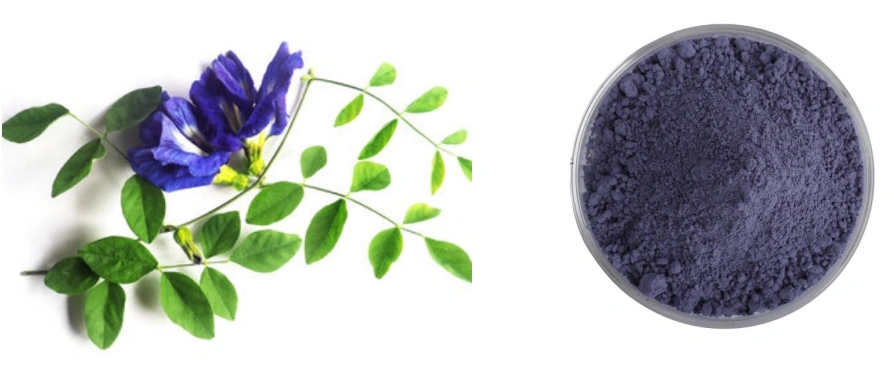
What Butterfly Pea Flower Powder Is and How It Makes Blue?
What Is Butterfly Pea Flower Powder?
A climbing plant called Clitoria ternatea grows in tropical and subtropical areas. Butterfly Pea Flower Powder is made from the dried flowers of this plant. It is cleaned, dried, and then ground into a very fine blue powder. Standardised extracts are stronger, and whole dried flowers can be soaked. This is not the same as those things. It's easy to give a lot of powder at once, measure, and dry-batch. Butterfly pea flower that has been ground up is what the Yanxi Herbs powder is made of. There are different mesh sizes, from 80 to 200, but all of it goes through an 80-mesh sieve. Before I accept a batch, I always compare the lot specs. This is because drying and grinding change the colour, smell, and amount of wetness.
How Anthocyanins Create the Blue Color?
The colour comes from anthocyanins, mostly a group called ternatins. We know that they are delphinidin-based pigments with a stacked structure that helps them keep their colour, according to a review that came out in 2021 in Frontiers in Plant Science. Most anthocyanins turn red when they are exposed to acid, so this one is different. The amount of shade depends on when it was picked, dried, and stored. A lot of light, oxygen, and heat can fade the colour over time. There may be small colour differences between lots because this comes from plants. I believe you should decide on a colour standard and request lot details for each order.
Why pH Turns Blue into Purple or Pink?
The butterfly pea flower's colour can be used to naturally find out what the pH level is. It looks blue when the pH is close to 7. When the drink isn't too acidic, it turns purple. When the drink is too acidic, it turns pink or fuchsia. This is something that the University of Florida IFAS Extension talks about in its guide to butterfly pea extract as a natural colourant. Putting lemon juice in blue tea will show you how this works. When the pH goes up, the colour turns back to blue. Check the pH of the whole thing, not just the water or base. This is a simple lesson for people who make things. Salts in the water can also change the colour of the water a little.
Butterfly Pea Flower Powder Uses in Tea, Drinks, and Confectionery
Tea, Lattes, and Color-Changing Drinks
Butterfly pea powder tea is simple to make. Just mix about ¼ teaspoon of powder with 8 ounces of hot water. Stir it, let it sit for one minute, and then strain it for a better cup. Whisk the powder into the warm plant-based milk, and then you can add any kind of sugar you like. Add lemon juice or lemonade to change the colour. There are some extra checks that people who make ready-to-drink recipes have to do. Different factors, such as acidity, viscosity, foam behaviour, and dispersion, can change the final look. It's best to test on a small scale first before making a lot of them because fine plant fibres can settle over time.
Bakery, Desserts, and Confectionery
Butterfly Pea Flower Powder can be used to make many kinds of candy, ice cream, frosting, pastries, and more. Acidity and heat decide what will happen. As late as the process will allow, test the candy after adding the powder. Once it's cooked, the colour may fade. Sugar cane has citric acid that will make the colour more purple or pink if the pH is not changed. Neutral dairy bases tend to have a bluer tone. It's important to test chocolate and other oil-based foods for spreading more because the colour doesn't dissolve in fat but in water. At first, bake only a few at a time because the heat in the oven and the mixture's pH can change the colour.
Using Butterfly Pea Flower Powder as Natural Blue Food Coloring
First, decide on the colour, pH, process temperature, and packaging that you want. Next, make a dose chart. A lot of businesses start their tests between 0.05% and 0.5% by weight. At each level, they check the price, colour, taste, smell, and texture. This level of taste stays neutral to slightly woody, and it usually comes after the main taste. Before you start, mix the powder with sugar or another dry ingredient. Then, sieve it and use high-shear mixing to help it spread out more. After that, make a pilot batch and test the stability quickly. You should save some samples from each lot for later use. Write down the requirements for each group so that your team can judge them all the same way.
Butterfly Pea Flower Powder Compared with Other Blue Options
Butterfly Pea Powder vs. Blue Spirulina
An enzyme called phycocyanin gives it its blue colour. Butterfly pea uses anthocyanins, which make them work in a different way. The 2017 Annual Review of Food Science and Technology and other reviews of food colorings say that phycocyanin doesn't do well with heat or acid. Butterfly pea powder works better when it's hot, but its colour changes when the pH changes. The spirulina powder can make things taste like the ocean, and the flower powder is mild and woodsy. Get quotes for both price and supply because they change based on sources and times of the year. However, matcha is a part of green tea and does not work in place of a blue dye. Not just the colour in the bottle, but also the pigment that works best with your process and pH.
Powder vs. Whole Flowers and Tea Bags
Flowers that are whole look nice in a café pot. When they are in hot water, the colour slowly comes out. This powder quickly turns colour and is dosed by weight, which makes it easier to make large amounts of it over and over. To make it more helpful, you can mix it dry with tea, sugar, or other things. Fine plant matter can settle to the bottom of a clear drink, though, if you don't filter it or keep it stable. Customers like tea bags because they are easy to use, but they make it harder to control how much is used when cooking. Powder makes it easier to mix and measure for big tea or private-label needs. Even now, whole flowers are a great way to make a mark at the table. Choose the file type that works with your item.
Benefits That Matter to Buyers
One good thing about butterfly pea flower powder is that it has a plant-based colour that makes it easier to put labels on things without mess. If you keep our product in the right way and seal it up, it will last for 24 months. It's easy to store dry powder. In the lab, anthocyanins found in the flower have been shown to protect cells from damage. A study from this group came out in 2019 in the magazine Evidence-Based Complementary and Alternative Medicine. Labels can't make health claims, though, because of that study. That's why I see the antioxidant numbers as background information and not as a business promise. A short list of chemicals, colour, and an easy way to measure out a dose are still the most important things for business. Find out how to name the item by looking at the marking rules in your area.
How to Choose and Buy Bulk Butterfly Pea Flower Powder?
Quality Documents and Specifications to Request
If you want to know where the food came from, what the allergen statement says, and if there are any chemical test results, you should ask for them. Place the numbers next to each other. Our powder has less than 1000 cfu/g of plate count, less than 100 cfu/g of yeast and mould count, and less than 5 ppm of ash. There are labels on it that say it is Kosher, Halal, FDA-registered, ISO, and HACCP. Also, quality managers should make sure that the butterfly pea flower extract is only used in certain kinds of food. This is because the FDA only lets it be used in certain ways. The law says that a lawyer can tell you if your product type and ingredient form are legal.
Packaging, Stock, and Lead Time
Yanxi Herbs sells Butterfly pea flower powder in large amounts. It comes in 25 kg drums, 5 kg boxes, and 1 kg bags. There is stock on hand; you can get free samples, and delivery takes one to three business days after payment. Keep the sealed packs somewhere cool, dry, and out of the light. This is because light, air, and water all make the anthocyanins less powerful. Before you choose a quote, check more than just the unit price. See how much the whole landing cost. It should include shipping, packaging, testing, the minimum order quantity, setting up the pallets, and the shelf life when they get there. We work with local warehouses in the US and Europe to help you get some orders to you faster.
How to Evaluate a Supplier
For each job, you need a different type of proof. Colour range, particle size, and the ability to spread out are things that R&D managers want. Managers who buy things want to know about price, wait time, and capacity. Managers of quality want certificates and lots that are all the same. Since 2010, Yanxi Herbs has been making natural ingredients and sending them to other countries. Their goods have been sent to over 100 different places around the world. We make things, do research and development, and grow the things we need. Kosher, Halal, ISO 22000, and HACCP have all given us their seals of approval. You can ask any seller about saving samples, shipping papers, customs rules, and keeping track of your order. It is more likely that a provider will be able to handle long-term supply with fewer shocks if they give clear answers to these questions.
Common Problems and a Practical Development Workflow
Fading, Clumping, and Sedimentation
Most of the time, fading is caused by heat, light, air, or a long hold time. Add the powder late in the process and make sure it doesn't get too hot. Put it in a clear container. Keep the drums closed and scoop with dry tools to keep the stuff from sticking together. Sedimentation is the process by which fine fibres sink to the bottom of thin liquids. If you want your drinks to be clear, you can either filter them or blend them with a dry transport first. Check the spec sheet for the particle size and make sure it works with the tools you have. The best way to spread things out is still to mix them, but a fine sift, such as the 80–200 mesh range we sell, can help. Test in more than just water; test in the whole answer.
Unexpected Purple Shades and Strong Flavor
If your drink turns purple, check the pH before it does. Citric acid, fruit juice, and sour tastes are often to blame. You could raise the pH a little or lower the acid a little, or you could just leave it at that. Salts and other dyes can also change the colour. Put the samples next to each other to see how they compare. If you taste a woody or herbal note, cut back on the amount. A bad taste usually means you added too much or the wrong base. This is because the taste isn't strong when used normally. It's not the same when goods are late, so get your paperwork together before the package leaves.
Six Steps From Concept to Production
I think you should work this way. Write down what you're selling, who you want to buy it, and what type of law it fits into. After that, check out a few suppliers and ask to see some samples. Third, test the heat tolerance, colour, flavour, amount, and distribution in the lab with a small group of people. Fourth, look for germs, feel things, and see things to make sure of the quality and consistency. The fifth step is to agree on the business standard, handling, wait time, and minimum order number. Sixth, guess what will happen and rearrange the points. Also, keep track of the lot numbers and samples that were saved. Before the first sale, these steps will help the R&D, buying, and quality teams all follow the same plan.
Conclusion
Flavonoids from Clitoria ternatea give Butterfly Pea Flower Powder its blue colour. It can be used in tea, drinks, and sweets. The colour goes from blue to purple or pink as the pH drops. To make sure the end product works, you need to test it for pH, as well as for light, heat, and storage. Powders are simple to measure out, blend dry, and add colour quickly, but fine plant fibres can settle in drinks that are already clear. It can handle heat better than blue spirulina most of the time, but acid can change its colour, so the choice relies on what the product needs. People who want to buy something should look at its features, certificates, packaging, and wait time. They should also follow a step-by-step process from testing to production. Then, a steady supply and clear instructions help keep the results the same across batches.
FAQ
Is Butterfly Pea Flower Powder safe for commercial food use?
For safety, it's important to have records for food safety, rules for the target market, and tests for contaminants. Before you buy the food, make sure you look at the certificate of analysis and talk to a regulatory adviser. The FDA only lists colour additives for certain uses.
How much powder should I use?
A lot of tests start at 0.05% to 0.5% by weight. It is important to know the goal colour, pH, and base in order to find the right amount.
Why did my blue drink turn purple or pink?
Because it is acidic, the colour changes. When you add lime, lemon, or citric acid, the pH goes down. The colour changes from blue to pink or purple. If you raise the pH, it goes back.
Does Yanxi Herbs offer samples, and what is the lead time?
Yes. There is stock on hand; you can get free samples, and delivery takes one to three business days after payment. To pack things, there are 1 kg bags, 5 kg boxes, and 25 kg drums.
Request a Free Butterfly Pea Flower Powder Sample from Yanxi Herbs
Looking for a Butterfly Pea Flower Powder supplier for your tea, beverage, or confectionery line? Yanxi Herbs offers in-stock powder, free samples, ISO, HACCP, Kosher, and Halal certificates, and delivery within 1–3 working days after payment. Email info@yanxiherbs.com or visit yanxiherbs.com to request specifications, pricing, and a sample for your own formulation trials.
References
1. Frontiers in Plant Science, 2021. "Anthocyanins from Clitoria ternatea Flower: Biosynthesis, Extraction, Stability, Antioxidant Activity, and Applications."
2. Journal of Food Science and Technology, 2021. "Extraction Methods of Butterfly Pea (Clitoria ternatea) Flower and Biological Activities of Its Phytochemicals."
3. University of Florida IFAS Extension, 2019. "Butterfly Pea (Clitoria ternatea) Flower Extract (BPFE) and Its Use as a pH-Dependent Natural Colorant."
4. Evidence-Based Complementary and Alternative Medicine, 2019. "A Commercial Potential Blue Pea (Clitoria ternatea L.) Flower Extract Incorporated Beverage Having Functional Properties."
5. Annual Review of Food Science and Technology, 2017. "Natural Colorants: Food Colorants from Natural Sources."
6. U.S. Food and Drug Administration, 2024. "Summary of Color Additives for Use in the United States in Foods, Drugs, Cosmetics, and Medical Devices."

Send Inquiry
Related Industry Knowledge
- What Manufacturing Applications Can Bulk Rose Powder Serve in Food and Personal Care Products?
- Bulk Rose Powder for Natural Flavor, Color, and Botanical Positioning in Private Label Products
- Bulk Rose Powder Supports Scalable Botanical Ingredient Sourcing for Beauty and Wellness Product Manufacturing
- Instant Green Tea Powder for Ready-to-Mix Beverages, Tea Blends, and Functional Drink Manufacturing