
Chlorophyll Powder for Plant-Based Drinks and Instant Beverage Mixes
Oct 16, 2026
If you source ingredients for plant-based beverages or instant drink mixes, chlorophyll powder deserves a spot on your radar. This concentrated green pigment delivers natural color, functional nutrition, and clean-label appeal in a single ingredient. Pair it with a complementary botanical like Purple yam powder—derived from Dioscorea alata and rich in natural anthocyanins—and you get a formulation that covers the full color spectrum while meeting today's demand for transparent, plant-forward ingredient decks.
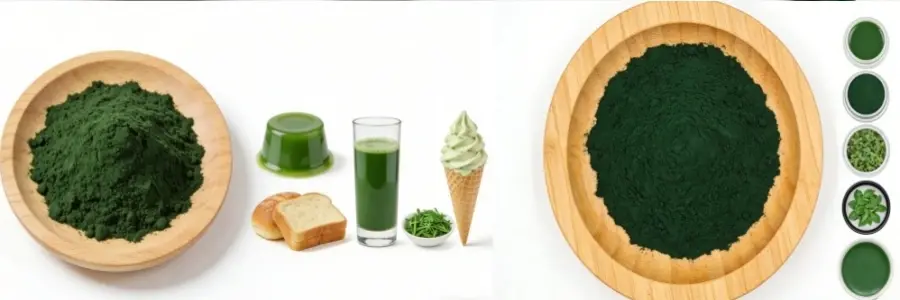
Understanding Chlorophyll Powder and Its Role in Plant-Based Beverages
What Chlorophyll Powder Actually Is
Plants like mulberry leaf, spinach, and alfalfa are used to get the green color that goes into chlorophyll powder. The powder is then dried out until it is stable enough to mix with water. When you take chlorophyll out of plants, you get chlorophyll powder, which is not the same thing. The powdered form is easier to use in large production runs because the pigment content can be controlled and stays the same.
Functional Benefits for Beverage Formulation
Chlorophyll powder does more than just turn drinks green. Good at fighting free radicals, a study in the journal Food Chemistry found that foods with chlorophyllin are very good at it. It helps the body clean itself, according to a number of other studies. It can be used to cover up light tastes, which is helpful when working with bitter plant bases. Getting rid of free radicals is another way to keep things new.
Where Purple Yam Powder Fits In
Green and purple dyes have to be used in the same line of drinks because more people want herbal drinks that come in more than one color. The strong violet color of Purple Yam Powder comes from anthocyanins, which are found in the plant's fresh roots. People who make drinks from plants can use chlorophyll and ube powder to make lines that look good and don't use any fake dyes.
How to Choose and Use Chlorophyll Powder for Instant Beverage Mixes
Key Quality Metrics to Check
Make sure these things are true with your supplier before you place a big order:
- Purity: Look for a CH4 level that is regulated and a COA from a third-party lab that is approved by the government.
- Solubility: Grades that are water-dispersible break down more quickly in quick mixes and settle out less over time.
- Shelf life: If you keep something that has been dried and packed safely, it should be safe for at least 24 months.
- Certifications: If you want to sell your goods in the EU and the US, you need to be ISO 22000, HACCP, Kosher, and Halal approved.
The way things are made often changes because of these acts. There is a risk when someone in the supply chain can't provide batch-to-batch COA information.
Dosage Guidelines by Application
For each type of drug, the dose is different. There should be between 0.5% and 1% by weight of green smoothie powder in a container. Since the powder is mixed with some water, many quick drink packets only need 0.2 to 0.5 percent. When you add Purple Yam Powder to a stacked or mixed drink, make sure that all of the other ingredients stay in the same range so that neither color will be too strong in the end cup.
Formulation Example: Two-Tone Instant Drink Sachet
A simple recipe could use 0.4% green powder and 5–8% Dioscorea alata powder, a natural flavor carrier, and a sugar base with no calories. Before you stir, you can see that the purple and green layers are separate in the glass. It stands out on the wall and on social media because of this. There's no need for fake color because the name stays clean.
Comparing Chlorophyll Powder with Other Natural Green Ingredients
Chlorophyll Powder vs. Spirulina and Matcha
Each green food is unique. Most of the time, you need to add flavors to spirulina to hide its strong seaweed smell. It's hard to use matcha in drinks that don't have any other flavor because it tastes very much like plants. When used in the right amounts, chlorophyll powder doesn't taste good, though. When you need to mix something quickly and keep the flavors even, this is a better choice. It also costs less per serving than ceremonial matcha.
Purple Yam Powder vs. Taro and Sweet Potato Powders
Purple yam, also known as Dioscorea alata, is a root vegetable powder that tastes sweet and earthy and is a deep violet color. When mixed with taro powder (Colocasia esculenta), it tastes softer and has more starch, while the color changes to a lighter lilac-gray. Purple sweet potato powder has more sugar than white sweet potato powder most of the time. For business-to-business buyers who want to call their goods "clean label" or "low sugar," Purple Yam Powder at 80 mesh is the better choice.
Organic vs. Non-Organic Sourcing
Getting organic approval costs more, but it lets you sell your products in more places. There is now proof that the chemicals in drinks in the US affect many people who buy food and drinks for shops and restaurants. Industrial bakeries and supplement capsules are two places where non-organic grades can still be used. This is because the organic benefits are not a big part of the product's sales pitch. Before you choose a source tier, think about the age group you want to reach.
Procurement Strategies and Supplier Selection
Bulk Purchasing Best Practices
A lot of the time, plant powder prices go up every 25 kg, 100 kg, and 500 kg. Lead times should be talked about at the beginning of the deal, not after the first sale. If crops don't grow well, the company that sells green powder and Purple Yam Powder should have extra on hand. This will help you keep to your plan for making things. When Yanxi Herbs first opened in 2010, it grew its own herbs and made its own goods to reduce supply risk.
How to Verify Supplier Credibility
You should be able to get ISO 22000 and HACCP certificates, a COA for each batch of output, heavy metal test results, and virus count information right away from anyone you ask. Less than 10 parts per million (ppm) of heavy metals and 1,000 cfu/g of total plate count are required in the specification. It's the same level as what the FDA and the EU set for food safety. It's better to ask for these papers before sampling than after.
Cost Factors Often Overlooked
You should think about more than just the unit price. You should also think about the customs classification codes, the import taxes on botanical extracts coming into the US, the fees for third-party testing if your quality control team has to test each batch again, and the costs of any cold storage or temperature control storage you may need. You might pay more per kilogram from a cheaper source with unknown wait times, but in the long run, you'll save more money if you buy from a seller who ships faster and has papers ready to export.
Addressing Challenges and Risks
Quality and Adulteration Risks
Changing chlorophyll powder usually means switching from natural dyes to man-made ones. This takes place when green dyes that are less expensive are mixed with copper chlorophyllin. You should always ask for HPLC findings. The best way to tell if an ube powder is good is to look at how much anthocyanin it has. The color might fade quickly when water is added if the powder doesn't have enough anthocyanin or wasn't dried properly.
Regulatory Compliance in the US Market
21 CFR Part 73 is the law in the US that says chlorophyll and chlorophyllin can be used to color food. People can eat Purple Yam Powder as long as it is used as an ingredient in a whole food. See if the source you're using has anything to do with the FDA. Things that are going to be used in dietary supplements need to follow stricter rules for labeling and paperwork, so this is very important.
Storage and Handling
Both powder types can soak up water. Keep them below 25°C and at least 60% relative humidity in bags or drums with rubber seals. Make sure you know the pH of the finished product before you scale it. Because the root powder's anthocyanins are pH-sensitive, they change color from red to blue-green in alkaline conditions. Products can be kept for 24 months if packed well.
Conclusion
Chlorophyll powder and Purple Yam Powder are two of the best natural colorants that drink makers can get right now. There are different kinds of colors, and each one has its own "clean label" rules for safety and nutrition. For buying teams, the choice comes down to quality from a known source, paperwork that is the same for each batch, and a supply they can depend on. Yanxi Herbs has all three of these: ISO, HACCP, Kosher, Halal, and FDA approval.
FAQ
Is chlorophyll powder suitable for all plant-based beverage types?
Any cold-process drink, quick drink mix, or ready-to-drink (RTD) format can use it. Keep in mind that if you handle chlorophyllin sodium copper salt grades at temperatures above 85°C, the color might not be as strong. This is the first thing you should always do to make sure your process will work.
What is the anthocyanin benefit of purple yam powder?
This type of antioxidant is found in plants such as Dioscorea alata. These things support the idea of a "clean label" and help fight free radicals. In Yanxi Herbs' Purple Yam Powder, there is no added sugar or fake stuff. It is completely clean and has been dried with a spray. It can be used in healthy foods and vitamins.
What are the minimum order quantities and lead times?
Yanxi Herbs sells the root powder in 25 kg drums, 5 kg boxes, and 1 kg bags. The package will be sent out one to three business days after we get paid. Samples are free for people who meet the requirements. Email info@yanxiherbs.com to get chlorophyll powder samples or to find out how much you need to order in order to place an order.
Can these powders be used together in one formula?
Yes, these ingredients blend well. Both pigments can change color and become less of what they were meant to be if the pH level is too high, so test pH balance carefully.
Source Your Chlorophyll and Purple Yam Powder from Yanxi Herbs
Since 2010, Yanxi Herbs has sent high-quality plant-based goods to more than 100 countries. Are you not sure if you need chlorophyll powder for a line of green drinks or a verified Purple Yam Powder source for functional drink recipes? The export paperwork, samples, and custom specs can all be taken care of by our team. To get a free sample, email us at info@yanxiherbs.com or go to yanxiherbs.com right now.
References
1. Humphrey, A. M. (2004). Chlorophyll as a color and functional ingredient. Journal of Food Science, 69(5), C422–C425.
2. Ferruzzi, M. G., & Blakeslee, J. (2007). Digestion, absorption, and cancer preventative activity of dietary chlorophyll derivatives. Nutrition Research, 27(1), 1–12.
3. Khoo, H. E., Azlan, A., Tang, S. T., & Lim, S. M. (2017). Anthocyanidins and anthocyanins: Colored pigments as food, pharmaceutical ingredients, and the potential health benefits. Food & Nutrition Research, 61(1), 1361779.
4. Wrolstad, R. E., & Culver, C. A. (2012). Alternatives to those artificial FD&C food colorants. Annual Review of Food Science and Technology, 3, 59–77.
5. Boo, H. O., Hwang, S. J., Bae, C. S., Park, S. H., Heo, B. G., & Gorinstein, S. (2012). Extraction and characterization of some natural plant pigments. Industrial Crops and Products, 40, 129–135.
6. U.S. Food and Drug Administration. (2023). Color additives permitted for use in human food — 21 CFR Part 73. FDA Food Ingredient Databases.

Send Inquiry
Related Industry Knowledge
- What Makes Butterfly Pea Flower Powder Suitable for Natural Color Applications?
- Why Do Food Manufacturers Choose Freeze-Dried Lemon Powder Over Fresh Citrus Ingredients?
- High Purity Butterfly Pea Flower Extract Powder For Functional Beverage Production
- Freeze-dried Dragon Fruit Powder for Vibrant Natural Color and Clean Label Formulations
_1787033972542.webp)