Dragon Fruit Powder for Fruit Beverage Manufacturers and Plant-Based Food Product Development
Nov 17, 2026
People who make fruit drinks and plant-based foods can use dragon fruit powder to add colour and flavour from fruit without having to handle real fruit. Bulk Dragon Fruit Powder, also known as pitaya powder, gives smoothies, quick drinks, dairy-free options, bars, and baked goods their natural purple-red colour, fruity flavour, and healthy fibre. You'll get the best results if you match the drying method, particle size, and documentation to your formula and then test samples in the real product. This guide shows how Yanxi Herbs makes decisions like that.
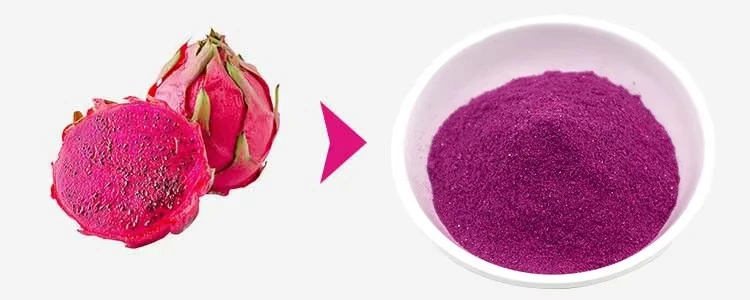
Why Manufacturers Choose Pitaya Powder and How It Is Made?
Why Manufacturers Move From Fresh Fruit to Powder?
Keeping fresh dragon fruit in the fridge, peeling it, and pulping it all take work and make each batch different. Most of that work is done by a powder. It's weighed, mixed, and then you move on. Bulk Dragon Fruit Powder also gives plant-based teams a vegan, fruit-forward ingredient that helps with clean labelling when the requirements are kept simple.
Powder is judged differently by industrial buyers than by retail buyers. Fruit solids, carrier content, drying method, moisture, colour, solubility, microbiological limits, and paperwork are some of the things that they look at. The R&D, purchasing, and quality teams can find a good balance between sensory results, production speed, compliance, and supply continuity by picking the right format.
Nutrition, Ingredients, and Functional Properties
The flavour of a powder depends on where it comes from—whole fruit, pulp, or juice extract, with or without maltodextrin or another carrier. Ask for a recent Certificate of Analysis that lists the amount of fat, protein, fibre, carbs, and sugars in the food.
There is a type of betalain pigment called betacyanins that gives red pitaya its purple-red colour. In a 2002 Food Chemistry study, Stintzing and his colleagues talked about these pigments in red-purple pitaya. Betacyanins, dietary fibre, and natural vitamins are some of the active ingredients in our powder. The way we process it keeps betacyanins at levels above 85%. Most of the time, red pitaya gives a stronger colour, while white pitaya gives a softer look. You should test the colour, dispersibility, hygroscopicity, and stability in the context of your own use.
How Is Commercial Dragon Fruit Powder Made?
Fruit is usually ready for commercial production after it has been inspected, washed, sorted, peeled, pulped, dried, milled, sieved, packaged, and batch records are kept. Colour, smell, stability, and cost are all changed by drying. Spray-drying is good for instant drinks and high-volume lines, while freeze-drying tends to bring out the fruit flavour more. They looked at spray-dried pitaya powder as a natural colourant in a 2012 study in Food Science and Biotechnology.
We choose the best red pitayas, dry them with current spray drying, and then sort the powder through a 60-80 mesh screen. Checks for quality should look at things like moisture, particle size, microbiological safety, foreign matter, and the consistency of the lot. Ask any supplier about the types of fruits they sell, where they come from, the tools they use to process them, and their production records.
Choosing and Using Bulk Dragon Fruit Powder in Beverages and Plant-Based Foods
Matching the Powder to Your Finished Product
One powder that is used in baked goods, plant-based yoghurt, or an extruded snack needs to dissolve differently, have different particle sizes, and hold its colour better than another powder that is used in cold drinks. Compare the types of ingredients, the amount of food solids, the wetness, the water activity, the bulk density, the pH, the ability to disperse, the limits of microbes, and the colour values. Write down the amount of extra sugar, carriers, organic status, and pitaya type.
The price per kilogram doesn't tell you much by itself. It costs more in the long run to use a powder that doesn't mix well or fades in your drink. It is much more useful to test samples in the actual product matrix than to compare dry powders side by side.
What Our Powder Offers Formulators?
Our Bulk Dragon Fruit Powder is a fine, purple-red powder made from the fruit. It has a mesh size of 60 to 80. It mixes well with water, and the fine texture doesn't leave behind any messy seed dust, which is good for lines with a lot of volume. This keeps the loss during drying at or below 5%, which stops caking.
Bulk Dragon Fruit Powder is used as a base for bubble tea, fruit juice blends, energy drinks, and tropical drinks that are ready to drink. This is something that food teams put in breakfast cereals, nutrition bars, yoghurt toppings, and baking mixes. Standardised particle size is used by supplement companies when making capsules and tablets so that automatic packaging systems can give the right dose every time.
Application Guidance for Beverages and Plant-Based Foods
When mixing liquids, vortex mixing at 1000 to 1500 rpm for 3 to 5 minutes spreads the ingredients out evenly. It also helps to mix the dry ingredients together first. Keep track of the colour, pH, sedimentation, hydration time, and viscosity.
Betalain pigments don't like being hot, so if your process lets you, add the powder after the heat step. The temperature limits for heat-sensitive formulas are shared by our technical team. Proteins, fats, fermentation, and water activity can change how plant-based yoghurt, bars, and baked goods turn out. Do practice tests with different doses. Test more than one production lot where uniformity is very important.
Quality Standards and Supplier Evaluation
Documents Your Quality Team Should Request
A reliable seller gives you clear papers right away. Ask for the Certificate of Analysis, the product data sheet, the bacterial results, the pesticide and heavy metal reports, the allergy and non-GMO statements, and the information about the place where the food came from. Check out certificates for food safety like HACCP and ISO 22000.
When we ship something, we include a Certificate of Analysis, an MSDS, and phytosanitary licenses. Our products are certified by ISO 22000, HACCP, SGS, Kosher, and Halal, and they are also FDA-registered. Quality managers should also check with their legal advisors to make sure that the label claims fit the use that the product is meant for in the U.S. market.
Product Specifications at a Glance
This table lists the core numbers your R&D and quality teams will check first.
| Item | Specification |
|---|---|
| Appearance | Purple red fine powder |
| Specification | 60-80 mesh |
| Used Part | Fruit |
| Active Ingredients | Betacyanins, dietary fiber, natural vitamins |
| Loss on Drying | ≤5% |
| Ash Content | ≤5% |
| Heavy Metals | ≤10 ppm |
| Total Plate Count | <1000 cfu/g |
| Yeast & Mold | <100 cfu/g |
| Shelf Life | 24 months, sealed and properly stored |
Use these limits as the reference when you approve samples and later lots.
A Supplier Scorecard for Quality, Supply, and Support
This is the scorecard that I think your R&D, purchasing, and quality teams should use to compare offers.
- Compare Certificates of Analysis from more than one lot to get good evidence. If you compare batches, look at the colour, wetness, microbial results, and heavy metals. Numbers that stay the same show that you're in control of the process, and they give your quality manager a clear way to check new inspections, handle complaints, and do reports.
- Supply and logistics: Before you plan a launch, make sure you know how much stock you have, how long the lead time is, what kinds of packaging you can use, and how you will ship your products. Find out if the supplier ships from nearby warehouses, how it handles urgent orders, and what happens if you change your mind about the forecast. They will keep your production plan safer than a small price difference.
- Help with technology: Check to see if the supplier's R&D team can answer questions about formulation, change particle size, and talk about how much heat can be used to process heat-sensitive pigments. When full production starts, problems with dispersion, fading, or caking are usually fixed faster by a supplier who is involved in the pilot tests.
These three checks cover the most common reasons why lots are rejected and ingredients are late.
Pricing, Packaging, Storage, and Delivery
What Shapes Landed Cost?
The price given for Bulk Dragon Fruit Powder is for more than just the fruit. The total landing cost depends on the type of fruit, how it was dried, how much fruit solids were in it, the carrier used, the amount of fruit that was packed, the season, the order number, testing, freight, taxes, insurance, and the final location.
Check to see if there are minimum order quantities for each SKU, type of packaging, or production batch. A good request for a quote includes the type of powder, its use, the annual volume, the size of the packaging, its destination, Incoterms, certifications, sample needs, lead time, and any OEM or private-label needs. The more information you give us, the better our advice will be.
Packaging and Shipping Options
Dragon Fruit Powder in Bulk comes in 1 kg foil bags, 5 kg boxes, and 25 kg fibre drums with two polyethylene bags inside each one. There are tamper-evident seals and humidity indicators on the containers. Big makers can buy 500 kg boxes that are labelled with their own information.
The item is in stock, and it will be sent out one to three business days after payment. International orders can be sent by air freight in three to five days, and large packages can be sent by sea freight for less money. We also keep warehouses in Europe and the US so that buyers in those areas can get their orders faster.
Storage and Shelf Life
Changes in light, air, temperature, and humidity can all affect dragon fruit powder. Keep it closed, below 25°C, in a dry place out of direct sunlight. Quickly reseal packages that have been opened, and always use dry, food-grade tools to handle them.
Our powder will last for 24 months if you keep it this way. The food's shelf life is still affected by moisture, how the water reacts, the barrier of the packaging, and how clean your floor is. Keep some samples from each lot and check them for colour, smell, flowability, wetness, and the presence of microbes. Their study in the Journal of Food Science in 2006 showed that betalain pigments lose their colour when they come in contact with heat, light, and air.
Building a Long-Term Supply Program
From Sample to Supplier Approval
It takes little to build a strong supply programme. Ask for a free sample and then test it in the lab and on a small scale. R&D checks for colour, flavour, solubility, and stability. Your quality and purchasing teams look over certificates, traceability, production capacity, and rules for controlling changes.
Write down the ranges of colour, wetness, particle size, and bacterial data that are suitable. Ask the supplier to let you know ahead of time if there are any big changes. With these steps, you can turn a good sample into a written approval that you can use in case of an audit.
Customization and Private-Label Support
There are many projects that need more than just a grade. Our expert team changes the size of the particles, talks about how to keep the carriers stable, and goes over the needs for organic certification. For any size order, we can also make unique packages, and for big orders, we can name them.
Custom blends, instant drink mixes, smoothie products, and nutrition formulas are some of the things that can be made for private label and OEM work. Our R&D staff helps us come up with the best ways to use the powder. Early on, let us know what application you want to use, as this will affect all of your other choices.
A Simple Decision Process for Selecting a Powder
Don't choose a powder just because it's the cheapest. First, make sure that the drying method, variety, colour, ability to dissolve, and stability are all right for the job. Next, make sure that there are no exceptions to the rules about added sugar, allergens, microbiological limits, contaminants, and paperwork. Then, look at the landed cost, the MOQ, the lead time, the packaging, and the technical support.
Support the final choice with samples that have been tried in the intended use, written specs, and a clear way to handle complaints, batches that don't meet requirements, and replacement orders. If you can, find a main seller and a backup source to lower the risk of shipping delays and fruit shortages during certain times of the year.
Conclusion
Bulk Dragon Fruit Powder is a stable ingredient that can be used instead of fresh fruit when making fruit drinks and plant-based foods. The right choice relies on the source, the way it is dried, the amount of transport, the particle size, and the final product. Red pitaya powder that has been spray-dried spreads quickly and has a strong colour. But betalain pigments need to be handled carefully around heat, light, and air. Price per kilogram is not as important as application testing, written specs, and full quality papers. The buying picture is finished with landed cost, packaging, storage, and shelf life. A step-by-step process that includes sampling, pilot tests, supplier approval, and lot monitoring ensures that the product stays consistent and the supply stays steady over time.
FAQ
Which is better for beverages, spray-dried or freeze-dried powder?
It works best for instant drinks and high-volume lines because spray-dried powder dissolves and flows more quickly. It's more likely that freeze-dried powder will still taste like whole fruit. Your finished product tells you.
Does the powder contain carriers or added sugar?
Not all suppliers do this. Ask for the written specification and the Certificate of Analysis, and make sure you know what's in the carrier for your order.
How long does Bulk Dragon Fruit Powder last?
If you seal it up and keep it below 25°C in a dry place out of the sun, our powder will last for 24 months.
What package sizes do you offer?
We pack 1 kg bags, 5 kg boxes, 25 kg drums, and 500 kg pallets for big producers. We can also make your own packaging.
Can I use it in heat-treated products?
Betalain pigments don't like heat. If you can, add the powder after the heat step. Also, let our team know what temperatures are too high or too low for your process.
Request a Bulk Dragon Fruit Powder Sample or Quotation from Yanxi Herbs
Ready to test Bulk Dragon Fruit Powder in your next beverage or plant-based formula? Yanxi Herbs is a Bulk Dragon Fruit Powder supplier with free samples, in-stock product that ships within 1-3 working days after payment, ISO 22000, HACCP, Kosher, and Halal certification, and local warehousing in Europe and the US. Email info@yanxiherbs.com with your application, volume, and destination, or visit yanxiherbs.com for details.
References
1. Fruits, 2006 – Le Bellec, Vaillant, and Imbert, "Pitahaya (Hylocereus spp.): A New Fruit Crop, a Market with a Future"
2. Food Chemistry, 2002 – Stintzing, Schieber, and Carle, "Betacyanins in Fruits from Red-Purple Pitaya, Hylocereus polyrhizus (Weber) Britton & Rose"
3. Journal of Food Science, 2006 – Herbach, Stintzing, and Carle, "Betalain Stability and Degradation: Structural and Chromatic Aspects"
4. Food Science and Biotechnology, 2012 – Tze et al., "Physicochemical and Nutritional Properties of Spray-Dried Pitaya Fruit Powder as Natural Colorant"
5. Codex Alimentarius Commission, 2020 – General Principles of Food Hygiene (CXC 1-1969)
6. U.S. Food and Drug Administration, 2015 – Current Good Manufacturing Practice, Hazard Analysis, and Risk-Based Preventive Controls for Human Food (FSMA Final Rule)

Send Inquiry