
Freeze-Dried Dragon Fruit Powder: Preserving Color During Food Processing
Oct 19, 2026
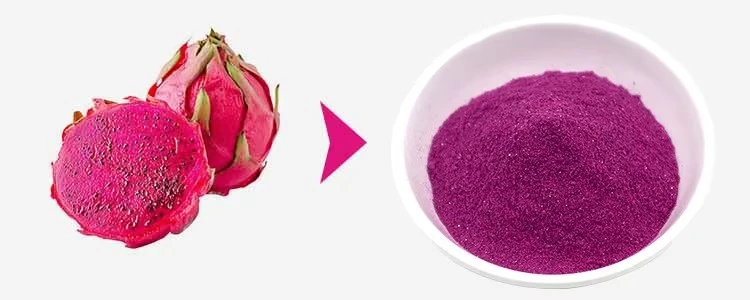
Freeze-dried dragon fruit powder has become one of the most sought-after natural colorants in modern food manufacturing. Produced through a low-temperature sublimation process, it retains the fruit's natural betalains, antioxidants, and vivid magenta pigment without added sugars or preservatives. For B2B buyers in beverage, bakery, supplement, and cosmetic sectors, color stability is not just an aesthetic concern — it directly affects shelf appeal, label claims, and consumer confidence. This article explains how freeze-drying protects that color and why it matters at every stage of production.
Understanding Freeze-Dried Dragon Fruit Powder and Color Preservation
Why Color Retention Matters in Food Manufacturing
People often decide how good something is by looking at its color first. Most people buy things in this market because they say they are natural or have clean labels. A dull or inconsistent color can quickly hurt brand trust. Pitaya powder naturally turns pink to magenta. This color lets companies that make drinks, dairy products, or healthy snacks know that the product is new, works well, and is worth more on the shelf.
What Makes Betalains So Fragile
Red dragon fruit's main color comes from betacyanins, which are a type of betalain. As a study in the journal Food Chemistry confirmed, betacyanins break down quickly when they come into contact with air, heat above 70°C, or UV light. It is very bad to spray-dry normally, with temperatures between 150°C and 200°C. The powder that is made has lost a lot of its color and is not as good at fighting free radicals.
How Freeze-Drying Solves the Problem
It gets rid of wetness by sublimating it at very low temperatures, usually around -40°C, while the vacuum pressure stays the same. This way of making the powder saves its bright purple-red color and nutritional value by skipping the high heat that kills betacyanins. Colorimetric CIELAB tests always show that freeze-dried powder does better than dried dragon fruit. It has darker a* values that show better red pigment preservation.
The Freeze-Drying Process: From Fresh Dragon Fruit to Vibrant Powder
Raw Material Selection and Pre-Treatment
Producing consistent Freeze-dried Dragon Fruit Powder begins with selecting ripe, high-quality red dragon fruit (Hylocereus costaricensis) with suitable colour characteristics and raw material quality. Since betacyanins contribute to the fruit's distinctive pink-red colour, choosing fruit with consistent pigment levels can help manufacturers achieve more predictable results in the finished Freeze-dried Dragon Fruit Powder. Before freezing, the fruit should be carefully sorted, washed, and cut under hygienic processing conditions to remove damaged material and prepare it for drying. Depending on the production process, appropriate pretreatment may also be considered to help limit enzymatic browning and preserve the fruit's natural appearance. However, any additives or processing aids must be suitable for the intended application and comply with the relevant food regulations. For large-scale production, these upstream quality-control measures are essential when manufacturing Freeze-dried Dragon Fruit Powder, as differences in fruit maturity, pigment content, and handling can affect the final product. Procurement managers should therefore look for suppliers with documented raw material selection criteria, traceability systems, and consistent batch-testing procedures. When evaluating Freeze-dried Dragon Fruit Powder, buyers should review colour specifications, moisture content, particle size, and certificates of analysis to confirm that the ingredient meets their requirements. By controlling raw material quality and processing conditions, manufacturers can improve batch consistency and produce Freeze-dried Dragon Fruit Powder that better meets the needs of commercial food applications. Reliable upstream quality management also helps businesses maintain predictable specifications when purchasing Freeze-dried Dragon Fruit Powder in bulk.
Controlled Freezing and Vacuum Sublimation
The fruit is quickly frozen to -40°C to keep the cells' shape after being pre-treated. After that, the substance goes into a chamber with no airflow. There, the ice changes directly into vapor without first going through a liquid phase. In this way, the fruit solids keep their sponge-like, porous structure, which makes it easy for cold water to dissolve the powder. Fine purple-red powder with a moisture level of ≤5% and a mesh size of 60–80 is what is made.
Real-World Application Outcomes
The drink company that added this to a cold-brew hibiscus-dragon fruit mix said that the color stayed pink through 12 production batches. This is an important quality for store shelves to meet. Since adding it before high-heat baking could break down the betacyanin, bakeries have used it to keep the color of glazed pastries after they've been baked. These examples from real life show that the feature works well in business.
Comparing Freeze-Dried Dragon Fruit Powder with Alternative Products
Freeze-Dried vs. Spray-Dried Dragon Fruit Powder
Spray-drying is faster and less expensive, but a study in the Journal of Food Engineering shows that the high temperatures at the beginning of the process cut the amount of betacyanin by up to 60%. Most of the time, maltodextrin transporters are needed for spray-dried types. These make the natural color less concentrated and add carbs to the label at the end. On the other hand, freeze-dried powder is made of nothing but fruit. It's a better choice for clean-label lines because of this.
Freeze-Dried vs. Dehydrated Dragon Fruit Alternatives
Some heat-sensitive chemicals are broken down by air or drum drying at temperatures between 60°C and 80°C. This makes the powder darker and less uniform. Different types also have different textures. Dried varieties tend to stick together more because they still have more water in them. Pitaya powder that has been freeze-dried has a water activity below 0.3 and can be kept for 24 months in containers that have been sealed. These are measurable benefits that matter to supply chain managers who plan product runs that last a long time.
Organic Certification and Market Positioning
If a business in the U.S. or Europe wants to sell to health-conscious people, it needs to get organic approval. Major grocery shops like Whole Foods and Aldi are looking for Freeze-dried Dragon Fruit Powder that has been certified organic. This powder can be traced back to its source and has a smaller risk of having pesticide residue. When quality managers look for sellers for these channels, they usually pick ones that can give them both organic paperwork and microbiological screening results from a third party.
Practical Applications and Benefits in the Food Industry
Application Sectors and Dosage Guidance
There are many ways to use the powder because it is very adaptable. Right now, these are the main ways that producers can use pitaya powder effectively:
- Beverage sector: Used at 1–3% in cold-pressed juices, plant-based lattes, and instant tea blends to deliver a natural pink tone and mild tropical flavor without synthetic dyes.
- Bakery and confectionery: Applied at 0.5–2% in icings, frostings, and macaron shells where post-bake color application preserves betacyanin integrity.
- Nutraceuticals and supplements: Incorporated into superfood blend capsules and meal replacement powders at 5–10% for antioxidant label claims supported by actual betacyanin content.
- Cosmeceuticals: Used in powder-to-paste face masks and natural lip tints, where its pigmentary quality and antioxidant profile serve both aesthetic and skin-benefit functions.
It is added to cold-pressed juices, plant-based lattes, and instant tea blends at a concentration of 1% to 3% to give them a natural pink color and a mild tropical flavor without using artificial dyes.
Betacyanin is used in frostings, icings, and macaron shells at a concentration of 0.5 to 2%. Adding color after baking protects the structure of the betacyanin.
Foods and supplements: 5–10% of this substance is added to meal replacement powders and pills with a superfood mix to back up the antioxidant claims on the label. It is used in natural lip tints and powder-to-paste face masks because it gives color and has antioxidants that are good for the skin.
Health Benefits and Clean-Label Value
You can use the same ingredient in more than one line of products without having to change the way it's made. This freedom to buy things from different categories makes it easy for R&D teams that are in charge of many projects.
Procurement Guide: Sourcing Freeze-Dried Dragon Fruit Powder for B2B Clients
Supplier Evaluation Criteria
When purchasing Freeze-dried Dragon Fruit Powder, there are three major things that people should think about. First, make sure that color retention standards are met by using CIELAB colorimetric data from more than one batch. When a* values stay the same, it means that the process is under control. After that, look at the qualifications. To sell in the US and EU, you need to be registered with ISO 22000, HACCP, Kosher, Halal, and the FDA. Third, make sure you get all the information you need to get a full picture of where the materials came from and the results of any pesticide residue tests.
Logistics, MOQ, and Storage Considerations
When you buy in bulk, the standard packaging options are 1 kg/bag, 5 kg/box, and 25 kg/drum. These can be used for both small test runs and large production runs. Food has a 24-month shelf life if it is kept in foil containers with lids, out of direct light, and with a relative humidity below 40%. If someone wants to do business with a supplier for a long time, they should make sure that the seller has stock and can ship within one to three business days of getting paid.
OEM and Private Label Options
With OEM and private label deals, brands can choose their own mesh sizes, blend formulas, and package their goods in any way they want. This is very important for supplement companies and companies that sell makeup products that need more details than the normal 60–80 mesh. It saves a lot of time and work during the product development cycle to make sure that a supplier can handle requests for custom formulations from the start.
Conclusion
Producing high-quality Freeze-dried Dragon Fruit Powder requires careful control of processing conditions to help preserve the fruit's natural colour, flavour, and overall quality. For manufacturers in the food, supplement, and cosmetics industries, Freeze-dried Dragon Fruit Powder offers a convenient botanical ingredient that can be evaluated for different formulation needs. Freeze-drying removes moisture at low temperatures, which can help retain certain heat-sensitive compounds, including betacyanins responsible for the pink-red colour of red dragon fruit. However, actual pigment retention depends on the raw material, processing parameters, and storage conditions, so suppliers should provide relevant product specifications and supporting test results. When sourcing Freeze-dried Dragon Fruit Powder, procurement and R&D teams should assess colour consistency, moisture content, particle size, microbiological quality, and suitability for the intended application. Understanding how processing affects Freeze-dried Dragon Fruit Powder also helps product developers establish appropriate storage and handling procedures. For commercial applications, buyers should review batch-specific certificates of analysis, traceability records, and applicable regulatory documentation before confirming a supplier. Proper moisture-resistant packaging and suitable storage conditions can help maintain the quality of Freeze-dried Dragon Fruit Powder throughout distribution. By comparing processing methods, testing results, and supplier quality systems, businesses can determine whether Freeze-dried Dragon Fruit Powder meets their formulation and procurement requirements. A consistent supply of well-documented Freeze-dried Dragon Fruit Powder can support product development across multiple industries while helping manufacturers maintain reliable quality standards.
FAQ
Does the powder contain added sugars?
We don't think so. The freeze-drying process only makes the fruit sweeter. It can be used in low-sugar and clean-label goods where it's important for business to be able to see the ingredients clearly.
Will the pink color hold in cold beverages?
Yes. When you lyophilize something, you make particles that are porous and dissolve easily in cold water or plant-based milks. When betacyanins are in cold, acidic conditions, they don't change. It is safe to use as a natural colorant in cold brew and ready-to-drink drinks because of this.
Why does the powder sometimes clump?
Dragon fruit powder soaks up water because it has sugar in it naturally. It won't absorb water if you store it in sealed foil packages with a relative humidity of less than 40%. This also keeps the smooth smoothness needed for accurate doses during production.
Is it stable during baking?
Betacyanins start to break down when the temperature goes above 70°C. If the glaze, frosting, or icing has already been heated, the powder will work better. It will not work as well in doughs that will be baked at temperatures above 150°C.
How does it compare nutritionally to fresh dragon fruit?
Fruits that have been freeze-dried have more vitamin C, fiber, and betacyanin in them, and they can be stored for a long time. When the food is processed, some of these chemicals are lost. However, freeze-dried food saves a lot more of them than spray-dried or normally frozen food.
Partner with Yanxi Herbs for Premium Freeze-Dried Dragon Fruit Powder Supply
Yanxi Herbs has been selling natural goods that are safe for people all over the world since 2010. As a reputable provider of Freeze-dried Dragon Fruit Powder, we offer goods that are ISO 22000, HACCP, Kosher, Halal, and FDA-registered. We also offer free samples, flexible minimum order quantities, and fast shipping. To get more information and to buy in bulk, go to yanxiherbs.com or email our team at info@yanxiherbs.com right away.
References
1. Herbach, K. M., Stintzing, F. C., & Carle, R. (2006). Betalain stability and degradation — structural and chromatic aspects. Journal of Food Science, 71(4), R41–R50.
2. Nerd, A., Sitrit, Y., Kaushik, R. A., & Mizrahi, Y. (2002). High summer temperatures inhibit flowering in vine pitaya crops. Scientia Horticulturae, 96(1–4), 343–350.
3. Esquivel, P., & Araya-Quesada, Y. (2012). Characterization of the edible parts of yellow pitaya (Selenicereus megalanthus). Food Research International, 46(2), 557–563.
4. Cortez, R., Luna-Vital, D. A., Margulis, D., & González de Mejía, E. (2017). Natural pigments: stabilization methods of anthocyanins for food applications. Comprehensive Reviews in Food Science and Food Safety, 16(1), 180–198.
5. Ratti, C. (2001). Hot air and freeze-drying of high-value foods: a review. Journal of Food Engineering, 49(4), 311–319.
6. Kha, T. C., Nguyen, M. H., & Roach, P. D. (2010). Effects of spray drying conditions on the physicochemical and antioxidant properties of the Gac (Momordica cochinchinensis) fruit aril powder. Journal of Food Engineering, 98(3), 385–392.

Send Inquiry

Related Industry Knowledge
- What Makes Butterfly Pea Flower Powder Suitable for Natural Color Applications?
- Why Do Food Manufacturers Choose Freeze-Dried Lemon Powder Over Fresh Citrus Ingredients?
- High Purity Butterfly Pea Flower Extract Powder For Functional Beverage Production
- Freeze-dried Dragon Fruit Powder for Vibrant Natural Color and Clean Label Formulations