
How Butterfly Pea Flower Powder Creates Blue and Purple Desserts
Oct 17, 2026
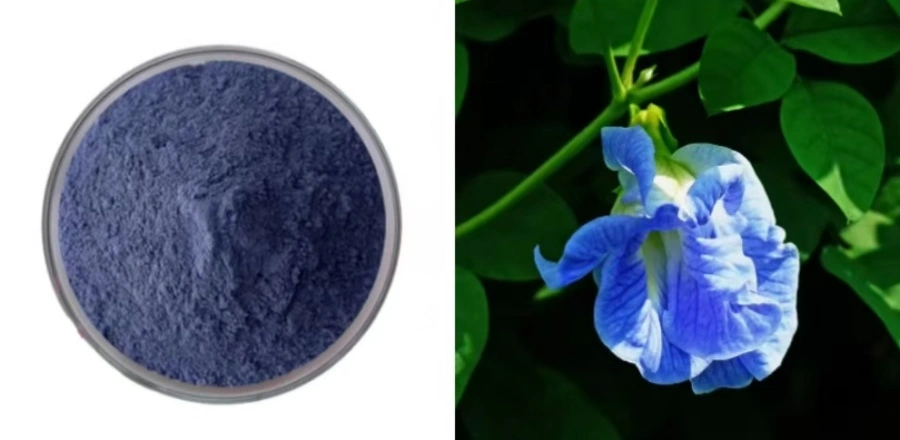
Butterfly pea flower powder is the natural colorant your dessert line has been waiting for. Sourced from the dried petals of Clitoria ternatea, this finely milled blue powder delivers deep blue and purple tones to desserts without a single drop of artificial dye. The secret lies in its anthocyanin pigments, which shift color when pH changes—blue in neutral conditions, purple or pink when acidic ingredients are added. For food manufacturers, bakeries, and confectionery brands sourcing clean-label ingredients at scale, this botanical powder offers both visual impact and functional value in one ingredient.
Understanding the Color Science Behind Blue and Purple Desserts
What Makes the Color Work
Butterfly pea extract works because of the tannins in it. They don't change color as much as most natural ones because they are not made of natural oils. Because blue absorbs orange-red light, the powder looks very dark blue. The color stays bright when mixed with water as long as the pH level is normal to slightly alkaline.
The pH Color-Change Mechanism
The structure of the anthocyanin changes when acidic substances like cream of tartar, lemon juice, or citric acid are added. When the pH is very low, it turns blue, purple, violet, pink, or red. This way of moving is like a natural pH checker. Dessert chefs only need to change how acidic the recipe is to make a line of different colors with the same ingredient.
Why Thermal Stability Matters for Baked Goods
Around 120°C, the anthocyanins in butterfly peas get too hot to stay green. But spirulina blue loses its color above 45°C. This makes the powder good for making baked goods, puddings that set, and jellos that need to stay colored while they're being heated up.
Step-by-Step Guide to Incorporating It Into Dessert Production
Selecting the Right Specification
Yanxi Herbs' Butterfly Pea Flower Powder does not have any fillers or flow agents added to it. Florets that have been dried out are the only thing that goes into it. It is fine, with a mesh size of 80 to 200. A smooth, grit-free mixture that can be mixed with water is what's left after the particle size goes through an 80-mesh sieve. Powder comes in drums that hold 25 kg, bags that hold 1 kg, and boxes that hold 5 kg. After being paid, the stock is ready to ship in one to three working days.
Dosage and Preparation
To get a deep blue color in most treat recipes, you only need to use 0.05% to 0.5% by weight. Here's a good way to do it, broken down by type of dessert:
- Panna cotta and gelatin desserts: Dissolve the powder in warm water (below 80°C) before combining with the base mixture. Use 0.2%–0.3% for a deep blue tone. Add citrus after setting to produce a purple gradient effect at the surface.
- Macarons and sponge cake: Blend the powder directly into dry ingredients. At 0.3%–0.4%, the baked crumb holds a perceptible blue-gray tone. Pair with a raspberry or yuzu filling to activate the purple shift at the interface.
- Smoothie bowls and chilled puddings: Mix with plant-based milk or coconut milk at room temperature. At 0.1%–0.2%, the result is a pale lavender. Blending with mango or pineapple deepens the shift toward deep violet.
What kinds of sweets do these three shapes look like? How they change color makes a big difference in how fun people find them. When R&D teams test their ideas in the real world, they often find that small changes in the concentration have effects that are the same from batch to batch.
Packaging and Storage at Scale
Water and UV light should be kept away from it for 24 months. Keep it in a container with a lid. It's pure because it has about 5% ash and dried out, and has lost about 5% of its weight. The plate count is less than 1,000 cells/gram, and the yeast and mold counts are both less than 100 cells/gram. The air is kept with at least 10 parts per million of heavy metals. This is what the rules say for food safety around the world.
Comparing Blue Pea Flower Powder With Other Natural Colorants
Against Spirulina Blue
Spirulina phycocyanin makes things a bright teal blue color when it's cold. The color fades quickly above 45°C, so it can't be used to fry or clean food. Even when it's 120°C outside, the anthocyanins in butterfly peas still do their job. Now it's easy to compare two hot forms. Spruce also tastes like the sea if you eat the right amount of it. If you use butterfly pea powder instead, most other flavors will be able to hide its neutral, mild, crunchy taste.
Against Hibiscus and Red Cabbage Extracts
This flower only gives off pink or red tones, not blue or purple ones. The pH level changes, just like red cabbage juice does. It may smell like ash, though, which is not good. Butterfly pea anthocyanins give you a clean, deep blue background that you don't need to do anything else for. Pea flower coloring is the best way to make candy and dairy products look blue or lavender because it doesn't change the way they taste.
Against Matcha
Butterfly Pea Flower Powder is valued for its natural blue colour, making it a popular ingredient for food manufacturers developing visually distinctive beverages, desserts, and confectionery products. Unlike green-yellow plant-based colourants, Butterfly Pea Flower Powder can produce blue shades that may shift toward purple or pink depending on the acidity of the formulation. When procurement teams compare natural colour ingredients for different treats, they should assess colour stability, processing compatibility, ingredient traceability, and labelling requirements. Choosing Butterfly Pea Flower Powder can help manufacturers explore vibrant, plant-derived colour options while developing products with clear ingredient declarations. Beyond its colouring function, butterfly pea flower contains naturally occurring plant compounds that are being studied for their potential biological properties; however, specific health benefits should not be claimed without reliable evidence supporting the intended use. For commercial applications, buyers should evaluate Butterfly Pea Flower Powder based on its colour strength, solubility, microbiological quality, and performance under the processing conditions used in their recipes. Suppliers should provide relevant product specifications and documentation to support quality assurance and regulatory review. By comparing these factors carefully, food brands can determine whether Butterfly Pea Flower Powder is suitable for their product formulations, visual identity, and target-market requirements. A consistent supply of Butterfly Pea Flower Powder can also help manufacturers maintain more predictable colour results across production batches.
Procurement Considerations for B2B Buyers
Certifications to Require From Suppliers
A food business must be listed with at least ISO 22000, HACCP, Kosher, Halal, and the FDA in order to sell its goods. Yanxi Herbs has all five, which means it can help people in the Middle East, Europe, North America, and the Asia-Pacific region. The manager in charge of rules and quality should sign off on each batch with a valid Certificate of Analysis (COA). This will show that there are the right amounts of germs, active anthocyanin, and heavy metals.
Quality Consistency Across Batches
They use the same raw materials and handle them in the same way, so the color doesn't change from one batch to the next. The herbs from Yanxi Herbs are always the same color and mesh size because they are dried at low temperatures, machine-milled exactly, and grown in a certain way. It might change how people feel about a business if they make a lot of candy and dairy products. A different color could be used for one SKU.
Logistics and Supply Chain Reliability
Yanxi Herbs supplies botanical ingredients to international markets, helping buyers source Butterfly Pea Flower Powder for applications such as beverages, confectionery, cosmetics, and other suitable formulations. For procurement teams evaluating Butterfly Pea Flower Powder, reliable delivery, consistent product specifications, and clear communication are important factors when establishing a long-term supplier relationship. Buyers should confirm the company's current distribution capabilities in the United States and Europe, as well as the availability of local inventory, before planning repeat orders. For businesses purchasing Butterfly Pea Flower Powder in bulk, 25 kg drums may offer a practical packaging option, depending on the supplier's current specifications and minimum order requirements. Requesting a sample of Butterfly Pea Flower Powder before signing a supply agreement allows R&D teams to assess its colour performance, compatibility with other ingredients, and suitability for their intended formulation. In cosmetic development, teams should evaluate how the powder behaves within the specific product base and under relevant processing conditions, while also checking applicable safety and regulatory documentation. Testing Butterfly Pea Flower Powder in advance can help identify formulation challenges before commercial production begins. By confirming sample availability, packaging options, lead times, and volume pricing, procurement managers can make better-informed sourcing decisions and determine whether Butterfly Pea Flower Powder meets their quality, cost, and production requirements.
Addressing Safety, Compliance, and Product Positioning
Allergen and Safety Profile
The butterfly pea flower doesn't have any caffeine or a big allergy. The FDA said it was okay to use as a food and drink color in 2021. Labeling things sold in the US is now easy thanks to this law. This is in line with the clean-label rules that are changing the way people buy things right now.
Preserving Antioxidant Activity Through Processing
Antioxidants are good for your brain and skin and can be found in butterfly pea flower tears. Before they process something, they should make sure the pH is above 3. Also, clear packaging should be kept away from UV light for a long time. This way, it will last longer. Companies that make vitamins can store this ingredient in cold-fill or nitrogen-flush tanks. The color and living things inside these containers stay fresh for a long time.
Labeling and Market Differentiation
Labels for goods that say "butterfly pea flower" make it look like the name of a real plant, not a code for a dye that someone made. This is something that people in the US who read ingredient lists should know. Some food and drink brands that sell in high-end, healthy, or natural markets should make this ingredient clearer on the label.
Conclusion
Folks will buy sweets that are blue or purple and made with a living plant ingredient. Butterfly Pea Flower Powder is a good way to add color because it has anthocyanins that make it useful. Of course, it doesn't mess up labels either. More and more people are starting their own brands to meet the rising need for natural colorants. It is their job to make sure that the things they buy come from a known source that can be tracked. There is a market that really wants what is coming.
FAQ
Is butterfly pea flower powder safe for all consumer groups?
Yes. Also, it doesn't have any major allergens or caffeine that we know of. The FDA said in 2021 that it was okay to use in some ways as a colorant. Most people, even kids, can do it safely. But the rules that the government sets up for regular checks should still be followed when each product is made.
How does pH affect the final color in desserts?
Anthocyanins turn blue when the pH is a little acidic, between 0 and 1. Adding acidic things like fruit purées, lemon juice, or citric acid can change the color to purple, violet, or pink, depending on the pH level. In order to get the color back to blue, you can make it less acidic.
What certifications should I require from a bulk supplier?
Check to see if the FDA, Kosher, Halal, ISO 22000, and the business itself are recognized. Along with the active colors, you should also ask for a new batch COA that shows the exact amounts of bacteria. Every market in the world can follow the rules set by the government with these papers.
What is the typical shelf life and storage requirement?
It will last 24 months if you keep it somewhere cool, dry, and away from UV light. As time goes on, things kept in air, water, or light lose their color and anthocyanins more quickly. This is why they are usually kept in drums or bags that can't be opened.
Can it be used in oil-based dessert formats like chocolate?
Powder breaks down on its own when it comes into contact with water. You need a form that doesn't split when mixed with oil for chocolate couverture, mousse, and sweets made with fat.
Source Butterfly Pea Flower Powder in Bulk — Request a Free Sample From Yanxi Herbs
Since 2010, firms in more than 100 countries have bought natural dyes from Yanxi Herbs. These companies make vitamins, foods, and drinks. There are FDA, Kosher, HACCP, and ISO 22000 labels on the company that sells Butterfly Pea Flower Powder on our site. One kg, five kg, and twenty-five kg of these products. We let you try us out for free and ship quickly. You can email info@yanxiherbs.com or go to yanxiherbs.com to find out more. You can also get prices for large quantities for your next production run.
References
1. Phaniendra, A., Jestadi, D. B., & Periyasamy, L. (2015). Free Radicals: Properties, Sources, Targets, and Their Implication in Various Diseases. Indian Journal of Clinical Biochemistry.
2. Kamkaen, N., & Wilkinson, J. M. (2009). The antioxidant activity of Clitoria ternatea flower petal extracts and eye gel. Phytotherapy Research.
3. Oguis, G. K., Gilding, E. K., Jackson, M. A., & Craik, D. J. (2019). Butterfly Pea (Clitoria ternatea), a Cyclotide-Bearing Plant With Applications in Agriculture and Medicine. Frontiers in Plant Science.
4. Siti Azima, A. M., Noriham, A., & Manshoor, N. (2017). Phenolics, antioxidants and color properties of aqueous pigmented plant extracts. Journal of Functional Foods.
5. Chandrashekara, K. T., & Nagaraju, S. (2022). Anthocyanins as natural food colorants: Stability, bioavailability, and application in food systems. Food Chemistry.
6. Boo, H. J., Shin, J. A., & Lee, K. T. (2021). Regulatory Perspectives and Safety Assessment of Natural Blue Colorants Derived from Plant Sources for Use in the Food Industry. Food Science and Technology International.

Send Inquiry
Related Industry Knowledge
- What Manufacturing Applications Can Bulk Rose Powder Serve in Food and Personal Care Products?
- Bulk Rose Powder for Natural Flavor, Color, and Botanical Positioning in Private Label Products
- Can Instant Green Tea Powder Improve Efficiency in Ready-to-Mix Beverage Production?
- Which Beverage Products Can Manufacturers Develop with Instant Green Tea Powder?
_1787033972542.webp)