
How Is Freeze-Dried Dragon Fruit Powder Used in Smoothies and Snack Manufacturing?
Nov 22, 2026
Freeze-dried Dragon Fruit Powder is used as a fruit and color additive in smoothies, blending into liquid bases, protein blends, and smoothie bowl mixes. In snack manufacturing, it is used in bars, energy bites, granola clusters, coatings, fillings, and toppings for a pink-red hue and tropical fruit character. Best used when buyers match particle size, moisture, and heat exposure to the final formula. This ingredient is supplied to food and beverage teams globally by Yanxi Herbs. This article explains how to assess, test, and source it.
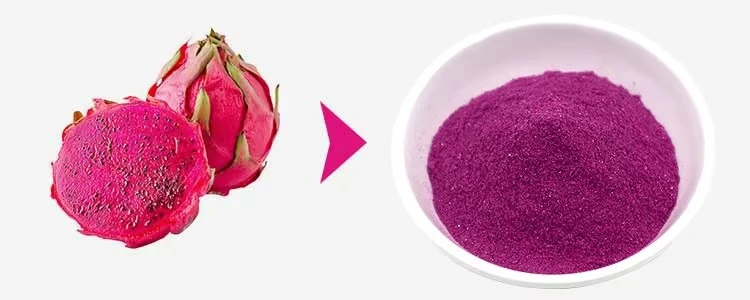
What Is Freeze-Dried Dragon Fruit Powder?
How the Powder Is Made
Producers begin with ripe dragon fruit, commonly known as pitaya. They check the fruit, wash it, prepare it, and then freeze it. Then the ice is pulled out as vapor in a vacuum, a process known as sublimation. The dried fruit is processed, sieved, tested, and packaged. Since it doesn't utilize high heat, it may keep more fruit color and scent than hot-air drying, although the results can vary according to settings. A study published in the Journal of Food Engineering in 2001 indicated that freeze-drying produces a better quality product than hot-air drying, albeit at a greater cost. Our Freeze-dried Dragon Fruit Powder is a fine purple-red powder, sieved to 60-80 mesh, with no added sugars or preservatives.
Red and White Varieties
The red flesh of the dragon fruit is due to betacyanins, a family of betalain pigments that give the fruit its pink-to-magenta hue (Trends in Food Science & Technology, 2004). White-fleshed fruit does not contain this pigment; therefore, the powder is pale and does not provide much color (Fruits, 2006). Red-fleshed powder is the most popular option for smoothies and snacks when you want to see a pink-red hue. Our powder is made from ripe red dragon fruit and includes the microscopic black seeds, giving the final product a natural speckled appearance. White types could attract clients looking for a light fruit taste without a color shift. Always refer to the specification sheet for the variety, since appearance alone is not an indication of botanical identification.
Freeze-Dried vs. Dehydrated and Juice Powders
Use warm air for dehydrated powder; thus, it may have a darker color and a weaker scent. Juice powder frequently includes carriers like maltodextrin to aid with drying and flow. A 2012 Food Science and Biotechnology study on spray-dried pitaya powder included maltodextrin as a drying aid, which goes to demonstrate why the carrier is important. Freeze-dried powder from whole fruit has more fruit content and fiber, whereas liquid powder may spread more freely. Ask for a thorough ingredient description, batch COA, and batch traceability documents from each supplier before you start evaluating possibilities. Clean-label companies should make sure their label says just dragon fruit.
Why Use Freeze-Dried Dragon Fruit Powder in Smoothies and Snacks?
Smoothie and Beverage Applications
In smoothies, the powder adds fruit taste and a pink-red color to ready-to-blend mixes, smoothie bowls, protein drinks, and meal replacement bases. It is low in moisture; thus, it is easier to dose, store, and transport than fresh fruit. Our powder quickly dissolves in smoothies and also works in instant tea mixes. Developers should test dispersibility, particle size, taste strength, and color stability in the real base. Betalain pigments are more stable in moderately acidic to neutral beverages. Heat, light, and oxygen degrade betalain pigments (Journal of Food Science, 2006). Store test samples under the same conditions as the final drink. Perform short trials before scale-up.
Snack Manufacturing Applications
Snack teams use the powder in fruit bars, energy bites, protein balls, granola clusters, date-based snacks, coatings, toppings, and fillings. It serves as a fruit ingredient and natural color source, supporting plant-based and premium positioning. Performance is a function of adhesion, moisture migration, texture, and particle size. Baked or extruded treats need pilot runs since heat may affect color or modify taste. Color is typically preserved by adding the powder after heating, as in a topping or cooled coating. Check pH, shelf life, and dose before scaling up to commercial production.
Benefits for Product Developers
Dragon fruit powder delivers manufacturers fruit solids, natural color, and a recognized botanical name on the label in one ingredient. It decreases seasonal supply fluctuations, cold storage demands, prep work, and waste compared to fresh fruit. It allows for uniform batch dosage since teams weigh powder, rather than separating fruit by ripeness. There is no added sugar or preservatives in our product, which fits clean-label ideals. Nutrition, color use, or vegan claims must be documented. The US regulatory teams also need to check how local regulations consider the chemical as a colorant. Only make assertions supported by the specification and COA.
How to Select the Best Freeze-Dried Dragon Fruit Powder for Manufacturing
Specifications to Review
The finished product, not the color or the price. Smoothie manufacturers often want dispersibility, taste, and low wetness. Snack and pastry teams generally concentrate on texture, heat tolerance, and moisture compatibility. Botanical identity, appearance, moisture, water activity, particle size, microbiological limitations, heavy metals, and shelf life will be reviewed. Below water activity means that the microbes grow more slowly, and they cease growing altogether at approximately 0.6 or below (Water Activity in Foods, 2020). That's why a hygroscopic powder requires moisture management. Request a sample, technical data sheet, and a COA before approval, and compare each to your internal acceptance limits.
Yanxi Herbs Product Specifications
Our Freeze-dried Dragon Fruit Powder is created from dragon fruit and is a purple-red fine powder at 60-80 mesh. Loss on drying < 5% Ash content < 5% Heavy metals < 10 ppm Total plate count < 1000 cfu/g Yeast and mold < 100 cfu/g Shelf life: 24 months if sealed and stored properly. Packing 1kg/bag, 5kg/box, 25kg/drum. In stock. Delivery in 1-3 business days after purchase. Free samples. These metrics provide R&D and quality teams concrete numbers to validate against their own standards.
Certifications and Documents
Quality managers require documentation that fits the product. Yanxi Herbs has ISO 22000, HACCP, SGS, Kosher and Halal certifications and the product listing is FDA registered. Order the COA and spec sheet with your sample and make sure that each certificate is for the facility and the particular product you are planning to purchase. Since 2010, we have been exporting natural ingredients to more than 100 nations and regions, thus export paperwork is part of our everyday job. Local storage assistance aids in speedier delivery and repeat purchases for US customers.
Packaging, Storage, and Bulk Buying
Packaging and Storage
Freeze dried powder attracts moisture from damp air, which may result in clumping, poorer dispersability, taste changes and lower shelf life. Store in original sealed packaging in a cool, dry and clean area away from heat, light, oxygen and strong scents. Use a first-in, first-out inventory control. Open containers only in low humidity locations, weigh rapidly, re-seal firmly. We provide 1 kilogram bags, 5 kg boxes and 25 kg drums for pilot experiments, short runs and full production. Select the pack size according to order volume, warehouse humidity and handling circumstances.
Wholesale and Bulk Purchasing
Wholesale pricing for Freeze-dried Dragon Fruit Powder depends on several factors, including fruit quality, processing yield, particle size, testing requirements, packaging specifications, order volume, and shipment destination. A low quotation does not always mean better value, because Freeze-dried Dragon Fruit Powder with high moisture content, weak color intensity, or poor dispersibility can lead to additional production losses and higher overall costs. Buyers should establish the minimum order quantity (MOQ), production lead time, safety stock requirements, and expected product launch dates at the beginning of the procurement process. When sourcing Freeze-dried Dragon Fruit Powder in bulk, confirm whether the ingredient is made from whole fruit or fruit juice, whether any carriers or additives are included, and which export documents accompany each shipment. Reliable stock availability is also essential for production planning. We maintain stock of Freeze-dried Dragon Fruit Powder and can arrange delivery within 1–3 working days after payment, helping customers respond quickly to urgent purchasing requirements and cover unexpected supply shortages. Choosing a supplier with transparent wholesale terms, consistent product specifications, and dependable inventory support can make long-term sourcing of Freeze-dried Dragon Fruit Powder more efficient and predictable.
Working with a Manufacturer or OEM Supplier
Working directly with the manufacturer enhances technical communication, traceability of the batches, control of specifications and flexibility of packaging. Buyers may acquire bulk powder, request specific particle sizes, or discuss projects for OEM and private label depending on capabilities. Procurement teams should check factory profile, manufacturing scope, quality processes, export experience, Incoterms, payment terms and corrective-action process. At Yanxi Herbs, we grow our own raw materials, do our own R&D and manufacturing, and can swiftly react to formulation problems. This system allows constant supply and consistent quality for long term projects.
Common Mistakes and Evaluation Steps
Mistakes to Avoid
Many teams choose a powder based on color or pricing, don’t consider water activity, or scale up without application testing. Color is not an indicator of fruit authenticity, safety, solubility or batch uniformity. Moisture management is critical since poor moisture control may lead to clumping, taste loss, packaging failure and microbiological issues. Also be aware that a powder that works well in a smoothie may act differently in a baked snack, coating or extruded product. assess documentation, test samples, perform pilot tests, evaluate sensory and physical findings, validate packaging and assess shelf life before approval.
Pilot Trials for Smoothies and Snacks
Pilot trials should be representative of production. For smoothies, try a number of dose levels in the real base, then evaluate mixing time, color after storage, and taste balance. Snack time: check the color of the powder in the dough, coating, or topping before and after cooking. At the beginning and conclusion of shelf-life testing, determine the moisture and water activity of the completed snack. Hold one control batch for comparison Share the data with your supplier as technical teams might recommend adjustments to particle size or packing.
A Three-Stage Evaluation Process
Here is a simple three-stage process that R&D, purchasing, and quality teams can share.
- Define the goal: Decide whether the product needs natural color, fruit flavor, nutrition, clean-label positioning, cost control, or easy dispersion. A clear goal shows which specification limits matter most and keeps teams from comparing powders that serve different purposes. Write the target dosage, base formula, and processing steps in one shared brief.
- Compare suppliers: Build a table covering ingredients, variety, processing method, moisture, water activity, particle size, certifications, minimum order quantity, lead time, packaging, and technical support. Ask each supplier the same questions, and request the same documents. Score each row against your own acceptance limits. This makes differences visible and removes guesswork from the shortlist.
- Validate in the formula: Test the shortlisted powder in the real product. Check sensory quality, color, texture, processing behavior, and shelf life across at least one pilot run. A powder that passes these tests under production conditions earns approval, while paper specifications alone do not confirm performance. Record every result for future audits.
These steps cut the risk of failed launches and costly reformulation.
Conclusion
Freeze-dried Dragon Fruit Powder gives smoothie and snack makers a low-moisture source of fruit solids, pink-red color, and tropical flavor. Freeze-drying can preserve more color and aroma than hot-air drying, and whole-fruit powder differs from juice powders that may use carriers. In smoothies, success depends on dispersibility and pH. In snacks, it depends on heat exposure, moisture migration, and texture. Selection should rest on specifications, water activity, certifications, and documents rather than color or price alone. Careful packaging and dry storage protect quality, while pilot trials confirm that a powder works in the exact formula. A staged evaluation of goals, suppliers, and in-formula performance leads to more consistent products and fewer production losses.
FAQ
Can I add the powder directly to a smoothie?
Yes. Our powder dissolves easily in smoothies, so you can blend it directly with fruit, yogurt, or plant-based milk. Test the dose in your own base first, since flavor and color depend on the recipe.
Why does the powder sometimes clump?
Freeze-dried fruit absorbs moisture from humid air. Store it sealed in a cool, dry place and reseal containers right after use.
Is freeze-dried powder different from spray-dried powder?
Freeze-drying uses freezing and vacuum, while spray-drying uses hot air and often carriers such as maltodextrin. Always check the ingredient statement.
Will the color survive baking?
Betalain pigments are heat-sensitive, so color may fade in baked or extruded snacks. Run a pilot, or add the powder after heating.
What is the shelf life?
The shelf life is 24 months under sealed and proper storage.
Do you offer samples?
Yes. Free samples are available, and the product is in stock.
Request a Freeze-dried Dragon Fruit Powder Sample and Quote from Yanxi Herbs
Yanxi Herbs is a Freeze-dried Dragon Fruit Powder supplier with ISO 22000, HACCP, SGS, Kosher, and Halal certifications, stock on hand, and warehouse support in the US. Free samples are available, and orders ship within 1-3 working days after payment. Email info@yanxiherbs.com to request a sample, a COA, or a bulk quote. You can also visit yanxiherbs.com to review our natural ingredient range and discuss OEM or private-label needs.
References
1. Journal of Food Engineering, 2001 – Ratti, C. "Hot Air and Freeze-Drying of High-Value Foods: A Review."
2. Journal of Food Science, 2006 – Herbach, K.M., Stintzing, F.C., and Carle, R. "Betalain Stability and Degradation: Structural and Chromatic Aspects."
3. Trends in Food Science & Technology, 2004 – Stintzing, F.C., and Carle, R. "Functional Properties of Anthocyanins and Betalains in Plants, Food, and in Human Nutrition."
4. Fruits, 2006 – Le Bellec, F., Vaillant, F., and Imbert, E. "Pitahaya (Hylocereus spp.): A New Fruit Crop, a Market with a Future."
5. Food Science and Biotechnology, 2012 – Tze, N.L., et al. "Physicochemical and Nutritional Properties of Spray-Dried Pitaya Fruit Powder as Natural Colorant."
6. Water Activity in Foods: Fundamentals and Applications (Wiley-Blackwell), 2020 – Barbosa-Cánovas, G.V., Fontana, A.J., Schmidt, S.J., and Labuza, T.P.

Send Inquiry

Related Industry Knowledge
- How Can Bulk Fo-Ti Extract Powder Help Brands Expand Plant-Based Ingredient Product Portfolios?
- Hyaluronic Acid Powder Bulk Helps Cosmetic Manufacturers Develop Hydrating Serums, Masks, and Anti-Aging Product Lines
- Why Do Manufacturers Choose Stevia Extract Powder for Formulations?
- What Makes Chaga Mushroom Extract Powder Suitable for Beverage and Powder Blend Applications?