
How to Choose Beta Carotene Powder for Beverage, Dairy, and Bakery Formulations?
Nov 28, 2026
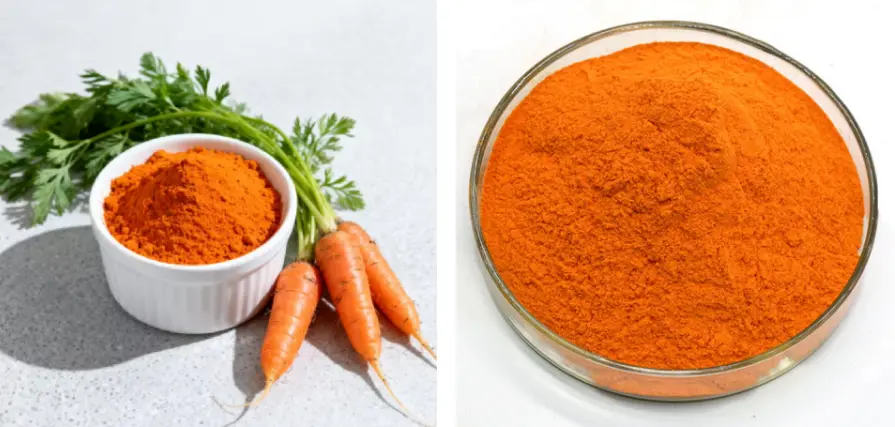
Use the product matrix to find the right Beta Carotene Powder for your beverage, dairy or bakery formulations. Next, match the delivery format to the product matrix. For most clear beverages, water-soluble or cold-water-soluble grade is required. Grades that work with oils are often found in doughs, fats and some dairy systems. Then check out the paperwork for your market. Make sure the color is strong and won’t fade in heat, light or oxygen. Pilot tests can compare natural and man-made sources. Suppliers should be evaluated not only on the basis of price/kg, but also on the basis of batch consistency, documentation and technical support. Don't approve a grade until you see how it works in your final product.
Start With the Application: Beverage, Dairy, or Bakery
Beverage Systems
Beta-carotene is fat soluble and therefore doesn’t belong in beverages. So I start with CWS (cold water soluble) and water-dispersible. For these powders, the microencapsulation is done with carriers like modified starch, gum acacia or gelatin. This is usually done by spray drying or bead making. The carrier protects the color and helps it mix evenly with water. The most important tests for a clear or acid drink are haze, sedimentation and “ringing” at the neck of bottle. Perfect grades in a lab beaker can break up over weeks on end. It should be tested in in the real drink, with the real pH, and in the real package.
Dairy and Plant-Based Products
Dairy adds minerals, fat, and protein, and all of these change how color looks and feels. Carotene that works well with oil can be carried by fat, but proteins and calcium change how the particles are spread out in the liquid. When yogurt is homogenized, pasteurized, treated with UHT, or fermented, it adds more stress. Because plant-based milks and yogurts have their own proteins and emulsifiers, cow's milk results might not work with them. I think you should test the powder at your actual fat level, after the full heat step, and after being stored in the fridge. Between the first day and the end of the shelf life, look out for creaming, specks, and shade drift. Write down all of the results so that you can compare each candidate fairly.
Bakery and Dry Mixes
When you work in a bakery, you have to spread out dry premixes, batters, fillings, and fats. A powder that can be spread out needs to be mixed evenly with sugar or flour. If it isn't, the crumb or frosting will have streaks and spots. Don't just look at the color in raw dough; judge it after baking too. Oven heat, moisture, and baking time can all change the final shade. When you store dry premixes, oxygen and water can slowly fade the color, which is another risk. The blend is checked after it has been mixed, baked, and left to sit for a while in normal storage conditions. When it comes to fillings and doughs with fat, oil-compatible grades work best, while dispersible powders work best for dry blends.
Set Your Core Selection Criteria: Specification, Source, and Format
Look Past Assay and Price
Assay does not tell you what a powder will do to color something on its own. The Beta Carotene Powder that is water soluble is typically available in concentrations ranging from 1% to 20% and the crystalline form can be as pure as 96%. You want to check out the strength of the color, the shade, how it spreads and how stable it is against heat, light, oxygen, moisture, acidity and metal ions. Also, watch the physical behavior, because the final product will have grittiness, visible particles and phase separation. Please send a specification sheet, a Certificate of Analysis, allergen and GMO statements, microbiological data, storage instructions for the product and recommended use levels. The ratio of the all-trans and cis isomers is also important as the all-trans form has the highest biological activity.
Natural vs. Synthetic Sources
Beta Carotene Powder can be produced through chemical synthesis, fermentation using Blakeslea trispora, or extraction from Dunaliella salina algae. Naturally sourced options may suit clean-label or premium products, provided the origin and relevant certifications are documented. Synthetic materials are often selected for their consistent composition, predictable color strength, and reliable supply. Neither production route automatically guarantees better performance. Consider labeling requirements, color yield, stability, supply continuity, and total cost of use. Since a source claim on a datasheet cannot predict how the powder will perform in your beverage, yogurt, or dough, I recommend conducting side-by-side tests using your final recipe. Ensure that all supporting documentation substantiates the claims you intend to make on the label.
Water-Soluble, Oil-Soluble, or Encapsulated
Do not think of all powders as being the same. Clear, cloudy, acidic, and emulsified drinks can all use water-soluble and water-dispersible formats. Products that dissolve in oil can be used in fats, oils, bakery systems, and some dairy formulations. Encapsulation protects the colorant from oxygen, light, heat, and water, but it can change the amount that is used, how quickly it is released, and how intense the color is. Ask the supplier about the carrier, particle size, emulsification, and the suggested pre-dispersion method, which should include the temperature and length of time for mixing. Check the carrier against your label and allergen needs as well. For example, gelatin might not work well with plant-based or vegetarian foods. A starch or gum acacia carrier might be a better choice.
Test Performance Under Real Processing Conditions
Match Trials to Your Production Line
Dosing, pasteurization or UHT, homogenization, baking, drying, filling, and refrigeration should all be done in the same way as in your factory. According to research in the field of food science, carotenoids are affected by oxygen, light, heat, and acidity. This means that each step can change the color. The risk is raised by metal ions and water. When I change one thing at a time, like pH or heating time, I can see which step makes the color fade. Keep a control batch that was made with your current colorant, and make sure that all of the candidate powders are mixed, heated, and filled in the same way. To make fair comparisons, the handling must be the same.
Measure Color With Numbers
As the light changes, so it's important to add readings from instruments to visual checks. The lightness level is given by L, the red-green axis is given by a, and the yellow-blue axis is given by b*. Before, after, and at set points while storing, you should measure each sample. The ¥E value is the difference in color between two readings added up. Your quality team can decide what a reasonable limit is. Track dispersion, sedimentation, assay retention, and sensory properties like off-notes or aftertaste are also important. A powder that keeps its color but gives off an old smell still fails the test.
Stability and Packaging Checks
Tests that speed up stability give me an early idea of how long something will last, but I always use them with real-time storage as well, since heat-driven tests don't show all the changes that happen in the real world. Packaging is very important. Clear bottles let light into the drinks, and dry premixes can pick up oxygen and moisture in a bad bag. Make sure the finished item is tested in the same amount of light and temperature as it will be in stores and warehouses, on its last package. Also, store the raw powder the way the supplier tells you to. Usually, they say to keep it in a cool, dry place away from light in sealed containers. A good formulation can be ruined by bad warehouse conditions.
Compare Suppliers and Avoid Costly Mistakes
Documents to Request
A good company that makes Beta Carotene Powder should give you clear paperwork right away. Ask for the product details, a certificate of analysis that shows what the product is made of, information on the source, data on stability, the recommended dose, allergen and GMO statements, microbiological results, details on the packaging, the minimum order quantity, the lead time, and export documents. What's behind the paper? Check out batch control, production capacity, experience with applications, and how quickly the technical team responds to questions about formulation. For bulk or private-label orders, you should also look at how the goods are shipped, how well they fit in the warehouse, how customizable they are, and whether the supplier can handle your growing needs. When documents come in full and correctly, it usually means that day-to-day operations are running smoothly.
Build a Weighted Scorecard
A scorecard for evaluating Beta Carotene Powder helps create a level playing field and prevents price from becoming the main decision factor. Allocate 30% to technical performance, 20% to stability, 15% to regulatory documentation, 15% to supply reliability, 10% to cost, and 10% to service. This is a balanced starting point. Technical performance covers color strength, shade consistency, dispersibility, matrix compatibility, and batch consistency. What matters is not the price per kilogram but the total cost of use, meaning the cost of coloring one production batch. Adjust the weights to suit your needs, but finalize them before samples arrive to avoid favoring a particular supplier. Test every supplier's samples under identical formulation and processing conditions, then evaluate them using the same scorecard.
Common Selection Mistakes
A small group of habits cause most of the problems I see. People who want to buy something choose the one with the lowest price per kilogram, test the powder only in water, or think that water-soluble and oil-soluble formats are the same thing. Others don't care about the packaging, think that natural is always better than synthetic, or don't check the destination-market documents. It shows up as uneven shading, bad dispersion, color loss, extra work, and delays caused by regulations. It's easy to fix. Before you approve a commercial order, you should compare the cost per finished batch, do pilot tests that are specific to the matrix, check the stability after a reasonable amount of storage, and make sure that every claim and certificate is true.
Safety, Dosage, and Selection Paths by Product
Color Use vs. Nutritional Use
As a carotenoid, beta-carotene can be changed by the body into vitamin A, though the process is different for each person. The Institute of Medicine says that 12 micrograms of beta-carotene from food is equal to 1 microgram of retinol activity equivalent, and 2 micrograms of beta-carotene from oil supplements is equal to 1 microgram. Under 21 CFR 73.95, the FDA in the US lists beta-carotene as a color additive that does not need to be certified for foods. It has the code E160a in the EU. Keep the color use and the nutrient claim separate, and check with your supplier about the assay, the carrier composition, and the level of use that was intended.
Supplement Dosage Cautions
Care must be taken with supplements. Two big studies, ATBC and CARET, found that people who smoked and worked with asbestos and took high-dose beta-carotene supplements had a higher risk of getting lung cancer. The same worry did not show up when eating beta-carotene from food. A condition called carotenemia can also make the skin turn yellow-orange if you get too much of it. Because of these results, supplement brands should have regulatory, medical, or nutrition professionals look over their consumer-facing guidance. This includes dosage, labeling, and warnings. As a formulator, I'd rather write down the dose and the language of the warning early on than change the label after the product has been released.
Selection Paths by Scenario
The type of product will determine which links are listed. Clear drinks need to be easy to mix, non-settling, acid resistant and clear. Nutritional drinks must be able to blend with minerals, proteins and emulsions. Plant-based, dairy and yogurt products should be heated, homogenized, fermented and refrigerated. Bakery goods should be evenly distributed, heat resistant, and not susceptible to moisture and oxidation in pre-mixes. “The right paperwork needs to be in place, and dietary supplements need to be on the market in the right dosage form. In all cases, comparative testing should be done in the production matrix that will be used to make the final product, using the same line settings and packaging as the commercial product.
Conclusion
Beta Carotene Powder is selected according to the product matrix as the pigment is stressed in different ways in drinks, dairy and baked goods. The delivery form has to be matched to that matrix, be it water-dispersible, oil-compatible or encapsulated. Along with assay and price, other considerations that affect the selection process are color strength, dispersibility, stability, documentation, and choice of natural or synthetic sources. The most reliable evidence comes from pilot tests that are identical to real processing, use Lab* values to measure color, and include packaging and storage. The best ways to compare suppliers are a weighted scorecard and lots of paperwork. Safety and dosage guidelines differ for color and supplement use. Smokers and those who work with asbestos are cautioned against taking high-dose supplements. The best you can hope for is a grade that passes matrix-specific tests, along with consistent documentation to support it.
FAQ
What is the best Beta Carotene Powder for clear beverages?
Most of the time, a cold water soluble or water-dispersible grade works best. Check it for sedimentation, haze, and color loss at your pH level and in your final package.
Should I choose natural or synthetic beta-carotene?
Both can work. When documented, natural-positioned material works well with clean-label products, and synthetic material provides consistent strength. In your own words, compare the two.
Which documents should I request before buying in bulk?
Ask for the specification, the certificate of analysis, the stability data, the allergen and GMO statements, the microbiological results, and the documents that show that the product is safe to sell in the US or the country where it's going.
Request Beta Carotene Powder Samples From Yanxi Herbs
Yanxi Herbs sells Beta Carotene Powder in two different types that can be mixed with water or oil. These types can be used in beverages, dairy, and bakeries. Looking for a company that sells Beta Carotene Powder? Email info@yanxiherbs.com with your pH, fat content, target shade, and processing information, and our team will talk about the best grades, samples, and paperwork. Visit yanxiherbs.com to find out more.
References
1. Institute of Medicine, Dietary Reference Intakes for Vitamin A, Vitamin K, Arsenic, Boron, Chromium, Copper, Iodine, Iron, Manganese, Molybdenum, Nickel, Silicon, Vanadium, and Zinc, 2001
2. U.S. Food and Drug Administration, Code of Federal Regulations Title 21, Section 73.95 Beta-Carotene, 2023
3. New England Journal of Medicine, The Effect of Vitamin E and Beta Carotene on the Incidence of Lung Cancer and Other Cancers in Male Smokers, 1994
4. New England Journal of Medicine, Effects of a Combination of Beta Carotene and Vitamin A on Lung Cancer and Cardiovascular Disease, 1996
5. Critical Reviews in Food Science and Nutrition, Natural Pigments: Carotenoids, Anthocyanins, and Betalains – Characteristics, Biosynthesis, Processing, and Stability, 2000
6. ILSI Press, A Guide to Carotenoid Analysis in Foods, 2001

Send Inquiry
Related Industry Knowledge
- How Can Bulk Fo-Ti Extract Powder Help Brands Expand Plant-Based Ingredient Product Portfolios?
- Hyaluronic Acid Powder Bulk Helps Cosmetic Manufacturers Develop Hydrating Serums, Masks, and Anti-Aging Product Lines
- Why Do Manufacturers Choose Stevia Extract Powder for Formulations?
- What Makes Chaga Mushroom Extract Powder Suitable for Beverage and Powder Blend Applications?