How to Source Butterfly Pea Flower Powder for Tea and Food Product Lines?
Nov 21, 2026
How to Buy Butterfly Pea Flower Powder for Tea and Food Applications: Start with a written brief describing your application, required pH, particle size, packaging, and certifications. Review the specification sheet and Certificate of Analysis (COA) and confirm supply capacity before placing a trial order, then test samples in your actual formula. Buyers who follow this sequence will not experience color drift, labeling problems, or shipping delays. I have written this guide from the point of view of a manufacturer that has been supplying natural ingredients since 2010, so you can compare suppliers with clear criteria.
Understand Butterfly Pea Flower Powder and Define Your Requirements
What Butterfly Pea Flower Powder Is and Why It Matters
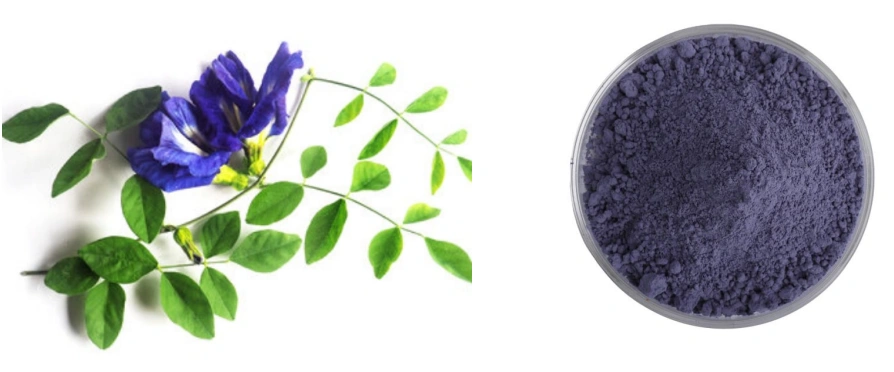
Butterfly Pea Flower Powder comes from dried Clitoria ternatea flowers that are ground into a fine blue powder. Its color comes from anthocyanins, including ternatins. These pigments shift from blue to purple or pink as acidity rises, and toward green in alkaline conditions. That pH response lets developers create color-changing teas and lemonades. The flower also has a long traditional use in Southeast Asia and Ayurvedic practice. Today, food brands choose it for clean-label blue in beverages, smoothies, bakery fillings, desserts, and confectionery. A plant-based blue supports premium positioning, but only if the powder performs the same way in every batch.
Choose the Right Format for Your Application
Not every blue botanical product behaves the same way. Whole dried flowers suit visual infusion in loose-leaf blends. Tea-cut material releases color more slowly and leaves visible plant pieces. Instant beverage powders may include carriers such as maltodextrin, so check the label and the COA. Our Butterfly Pea Flower Powder is 100% ground dried flower, offered in 80–200 mesh, with 100% passing an 80 mesh sieve. The fine, sifted texture suits direct blending into drink mixes, smoothies, batters, and tea sachets where you want fast color release without floral grit. Match the format to your process before you request quotes.
Write a Clear Procurement Brief
A written brief helps a supplier recommend the right grade the first time. I suggest listing the application and finished-product pH, the processing method and heat exposure, the mesh size, annual volume, packaging format, target market, and required certificates. Tea bag makers should add infusion time and sachet material. Beverage teams should state whether the drink is hot-filled, pasteurized, or served cold, since processing affects color. Quality managers should list limits for moisture, ash, heavy metals, and microbiology. R&D teams can note a trial range; our technical notes suggest 0.1% to 0.5% by weight for coloring, adjusted to the target shade. A precise brief shortens sampling and reduces rework.
Evaluate Butterfly Pea Flower Powder Quality Before a Bulk Order
Test Color, Flavor, and Performance in Your Own Formula
Appearance alone does not prove performance. Place each sample in your real base and record color intensity, aroma, taste, dispersion, sedimentation, and clumping. Test at your actual pH, because the same powder looks deep blue in neutral water and purple or pink in lemon juice. Run hot and cold trials if your line needs both. At coloring levels, butterfly pea has a mild, slightly woody taste that main flavors usually cover, but confirm this in your recipe. Keep an approved reference lot sealed so you can compare future shipments against the same standard.
Read the Specification Sheet and COA
Quality managers should compare numbers, not adjectives. Our Butterfly Pea Flower Powder specification lists anthocyanins as the active component, loss on drying of 5% or less, ash content of 5% or less, heavy metals of 10 ppm or less, total plate count under 1,000 cfu/g, and yeast and mold under 100 cfu/g. Shelf life is 24 months when sealed and stored properly. Ask every supplier for the batch-specific COA, origin details, and allergen and GMO statements. Compare limits across suppliers using the same test methods, since different methods can produce different results.
Compare With Blue Spirulina and Other Blue Options
Butterfly pea is often compared by buyers to blue spirulina, matcha, and synthetic FD&C Blue No. 1. Spirulina’s blue colorant, phycocyanin, is sensitive to heat and pH. Published studies on Spirulina phycocyanin suggest that stability decreases with increasing temperature and with pH values outside of a narrow range. Butterfly pea anthocyanins are resistant to many heated and acidic beverages, but change color with pH. Matcha adds green-tea flavor and caffeine, not blue color, and synthetic dyes are at odds with clean-label goals. Evaluate each option not just in terms of price but also taste, solubility, shade, processing tolerance, documentation, and continuity of supply.
Screen and Compare Butterfly Pea Flower Powder Suppliers
Check Certifications and Quality Systems
Certificates indicate how a supplier runs their plants, so ask for current copies. Yanxi Herbs is ISO 22000, HACCP, SGS, Kosher, and Halal certified, and our Butterfly Pea Flower Powder is ISO, HACCP, FDA Registration, Kosher, and Halal certified. ISO 22000:2018 is the international standard for food safety management systems. It covers hazard control along the food chain. Check that the certificate covers the product, the production site, and expiry dates. Quality teams may also ask for third-party test records and traceability documents. Audit contamination controls, batch identification, complaint handling, and recall procedures.
Confirm Stock, Capacity, and Lead Time
Purchasing managers want to see that a supplier can ship on time and reorder. Our Butterfly Pea Flower Powder is available in stock, and delivery is 1-3 working days after payment. The integration of raw material cultivation, R&D, and production ensures steady supply and consistent specifications. Ask any supplier about their monthly capacity, seasonal availability, sample timing, and repeat order history. American buyers can benefit from US and European local warehousing to speed replenishment. Ask for a written lead-time commitment and how the supplier will handle a delayed harvest or out-of-spec batch.
Compare Pricing, MOQ, Packaging, and Terms
Get quotes on the exact same specs so you are comparing apples to apples. Then calculate landed cost: product, freight, insurance, customs, duties, local handling, and any lab testing. Our powder is packed in 1kg bags, 5kg boxes, and 25kg drums. Free samples for evaluation are available. Moisture, light, and oxygen protection confirmed. A clear offer contains currency, validity period, MOQ, Incoterms, payment terms, production lead time, trial-order conditions. The lowest unit price may actually cost you more if you are missing documents or the batch fails incoming inspection.
Build a Qualification and Purchasing Process
Move From Sample to Trial Order
A structured sequence lowers technical and compliance risk when sourcing Butterfly Pea Flower Powder. First, define the finished product, dosage, target market, and quality limits. Second, request a free sample with the specification sheet and COA, and confirm that the sample reflects commercial production. Third, have R&D, quality, procurement, and regulatory teams test the powder in the real formula for color, flavor, dispersion, heat tolerance, and storage stability. Fourth, place a controlled trial order and test the incoming lot against your approved reference. Document the acceptance criteria so every repeat purchase follows the same rules.
Choose a Supply Model: Bulk, Organic, Private Label, or OEM
Your formula maturity determines the model. Standard bulk powders are for manufacturers and distributors with their own labeling and fixed recipes. If you intend to market your product as organic, ask for valid certification, chain-of-custody records, and certified-batch availability before making any organic claim. We can do private label in custom pack sizes, labels, and cartons. OEM projects may include custom blends, instant mixes, or dosage development with technical support. Yanxi Herbs provides flexible customization. But you need to check the ownership of formulas and artwork, development timelines, MOQs, and regulatory responsibilities before starting work.
Reduce Common Sourcing Risks
Most failures follow a few patterns: choosing by color or price alone, confusing butterfly pea with spirulina or synthetic dye, and ignoring destination-market rules. For US sales, FDA lists butterfly pea flower extract as a color additive exempt from certification under 21 CFR 73.69 and has updated permitted uses since. Check whether your product and claims match those conditions, and consult regulatory counsel. Treat samples as a preview, not proof; verify each commercial batch against the COA and set out-of-specification procedures. Store the powder sealed, cool, and dry, away from light, because heat, moisture, oxygen, and light degrade anthocyanins.
Use a Final Checklist Before You Choose a Supplier
Product Approval Checks
Before you sign, confirm that the powder suits your tea, beverage, smoothie, bakery, or confectionery use. Approval should cover color at your pH, taste, particle size, solubility, and processing performance. Check that the botanical identity is Clitoria ternatea, that the material is food grade, and that the label declaration matches your market. For tea sachets, test infusion and filter-paper behavior. For beverages, hold finished samples through their planned shelf life and watch for fading or sediment. If a result is unclear, repeat the test with a second lot.
Quality and Compliance Checks
Quality managers should have on file the current COA, specification sheet, certificates, and traceability records for each lot. Check microbiological limits, heavy metal results, and contaminant controls. Our spec is total plate count < 1,000 cfu/g and yeast and mold < 100 cfu/g, which provides clear release limits for your team. Keep the approved reference sample. Define what happens when a lot misses specification. Hold, retest, return, replace. Regulatory teams should look at import and export documents early. Lack of paperwork can halt a shipment at the border.
Commercial and Service Checks
Buying teams need to check MOQ, packaging, wholesale terms, lead time, repeat order ability, and shipping terms. Since 2010, Yanxi Herbs has exported natural ingredients to more than 100 countries and regions, and we combine rapid response with rigorous quality control and logistics support. Ask for one contact person for samples, documents, and reorders. A successful trial order, an approved reference sample, and written acceptance rules provide you with a stable base for long-term supply.
Conclusion
The best way to source Butterfly Pea Flower Powder for the tea and food lines is a sequence: define the application, choose the right format, test samples in the real formula, and check documents before a bulk purchase. The article showed that color is dependent on pH, that suppliers are comparable due to limits for moisture, ash, heavy metals, and microbes, and that supply stability is affected by certifications, stock, lead time, and packaging. Comparing blue spirulina to other options for taste, heat and acid tolerance, and documentation available will help you avoid basing your decision on price or color alone. Clear supply models, regulatory checks for the US market, proper storage, and an approved reference lot mitigate risk. Buyers can combine these steps to approve a powder and place repeat orders with consistent results.
FAQ
Is butterfly pea flower powder caffeine-free?
Clitoria ternatea is not a tea plant (Camellia sinensis), so it does not naturally contain caffeine. If you plan a caffeine-free label claim, ask your supplier for supporting documentation.
Does the color change with pH?
Yes. The anthocyanins act as natural pH indicators. The powder looks blue in neutral drinks and turns purple or pink in acidic ones, such as lemonade. Raising the pH moves the color back toward blue.
Can I request a sample before buying?
Yes. Free samples of our Butterfly Pea Flower Powder are available. We can send the specification sheet and COA with them, so your R&D and quality teams can evaluate the powder together.
What is the shelf life?
The shelf life is 24 months when the powder is sealed and stored properly. Packaging options include 1kg bags, 5kg boxes, and 25kg drums.
Request Butterfly Pea Flower Powder Samples From Yanxi Herbs
Looking for a Butterfly Pea Flower Powder supplier with stock, certifications, and flexible customization? Yanxi Herbs offers free samples, 80–200 mesh powder, and delivery within 1–3 working days after payment. Email your application, volume, and packaging needs to info@yanxiherbs.com, and our team will reply with the specification sheet and COA. You can also visit yanxiherbs.com for details on our natural colorants and botanical ingredients.
References
1. Journal of Food Science and Technology, 2021 – Extraction Methods of Butterfly Pea (Clitoria ternatea) Flower and Biological Activities of Its Phytochemicals
2. Frontiers in Plant Science, 2019 – Butterfly Pea (Clitoria ternatea), a Cyclotide-Bearing Plant With Applications in Agriculture and Medicine
3. Journal of Ethnopharmacology, 2008 – The Ayurvedic Medicine Clitoria ternatea: From Traditional Use to Scientific Assessment
4. Process Biochemistry, 2012 – Stability of Phycocyanin Extracted From Spirulina sp.: Influence of Temperature, pH and Preservatives
5. U.S. Food and Drug Administration, 2025 – Color Additive Status List
6. International Organization for Standardization, 2018 – ISO 22000:2018 Food Safety Management Systems

Send Inquiry