
How to Source Sialic Acid Powder for Functional Food and Nutrition Products?
Nov 24, 2026
If you want to source Sialic Acid Powder for functional food and nutrition products, begin with a written specification that includes the ingredient as N-acetylneuraminic acid (NANA). Confirm purity, source, solubility, and microbial limits with a batch-specific Certificate of Analysis. Finally, confirm that the supplier is a direct manufacturer with food-safety certifications. Ask for a sample, run a pilot in your own formula, and compare total landed cost, minimum order quantity, and lead time. Finally, check that the destination-market rules permit the intended use. By taking these steps, R&D, purchasing, and quality teams can approve a supplier with fewer delays and fewer surprises.
Sialic acids are a family of nine-carbon sugars found on cell surfaces, and N-acetylneuraminic acid (Neu5Ac) is the main form in humans. Sialic Acid Powder now appears in supplements, nutrition powders, functional drinks, and cosmetics, and researchers study it in infant nutrition. Here is how I suggest you approach sourcing, step by step.
Define Your Sialic Acid Powder Sourcing Requirements
Match the Grade to Your Application
Requirements differ by product type. A dietary supplement brand usually needs a high-purity powder with clear identity testing and a defined dose per serving. A functional beverage maker cares more about dissolving speed, taste, and clarity. Infant nutrition projects carry the strictest demands for traceability and contaminant control, and a new ingredient in that category needs careful regulatory review. Cosmetic teams look at skin compatibility and formulation stability. I also tell buyers that the highest purity is not always the most practical choice. A 98%–99% powder suits many applications, but a lower-purity or blended material may cost less if your product does not need that concentration.
Write a Technical Specification Before You Ask for Quotes
A clear specification keeps every supplier quoting the same thing. List the active content and test method, appearance, particle size, loss on drying, ash, heavy metals, total plate count, yeast and mold, allergens, packaging, shelf life, and storage conditions. For reference, our Sialic Acid Powder specification lists 98%–99% content, a white to off-white fine powder, 100% passing an 80-mesh sieve, loss on drying of 5% or less, ash of 5% or less, heavy metals of 10 ppm or less, total plate count below 1,000 cfu/g, and yeast and mold below 100 cfu/g. Share your own limits early, because they decide whether a standard grade works.
Check Destination-Market Rules Early
In the US, the finished product category sets the rules. Dietary supplements fall under the Dietary Supplement Health and Education Act of 1994 and FDA's current good manufacturing practice rules in 21 CFR Part 111. An ingredient not sold in the US before October 15, 1994, may need a new dietary ingredient notification, and conventional foods may need GRAS status or food additive approval. Infant formula faces separate FDA requirements. Health claims also face limits. I recommend asking your regulatory manager to confirm the intended use, dose, and label wording before you request samples, since a supplier cannot decide permitted claims for you.
Evaluate Sialic Acid Powder Composition, Purity, and Solubility
Confirm Identity: Sialic Acid, NANA, or a Blend
The term sialic acid covers a family of molecules, so the label alone is not enough. Commercial specifications usually refer to N-acetylneuraminic acid, also written NANA or Neu5Ac, with a molecular weight of 309.27 g/mol. Ask whether the material is pure NANA or a blend with carriers such as maltodextrin, because a blend lowers the active content per gram and changes your dosing math. Request the chemical name, CAS number, test method, and the percentage measured by HPLC or an equivalent method. A clear answer on these points shows that the supplier understands its own product and protects your label accuracy.
Compare Natural, Fermentation-Derived, and Synthetic Sources
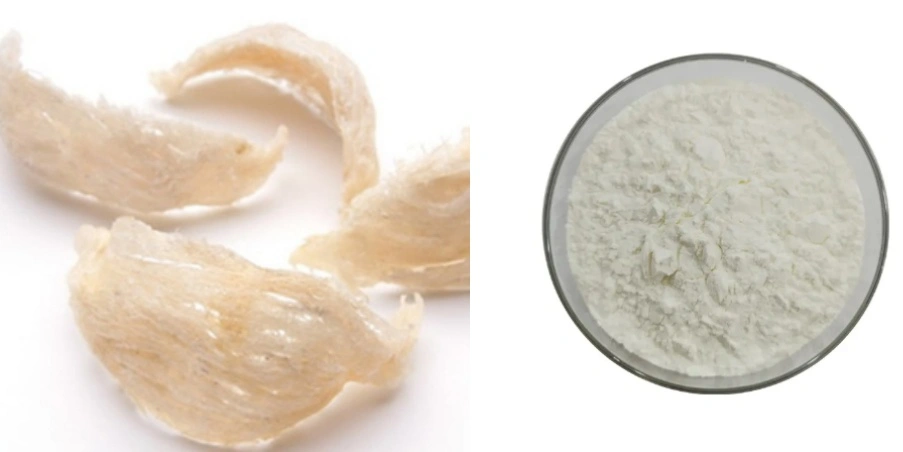
Sialic acid ingredients enter the market through three main routes: extraction from edible bird’s nest, microbial fermentation, and enzymatic or chemical synthesis. Bird’s nest extracts can vary from batch to batch as the raw material is a natural product. Fermentation and enzymatic routes tend to give a more standardized powder. Each route has different costs, allergen statements, and consumer positioning, so it all depends on your label strategy. Request a written production route, source statement, and allergen declaration, and judge the claim by documents, not adjectives. We can confirm the route for the lot you are evaluating; our product information describes N-acetylneuraminic acid from natural bird’s nest or fermented source.
Test Solubility in Your Own Formula
Sialic Acid Powder is water soluble, making it ideal for use in drinks, instant powders, and liquid supplements. However, a clean result in plain water does not always mean good performance in a real formula. Acidic drinks, protein powders, and mineral blends can affect the rate of dissolution, clarity, taste, and stability. I would recommend running small bench trials at your target dose and pH and then evaluating for clarity, sediment, flavor, and color after storage. Our powder is so fine (100% passing an 80-mesh sieve) that it mixes easily in dry mixes, but only your test will show how it works with your other ingredients. FILE: Write down your results.
Build a Supplier Evaluation Process and Verify Compliance Documents
Separate Manufacturers From Traders
Ask whether the company makes the ingredient, buys it from another plant, or just trades in it. A direct manufacturer can answer questions about the production route, change control, and batch records and can usually respond more quickly to specification requests. A trader can still sell the convenient stock, but the traceability often goes through a middleman. Look at production capacity, quality systems, export history, and audit preparedness. Ask for a virtual tour or site audit. Our company was established in 2010, exports to more than 100 countries and regions, has ISO 22000, HACCP, SGS, Kosher, and Halal certifications, and offers buyers a clear record to review.
Review the COA and Compliance Documents
A Certificate of Analysis should be batch-specific. Check the batch number, manufacturing date, expiry or retest date, test methods, limits, and actual results. Then request the product specification, Safety Data Sheet, allergen statement, origin statement, traceability records, and stability data, plus non-GMO or vegan declarations if your label makes those claims. Certificates must name the exact product and manufacturing site. Our Sialic Acid Powder carries ISO, HACCP, FDA Registration, Kosher, and Halal certificates. Keep in mind that FDA registration means a facility has registered with the agency; it is not FDA approval of a product. Your quality manager should still compare each document with the specification you wrote.
Assess OEM Support, Terms, and Communication
Many buyers need more than a bag of powder. Ask whether the supplier can provide custom packaging, labeling, formulation assistance, and private-label support, and clarify minimum order quantities and who owns technical files. Pay attention to how the team communicates during quoting. Clear answers, accurate lead times, defined payment terms, and a stated complaint process predict how future orders will go. Test the team with a technical question and see how quickly a specific answer arrives. We offer fast response, flexible customization, and one-stop service from product development to global delivery, with local warehousing support in Europe and the US to shorten delivery times for American customers.
Compare Formats, Safety Requirements, and Commercial Terms
Powder, Liquid, or Finished Capsules
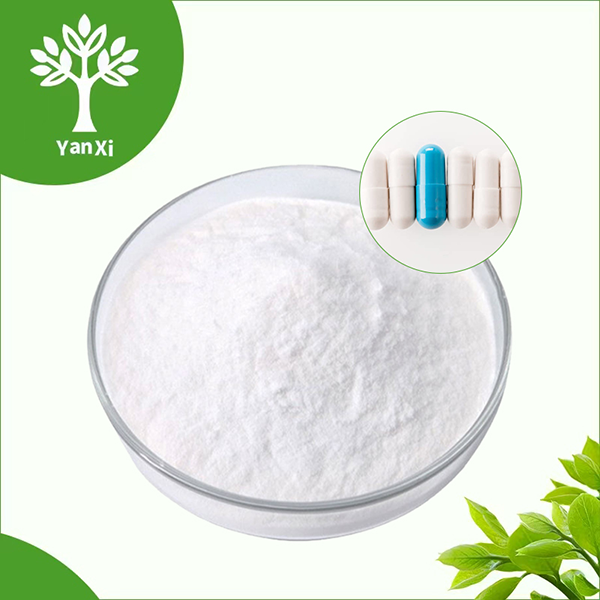
Powder allows for the concentration of the active ingredient, so it is usually cheaper to transport and store than liquid and is suitable for dry blends, tablets, capsules, and instant drinks. A liquid eliminates the step of dissolving but adds weight and usually requires closer attention to preservation. Capsules suit brands that want a ready product. Bulk powder suits manufacturers that control their excipients, dose, branding, and packaging. For bulk orders, we pack 1 kg per bag, 5 kg per box, and 25 kg per drum. The powder has a shelf life of 24 months when sealed and stored properly. Select the format that suits your production line.
Safety, Dosage, and Storage
The dose is dependent on the use, the formulation, the age group, local regulations, and available scientific evidence. Adult guidance should not be automatically extended to infants, children, pregnant consumers, or consumers who are taking medication. Request any safety and tolerance data available from the supplier and have regulatory and medical experts review final claims and directions. Check storage temperature and humidity limits, light sensitivity, and packaging suitability, as powders can absorb moisture. To preserve the 24-month shelf life of our Sialic Acid Powder, please store properly and keep sealed. And agree on an adverse-event reporting procedure before launch, so both sides know who to call if a consumer reports a problem.
Compare Price and Commercial Terms
Unit price alone gives an incomplete picture. Purity, grade, production route, certifications, packaging, volume, and lead time all affect the quote, so compare quotations that state the same terms: currency, Incoterms, validity, payment terms, testing, documentation, and freight inclusions. Then add the costs around the invoice: freight, tariffs, insurance, warehousing, audits, and rejected batches. A supply interruption can cost more than a small price gap. We keep Sialic Acid Powder in stock and deliver within 1–3 working days after payment, which helps buyers plan production runs without holding excess inventory. Ask for sample, pilot, standard bulk, and long-term contract terms separately.
Qualify Samples and Select the Right Sialic Acid Powder Partner
Run a Sample and Pilot Trial
A sample is somewhere between screening and approval. Request material matching the quoted specification, and the COA that accompanies it. Record the batch number and shipping conditions. Test identity, purity, moisture, microbial quality, solubility, taste, color, and odor in your own lab or an independent lab. A pilot run then brings out flow, blending uniformity, dosing, pH, and temperature issues prior to full production. We are happy to provide free samples of our Sialic Acid Powder so your R&D team can run this test at no material cost up front. End with a quality agreement that outlines specifications, change control, complaints, recalls, and audits so everyone understands the rules.
Follow a Five-Stage Workflow and Avoid Common Mistakes
I suggest: 1. Prepare the specification 2. Shortlist the suppliers 3. Request standard documents and quotes 4. Complete the testing and approval 5. Monitor the trial order and later batches. Next, separate requirements into mandatory and preferred items so that you can compare each supplier against the same list. There are some common mistakes that are easy to avoid: Buying the lowest price without confirming the purity, accepting a generic COA that does not correspond to the shipment, assuming that natural is better, not doing solubility trials, and ignoring the rules of the destination market. Review post-approval on a quarterly basis: batch consistency, delivery performance, document accuracy, responsiveness. Independent tests and trials in application offer practical protection for each of the risks.
Choose by Business Type
The best supplier depends on your role. Supplement and functional food brands need steady purity, supply continuity, and packaging flexibility. Infant and specialized nutrition companies need stronger traceability and facility qualification. Distributors need export documentation and inventory support. OEM and private-label clients need formulation help, label review, and clear ownership of technical files. Yanxi Herbs combines proprietary raw material cultivation, R&D capability, and production facilities to support stable supply and consistent quality, and our team works directly with R&D, purchasing, and quality managers on custom specifications. Tell us your role and priorities, and we will match the documents to your review.
Conclusion
Sourcing Sialic Acid Powder starts with a precise specification that identifies the ingredient as N-acetylneuraminic acid and matches grade to the finished product and destination market. Buyers then verify composition, production route, purity, and solubility with batch-specific COAs, samples, and application trials. Supplier review should separate manufacturers from traders and check certifications, traceability, OEM support, and communication. Format choice, dosage, storage, and total landed cost, including freight, tariffs, and rejected batches, matter more than unit price alone. A five-stage workflow with pilot testing and a quality agreement reduces common errors such as relying on generic COAs or skipping regulatory checks. The practical result is a documented, repeatable approval process that protects product quality and supply continuity.
FAQ
What is Sialic Acid Powder used for?
It appears in dietary supplements, nutrition powders, functional drinks, and cosmetics, and researchers study it in infant nutrition. Permitted uses, dosage, and claims vary by country and product category, so confirm local rules first.
Is sialic acid the same as NANA?
NANA, or N-acetylneuraminic acid, is the form most commonly listed in commercial specifications. Sialic acid is the broader family, so always request the exact chemical name and test method.
How can I verify purity?
Compare the batch COA with your specification, then confirm the results through your own or independent testing. Our Sialic Acid Powder is specified at 98%–99%, with loss on drying of 5% or less.
Which certificates and packages are available?
Our Sialic Acid Powder holds ISO, HACCP, FDA Registration, Kosher, and Halal certificates. It ships in 1 kg bags, 5 kg boxes, or 25 kg drums, and free samples are available.
What should I include in my inquiry?
Share your application, target market, required purity, certifications, packaging, estimated volume, and delivery destination. We will reply with the specification, COA, and sample options.
Request Sialic Acid Powder Samples from Yanxi Herbs
Looking for a Sialic Acid Powder manufacturer with stock on hand? Yanxi Herbs offers 98%–99% Sialic Acid Powder with free samples, ISO, HACCP, FDA Registration, Kosher, and Halal certificates, and delivery within 1–3 working days after payment. With more than 10 years of export experience and local warehousing in Europe and the US, we also support custom specifications. Send your application, volume, and destination to info@yanxiherbs.com, or visit yanxiherbs.com for details.
References
1. Annual Review of Nutrition, 2009. Wang B., "Sialic Acid Is an Essential Nutrient for Brain Development and Cognition."
2. Trends in Molecular Medicine, 2008. Varki A., "Sialic Acids in Human Health and Disease."
3. Current Opinion in Structural Biology, 2009. Schauer R., "Sialic Acids as Regulators of Molecular and Cellular Interactions."
4. Glycobiology, 2012. Bode L., "Human Milk Oligosaccharides: Every Baby Needs a Sugar Mama."
5. Code of Federal Regulations, Title 21, Part 111, 2007. U.S. Food and Drug Administration, "Current Good Manufacturing Practice in Manufacturing, Packaging, Labeling, or Holding Operations for Dietary Supplements."
6. ISO 22000:2018, 2018. International Organization for Standardization, "Food Safety Management Systems: Requirements for Any Organization in the Food Chain."

Send Inquiry
Related Industry Knowledge
- How Can Bulk Fo-Ti Extract Powder Help Brands Expand Plant-Based Ingredient Product Portfolios?
- Hyaluronic Acid Powder Bulk Helps Cosmetic Manufacturers Develop Hydrating Serums, Masks, and Anti-Aging Product Lines
- Why Do Manufacturers Choose Stevia Extract Powder for Formulations?
- What Makes Chaga Mushroom Extract Powder Suitable for Beverage and Powder Blend Applications?