What Should Buyers Check When Sourcing Astaxanthin Powder in Bulk?
Nov 12, 2026
Astasy and purity data, the powder format and how well it mixes, how stable it is, how long it lasts, the export documents and certifications, and the total landed cost are the six things that buyers should look at when they are looking for Astaxanthin Powder Bulk. Before you buy a lot, you should look at COAs from a few different batches and use a sample in your own recipe. Price per kg doesn't always show what's going on. What comes next is set up this way so that the R&D, purchasing, and quality teams can compare quotes in an even way.
You can now find astaxanthin in skin care products, drinks, supplements, and functional foods. Some problems that often happen with sourcing are assay results that don't always agree, natural origins that aren't clear, poor protection against oxidation, and export paperwork that is missing or not complete.
Confirm the Source, Potency, and Batch Consistency
Natural or Synthetic: Verify the Source of Natural Astaxanthin Powder Bulk
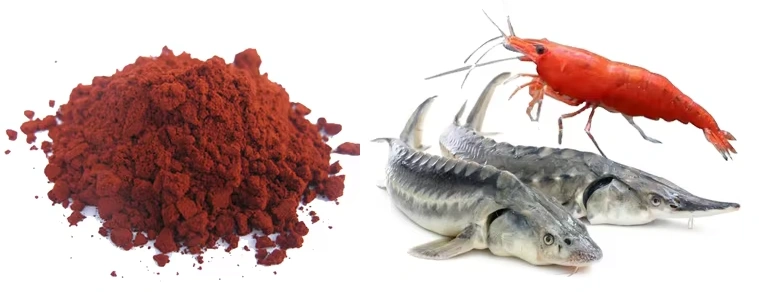
Source is the first choice. Most of the natural astaxanthin comes from the microalgae Haematococcus pluvialis. When this plant is under a lot of stress, it stores the color. Astaxanthin that is made in a lab is mostly used in food for animals. A 2013 article in Nutrafoods says that the two types have different molecular structures. Write down details about how the plants were grown, how the oil was extracted, the carriers, and the final powder form. The word "natural" should be seen as a claim that needs to be proven, not as proof in and of itself.
| Check | Natural (*H. pluvialis*) | Synthetic |
|---|---|---|
| Origin | Microalgae | Chemical synthesis |
| Main form | Mostly esterified | Mostly free |
| Isomers | Mainly 3S,3'S | Mix of stereoisomers |
| Common use | Supplements, clean-label foods | Mostly animal feed |
Potency and Purity: Read the Assay and Test Limits
Find out what the percentage really means. It's important for the test to show how much astaxanthin is in the whole powder, not just the part that has carriers added to it. Find out whether the astaxanthin is bound to something or not. Our Astaxanthin Powder Bulk has between 1% and 10% astaxanthin in it. The powder is very fine and dark red to purple-red. There can't be more than 5% ash, more than 10 parts per million of heavy metals, more than 1,000 yeast and mold colonies per gram, or more than 10 parts per million of heavy metals. The total plate count must be less than 1,000. Get the same list from all of the suppliers, along with the way to test each line.
Batch-to-Batch Consistency: Review COAs from Several Lots
It says a lot with just one COA. Get certificates from at least three recent production batches. Next, look at the assay, moisture, and microbiology test results. Things are being kept in check when the spread is narrow. Find out which lab did the tests, how they did them, and what the supplier's requirements are for release. You can keep track of a lot of things, from the raw materials to the shipment, if you ask to keep samples. There is a rule from the FDA called 21 CFR Part 111 that says companies that make dietary supplements need to make sure that every ingredient they get is what it says it is. This is also their job. That step goes more quickly if the supplier keeps good records.
Match Format, Solubility, and Stability to Your Application
Powder Format and Dosage Form
Capsules, tablets, gummies, sachets, and drinks all have different requirements for flowability, color, odor, particle size, and dispersibility. For beverage manufacturers, Astaxanthin Powder Bulk is a suitable format for applications that require a powder that can be mixed with water. Companies producing softgels may prefer an oil-based format. Our astaxanthin powder is derived from Haematococcus pluvialis, with astaxanthin content ranging from 1.5% to 10%. No synthetic astaxanthin is added. The powder has a fine, reddish-brown appearance and disperses well in water without easily clumping, making it suitable for use in beverages, dietary supplements, and sports nutrition products. Contact us for technical guidance on temperature, pH, mixing, and suspension requirements to ensure the powder is compatible with your existing production equipment and processes.
Solubility vs. Dispersibility
"Water soluble" on a datasheet usually means that the substance can be mixed or emulsified, since astaxanthin doesn't like water. It's not possible for powder and water to mix. For grades that can be mixed, the pigment needs to be held evenly in the liquid by a substance like gum arabic or starch. You could ask the supplier to test the suspension on a base that is like the one you have. Keep an eye out for sediment, ringing, and color drift during the shelf life that was planned. The liquid will be red to orange when it's done. This sheet changes the allergen and vegan status, so make sure you ask for it too.
Stability, Packaging, and Shelf Life
Marine Drugs published a review in 2014 that said light, oxygen, and heat can break down astaxanthin. That means the test and the packaging are both very important. Our powder will last for 24 months if you store it properly and seal it up. It comes in 25 kg drums, 1 kg bags, or 5 kg boxes. You can ask any supplier about things like foil-lined bags, sealed drums, nitrogen flushing, or vacuum packing for the inside of the package. Check to see how long the goods will last after they are shipped, what the best temperature is for storage, and what should be done if they are exposed to light or heat during transport.
Verify Certifications and Compare Suppliers
Grade and Certification Documents
"Food-grade" and "pharmaceutical-grade" are not the same thing. Make sure the grade is right for the product and the people you want to sell it to. For this item, we have ISO, HACCP, FDA registration, Kosher, and Halal certificates. Yanxi Herbs also runs its business by the rules set by ISO 22000, HACCP, SGS, Kosher, and Halal. If you need it to be organic, non-GMO, or vegan, ask for the certificate and information about the carrier. This is because carriers made of gelatin can make something not vegan. The dates, scope, and issuing body of each certificate should all be checked. Make sure that the name on each certificate is the same as the name of the business that is listed on your contract.
The Technical and Regulatory Document Package
There are often a COA, TDS, SDS, microbiology report, heavy-metal results, stability data, a manufacturing flow chart, and records of how the product was made in a full package. You should get these before you decide what to do, not after the first shipment. Next, make sure that the safety claims, daily dose, and intended use of the supplement, food, or cosmetic are all in line with US laws. Astaxanthin serving sizes in published studies range from 4 mg to 12 mg per day. Make sure that the serving size you choose fits with your own safety review. Lastly, get customs papers and papers from the country where the goods came from so that they can be brought in quickly.
Compare Astaxanthin Powder Manufacturers, Distributors, and Traders
There is someone who runs the factory and can show you how things are made. An agent may have stock, but they may also get data from another plant. A company that trades might not know much about where things come from. Find out what makes each type different when it comes to inventory, lead time, price clarity, production control, and service after the sale. There are no test methods or generic certificates, and there is pressure to place an order before the samples are approved. It's not clear where the goods came from. Yanxi Herbs has researched, made, and sent natural ingredients to more than 100 countries and regions since 2010. They also store things locally in the US and Europe. When evaluating an Astaxanthin Powder Bulk supplier, ask for a tour of their factory or a video review.
Review Pricing, MOQ, and Private-Label Support
Compare Quotations on Equal Terms
It only makes sense to compare astaxanthin powder wholesale prices if the strength, format, packaging, order volume, testing, and shipping terms are all the same. Price is affected by where it comes from, how concentrated it is, how it is delivered, and other factors. Before you buy from anyone, make sure you get a price per kilogram, an MOQ, details about the packaging, a lead time, payment terms, Incoterms, freight, insurance, customs documents, and an expiration date for the quote. Quotes that leave out some of these costs hide them. Put all the offers in one spreadsheet so you can see right away where there are gaps.
Calculate the Cost per Gram of Active Astaxanthin
It can be hard to understand the price per kilogram. There are 50 grams of 5% astaxanthin powder in a 1 kg bag and 100 grams of 10% astaxanthin powder in the same 1 kg bag. In other words, the 10% grade may cost less per gram of active ingredient than the other grades. Divide the price per kilogram by the amount of astaxanthin that is in that kilogram. To get 4 mg from a 2% powder, a formulator needs 200 mg of powder. This is also true for dose math. Add the costs of shipping, safety stock, shelf life, and packaging to get the landed cost. One to three business days after payment, our in-stock powder will be sent out. You can cut down on transit time and safety stock by storing things locally.
Astaxanthin Powder Supplier for Private Label and OEM Support
A lot of the time, brands need more than food and clothing. When sourcing Astaxanthin Powder Bulk, make sure to ask the supplier if they can help with formula development, pilot batches, stability testing, packaging, artwork review, and regulatory coordination, as well as private-label capsules, tablets, sachets, or premixes. Things that can be customized include strength, carrier, particle size, dispersibility, pack size, and country-specific documentation. It's important to approve a production sample, define acceptable quality variations, establish procedures for handling changes, and clarify who is responsible for formulas, specifications, artwork, and complaints before scaling up. Yanxi Herbs makes customization easy and offers free samples so your R&D team can test the products before placing a large order.
Build a Checklist and Match It to Your Buyer Profile
A Practical Procurement Checklist
What do I think? You should use these core checks to make a supplier scorecard.
- Product and quality: Confirm natural or synthetic source, assay on the finished powder, free versus esterified form, particle size, moisture, ash, heavy metals, and microbial limits. Compare COAs from at least three batches, and ask which method produced each result so every supplier's numbers line up. Request retained-sample details too.
- Documents and compliance: Collect ISO, HACCP, Kosher, Halal, and FDA registration records, along with the COA, TDS, SDS, stability data, and traceability files. Check dates and scope, and confirm that your regulatory team approved the claims and serving size for the US market. Keep every file in one folder for audits.
- Commercial terms: Record MOQ, lead time, packaging, Incoterms, payment terms, quote validity, and monthly capacity. Ask about local warehouse stock, safety-stock options, and sample availability. Compare cost per gram of active astaxanthin instead of price per kilogram, and note any private-label or customization requirements. Write these terms into the purchase agreement.
Your team can't just decide on price or sales claims with these checks.
Weight the Criteria with a Simple Scoring Model
An overall score with weights is used to make the final comparison. You could, for example, give 30% to quality and effectiveness, 20% to documentation, 15% to application performance, 10% to consistency, 10% to total landed cost, 10% to delivery flexibility, and 5% to technical support. On each line, the supplier gets a score from 1 to 5. Then, take the scores and multiply them by the weight. Finally, add them all up. The buy, quality, regulatory, and production teams should agree on the weights before the quotes come in. That way, they won't be changed to favor one vendor over another. It's possible to change the numbers to fit your plan and risk level.
Adjust Priorities for Your Role and Business
Natural origin, traceability, certifications, and stability should be the most important things for high-end supplement brands to know. Processing tolerance, color uniformity, and dispersibility are all important things for people who make functional drinks and foods to keep in mind. People who sell and bring goods into or out of a country need export documents, strong packaging, the ability to restock, and goods that will still be good when they get there. OEM clients should get help with pilot batches, learn how to make new products, and keep track of changes. The job of R&D managers is to make sure the formula works well. The job of purchasing managers is to make sure prices stay stable and supplies stay steady. The job of quality managers is to make sure certificates are followed, and batches are consistent.
Conclusion
You shouldn't compare prices to find Astaxanthin Powder Bulk. Instead, you should read a structured review. You should have proof that the source tells you if the material is natural or man-made. There must be COAs from more than one lot to back up the test and describe the finished powder. Because astaxanthin breaks down in light, oxygen, and heat, the application should test the format, how well it disperses, and how it is packaged. Proofs, legal papers, and the type of supplier can show how much control is behind a quote. It is more accurate to use the price per gram of active astaxanthin instead of the price per kilogram because it takes into account shipping, packaging, and extra stock. You can get the same answer from the technical, purchasing, and quality teams by giving them all a weighted scorecard.
FAQ
What is the difference between natural and synthetic astaxanthin?
It is mostly esterified and comes from the microalgae Haematococcus pluvialis. It is mostly found as the 3S,3'S isomer. Astaxanthin that is made in a lab is made up of stereoisomers that are mixed together. To make sure you get the right one, ask for proof of origin.
What should a COA show?
The amount of moisture, ash, heavy metals, microbes, the astaxanthin test, the test methods, and the lot number should all be on the COA. Check more than one set of certificates side by side and see which lab did the tests. Don't rely on just one set.
Is astaxanthin powder water soluble?
The normal form of astaxanthin powder doesn't mix with water. The color is spread out with a carrier in water-dispersible grades. When you mix it with your own drink base, it will turn your drink red to orange.
How should I store astaxanthin powder?
Close it up and keep air, light, and heat from getting in or out. If you store and seal our Astaxanthin Powder Bulk the right way, it will last for 24 months. The datasheet from the supplier will tell you what temperature to store the item at.
Request Astaxanthin Powder Bulk Samples and a Quotation from Yanxi Herbs
The Astaxanthin Powder Bulk from Haematococcus pluvialis is sold by Yanxi Herbs. Free samples, goods that are in stock, and delivery in one to three business days after payment are what they offer. As a trustworthy company that makes and ships Astaxanthin Powder Bulk, we offer forms for ISO, HACCP, FDA registration, Kosher, and Halal, as well as storage in the US. Email info@yanxiherbs.com with the strength, use, and amount you want. You can find out more at yanxiherbs.com as well.
References
1. Ambati, R.R., et al. "Astaxanthin: Sources, Extraction, Stability, Biological Activities and Its Commercial Applications—A Review." Marine Drugs, 2014.
2. Shah, M.M.R., et al. "Astaxanthin-Producing Green Microalga Haematococcus pluvialis: From Single Cell to High Value Commercial Products." Frontiers in Plant Science, 2016.
3. Capelli, B., Bagchi, D., and Cysewski, G.R. "Synthetic Astaxanthin Is Significantly Inferior to Algal-Based Astaxanthin as an Antioxidant and May Not Be Suitable as a Human Nutraceutical Supplement." Nutrafoods, 2013.
4. Higuera-Ciapara, I., Félix-Valenzuela, L., and Goycoolea, F.M. "Astaxanthin: A Review of Its Chemistry and Applications." Critical Reviews in Food Science and Nutrition, 2006.
5. Régnier, P., et al. "Astaxanthin from Haematococcus pluvialis Prevents Oxidative Stress on Human Endothelial Cells without Toxicity." Marine Drugs, 2015.
6. U.S. Food and Drug Administration. "Current Good Manufacturing Practice in Manufacturing, Packaging, Labeling, or Holding Operations for Dietary Supplements (21 CFR Part 111)." 2007.

Send Inquiry