
What Should Food Manufacturers Consider When Buying Beet Powder in Bulk?
Nov 22, 2026
Food makers should match Beet Powder to the completed product first, and then evaluate the specification, processing technique, quality data, certifications, packaging, shelf life, delivery terms, and supplier capabilities. A savvy buyer also looks at the whole landed cost, not just the stated rate. Beet Powder is used in drinks, smoothies, bakery goods, confectionery, vitamins, and as a natural red colorant; however, each usage has variable particle size, color stability, and microbiological restrictions required. I prepared this guide to assist R&D, buying, and quality teams in selecting vendors using specific criteria to prevent difficulties in production.
Start With the Intended Application and Product Specifications
Define the Application Before You Request Quotes
The specification should be specified by the application. Beverage and smoothie manufacturers often want minimal sedimentation, stable color, and mild taste. Bakery and confectionery teams monitor heat exposure, moisture, and particle size. Sports nutrition and supplement manufacturers commonly request nitrate testing, precise nutrition data, and traceability. I advise making a one-page summary that will include: botanical source, origin, processing technique, sensory goal, microbiological limits, contaminant limits, packaging, shelf life, and annual volume. Do you prefer 100% Beet Powder or a product with carrier or flow agents? A clear brief means vendors quote the proper material the first time, and shortens the sample step.
Compare Beetroot Powder and Beet Juice Powder
Names differ throughout the market, so check what you are purchasing. Beet root powder is made by drying and grinding the beet, so it retains nutritional fiber and is appropriate for dry mixes and bulk food applications. The extracted juice is spray-dried or freeze-dried to make beet juice powder. It commonly dissolves more quickly in liquids but may have a carrier. Raw, freeze-dried, and spray-dried items may have different color retention, taste, and flowability. Terms such as red beet powder are not a substitute for verification. Request the plant part, processing technique, and a batch Certificate of Analysis prior to acceptance.
Review Yanxi Herbs Beet Powder Specifications
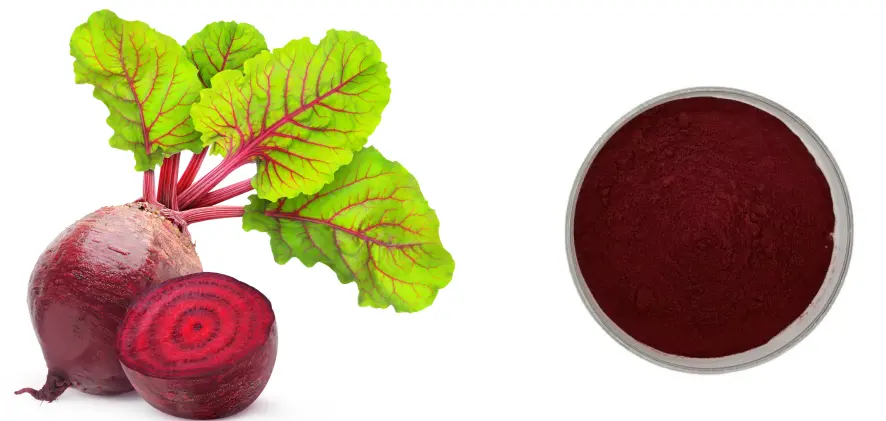
Our Beet Powder is made from fresh beet tuber. Appearance: Fine crimson to deep purple powder, 80-100 mesh, 100% through 80 mesh sieve. The active ingredients include betalains, dietary fiber, and natural sugars. The specification limitations include loss on drying not more than 5%, ash not more than 5%, heavy metals not more than 10 ppm, total plate count less than 1000 cfu/g, yeast and mold less than 100 cfu/g. The powder has natural red betalain pigments and earthy, sweet beet taste without additions . Shelf life: 24 months under appropriate storage if sealed. A quick initial screen is to compare these values against your personal boundaries.
Evaluate Quality, Consistency, and Functional Performance
Test Color, Flavor, and Dispersibility in Your Formula
Test your samples in your actual formula, not just in water. Published research on betalain stability demonstrates that heat, light, oxygen, and water activity may fade the pigment. The color is best preserved in moderately acidic settings around pH 4 to 6. Neutral or alkaline bases may change the tint to brown. Bakers should bake a pilot run and check color before and after. Beverage teams should consider dispersion, sedimentation, and flavor throughout the planned shelf life. Our Beet Powder is a fine 80-100 mesh powder that maintains the natural hues of the betalain and the earthy taste of the beet, giving formulators a clear starting point for these studies.
Verify Nutrition and Nitrate Data
The supplier's own statistics should be used for calories, carbs, fiber, and sugars, since nutritional values vary depending on beet type, concentration, processing, and use of carriers. Beets are a well-known dietary source of nitrate. A study in Sports Medicine (2014) explored nitrate supplementation and exercise performance. If your label or claim is based on nitrate, agree on a test technique and target range before placing a bulk purchase. Since source material fluctuates with seasons and growth circumstances, ask for findings from many manufacturing batches. Nitrate or Health claims also need separate regulatory clearance for your market.
Check Batch-to-Batch Consistency
Consistency safeguards your end product against variations in color, flavor, and texture. Request Certificates of Analysis on a few recent batches and review moisture, ash, microbiological counts, and appearance. Our spec: loss on drying and ash 5% or less, heavy metals 10ppm or less, total plate count less than 1000cfu/g, yeast and mold less than 100cfu/g. And save samples of every batch you get, and do your own incoming tests for color and moisture. Quality management may then record patterns and escalate concerns early, before a deviation reaches production.
Verify Certifications, Compliance, and Documentation
Match Certificates to Your Market
"The certificate requirements will vary by destination market, product category, and claims. US food and supplement customers often seek HACCP, ISO 22000, Kosher and Halal documentation, and some projects include organic, non-GMO, or gluten-free verification. Verify that each certificate indicates the manufacturing facility or product, if applicable. Our Beet Powder is Kosher & Halal certified and ISO, HACCP, and FDA registered. Note that FDA registration refers to a food facility’s registration with the agency. The product has not been authorized by the FDA. Get current copies. Check for expiration dates.
Request a Complete Technical Package
A full technical bundle makes your internal approval faster. "Please include the specification, Certificate of Analysis, ingredient and allergy declaration, origin details, shelf-life data, packaging information, traceability records, and safety documentation. The FDA's overseas Supplier Verification Program is aimed at ensuring that overseas suppliers provide food that meets US safety criteria, and US importers have a role to play. Organized documentation can help with such checks and speed up audits. Yanxi Herbs provides export-ready documentation for shipments to over 100 countries and regions, and our staff may exchange papers during sampling.
Confirm Color Additive and Labeling Rules
Beet Powder fits well under US color additive standards. Dehydrated beets (beet powder) are allowed as a color additive exempt from certification for coloring foods generally, in proportions compatible with good manufacturing practice under 21 CFR 73.40. This makes it a viable alternative for natural red in many food and beverage products. But claims, label language, and completed product regulations vary by category. Supplement brands need to examine their structure/function declarations, and cosmetic companies need to study the cosmetic requirements separately. I would suggest that your regulatory manager examine the final label before launch.
Assess Packaging, Shelf Life, and Logistics
Choose Packaging That Fits Your Volume
Choose the bundle that suits your level of growth. Our Beet Powder is available in 1-kilogram bags for lab experiments, 5 kg boxes for pilot runs, and 25 kg drums for regular production. Beet powder has natural sugars inside it that may absorb moisture and clump if the packaging is inadequate. Inquire about moisture barriers, light protection, food-contact compliance, tamper evidence, and batch labeling. Palletization also influences handling in the warehouse. Go for the biggest size you can easily close after you’ve opened it, to minimize air contact and save waste.
Plan Storage and Shelf Life
Our Beet Powder is good for 24 months if packed and kept correctly. Quality loss is accelerated by heat, humidity, oxygen, and light; thus, keep drums in a cool, dry, dark room away from strong scents. Keep unsealed bags or drums firmly closed and rotate stock on a first-in, first-out basis. Get storage recommendations from each supplier for sealed and unsealed goods, and include them in your warehouse operations. Good storage practices will ensure uniformity of color and flowability from the first scoop to the last.
Compare Total Landed Cost and Delivery
A good cost comparison looks beyond the product line on the quotation. Include testing, freight, insurance, tariffs, customs clearance, storage, inspection, and any waste from rejected batches. Delivery timing is important too. Our Beet Powder is in stock and delivered within 1-3 working days following purchase. The U.S. and Europe have local storage that may cut transportation for U.S. purchasers and minimize some import complexity. Benchmark suppliers on usable kilograms and total landed cost so buying managers may plan production with fewer gaps.
Compare Suppliers and Build a Structured Approval Process
Identify the Supplier Type and Capabilities
Start by finding out whether a corporation trades, exports, produces, or distributes. Review sourcing controls, manufacturing capacity, food safety systems, export experience, technical support, and complaint processes. Yanxi Biotech, founded in 2010, develops, manufactures, and sells natural colorants, zero-calorie sweeteners, cosmetic chemicals, and dietary supplement ingredients. We have integrated raw material cultivation, professional research and development, and sophisticated manufacturing facilities. Our goods have been exported to more than 100 countries and regions. OEM and private label customers should additionally verify formulation, packaging, and regulatory support, and we provide flexible customisation.
Follow a Sample-to-Contract Sequence
A structured sequence minimizes the danger of accepting improper content. Ask for specs and papers, identify suitable providers, and purchase representative samples. Evaluate the look, taste, color, solubility, and performance of the recipe. If claims or processing conditions are sensitive, conduct a trial batch. Suppliers are rated on quality, certifications, paperwork, consistency, landing cost, MOQ, lead time, packing, and support. Sign a Quality Agreement, which details specifications, test methods, acceptance limits, delivery conditions, modification notifications, and claim processes, before recurring orders commence. We provide free samples of Beet Powder so your team may complete testing before you make a bigger purchase.
Avoid Common Buying Mistakes
There are certain things that are just unnecessary headaches. The lowest wholesale quotation may include carrier-added goods, inadequate testing, or poor packaging. An organic label tells you how a product was cultivated and certified, but it doesn’t guarantee superior color, flavor, or solubility. Audit every carrier, flow agent, and processing aid. These may impact labeling, nutrition information, and clean-label claims. Words like pure, raw, or premium are assertions that demand batch data. Finally, qualify a second permitted source so that one delay doesn't halt your line.
Conclusion
In the case of buying Beet Powder in bulk, it is recommended to start the decision process with the application and conclude it with a written permission. Buyers should establish specs and differentiate between beet powder and beet juice powder and evaluate color, taste, and dispersion in the actual composition. Quality is backed by nutrition data, nitrate testing where claims demand it, and batch-to-batch results. Certificates, technical documentation, US color additive and importer standards certify conformity. Day-to-day performance and budgeting will be dictated by packing, storage, and total landing cost. Supplier type, manufacturing capacity, sample testing, scorecards, quality agreements, and a back-up source mitigate supply and quality risk. Together, these procedures provide R&D, buying, and quality teams with one common technique for selecting a reliable supplier.
FAQ
What is the difference between Beet Powder and beet juice powder?
Beet Powder from the root is made by drying and grinding the beetroot, so it keeps dietary fiber. Beet juice powder is made from pressed juice that is spray-dried or freeze-dried. It often dissolves faster but may contain a carrier, so always check the ingredient statement.
Does baking affect the color?
Yes. Betalain pigments are sensitive to heat, light, and oxygen. They hold color best in mildly acidic systems, so a neutral or alkaline batter can shift the shade. Run a pilot bake with your own recipe before full production.
Can I test a sample before ordering in bulk?
Yes. We offer free samples of our Beet Powder. Send your application, target volume, and packaging needs to info@yanxiherbs.com, and we will arrange sampling. The specification sheet and certificates are available on request.
Request Beet Powder Samples and Bulk Supply Details From Yanxi Herbs
Yanxi Herbs offers Beet Powder with free samples, in-stock supply, and delivery within 1-3 working days after payment. As an experienced Beet Powder manufacturer with local warehousing in the US and Europe, we support custom specifications and export documents. Send your application, volume, and packaging needs to info@yanxiherbs.com, or visit yanxiherbs.com for details. Our team will reply with a sample plan and technical documents.
References
1. U.S. Food and Drug Administration, 2024: Code of Federal Regulations Title 21, Section 73.40, Dehydrated beets (beet powder).
2. U.S. Food and Drug Administration, 2015: Final Rule on Foreign Supplier Verification Programs for Importers of Food for Humans and Animals.
3. Journal of Food Science, 2006: Herbach, Stintzing, and Carle, "Betalain stability and degradation: structural and chromatic aspects."
4. Molecular Nutrition & Food Research, 2015: Esatbeyoglu et al., "Betanin: a food colorant with biological activity."
5. Nutrients, 2015: Clifford, Howatson, West, and Stevenson, "The potential benefits of red beetroot supplementation in health and disease."
6. Sports Medicine, 2014: Jones, "Dietary nitrate supplementation and exercise performance."

Send Inquiry
Related Industry Knowledge
- How Can Bulk Fo-Ti Extract Powder Help Brands Expand Plant-Based Ingredient Product Portfolios?
- Hyaluronic Acid Powder Bulk Helps Cosmetic Manufacturers Develop Hydrating Serums, Masks, and Anti-Aging Product Lines
- Why Do Manufacturers Choose Stevia Extract Powder for Formulations?
- What Makes Chaga Mushroom Extract Powder Suitable for Beverage and Powder Blend Applications?