
Bulk Phycocyanin Powder for Natural Blue Icing and Bakery Applications
Oct 22, 2026
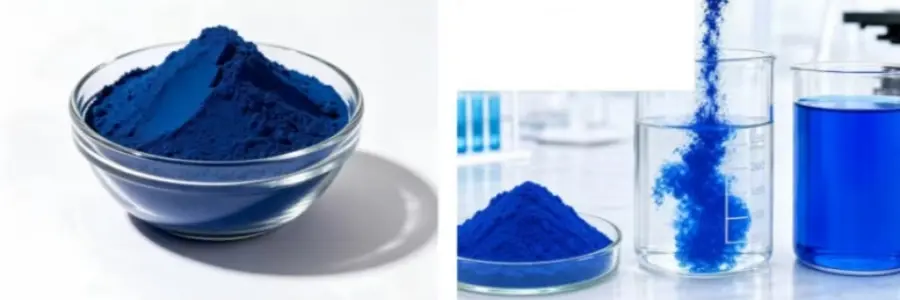
Bulk phycocyanin powder is a natural blue pigment-protein complex extracted from whole spirulina (Arthrospira platensis). It delivers a brilliant, water-soluble blue color to icing, frostings, and baked confections without synthetic dyes. As a clean-label ingredient with antioxidant properties, it meets the growing consumer demand for naturally derived food colorants. Certified under ISO, HACCP, FDA Registration, Kosher, and Halal standards, it suits large-scale bakery production. Available in specifications E3, E6, E18, and E25, it gives formulators precise control over color intensity at every production scale.
What Is Bulk Phycocyanin Powder and Why It's Ideal for Bakery Applications
The Source: Spirulina and Its Blue Pigment
Spirulina is a type of cyanobacterium that has been grown as food for the past few hundred years. The main color in it is phycocyanin. The chromophore that works is phycocyanobilin. It sticks to the backbone of a protein and turns water a very bright blue color. Phycocyanin is one of the few natural sources of a real blue color. Other plant-based colorants make colors that are green or yellow. Because of this, it is very useful for making sweets and baked goods.
Clean-Label Appeal for Modern Bakery Brands
There is research that shows people always read the food labels to find out what's in them. The International Food Information Council released a study in 2022 that said 75% of people in the U.S. intentionally avoid foods that have artificial dyes in them. Phycocyanin makes that answer clear. Since it comes from plants, it can be used instead of man-made colors like FD&C Blue No. 1 (Brilliant Blue FCF). People are less likely to buy bread and candy brands that are trying to move into the "clean label" or "free-from" categories if they add a blue colorant made from spirulina.
Antioxidant Value Beyond Color
Bulk phycocyanin powder offers food manufacturers more than a natural blue colour for product development, as phycocyanin and its associated compounds have also been studied for their potential antioxidant and biological properties. Research published in journals such as the Journal of Applied Phycology explores phycocyanin-related compounds, including phycocyanobilin, and their interactions with oxidative stress and inflammatory pathways. For manufacturers developing functional bakery products, bulk phycocyanin powder may be worth evaluating as a colour ingredient, provided it is suitable for the intended application and complies with relevant food regulations. However, laboratory findings about antioxidant or anti-inflammatory activity do not automatically establish health benefits in finished foods, so any nutritional or functional claims should be supported by appropriate evidence and reviewed against the rules of the target market. When considering bulk phycocyanin powder for bread, pastries, or other baked goods, R&D teams should assess its colour stability, heat sensitivity, formulation compatibility, and performance under actual processing conditions. Since high temperatures and changes in acidity may affect pigment stability, testing bulk phycocyanin powder in representative recipes is important before commercial production. Procurement teams should also request product specifications, certificates of analysis, and relevant safety documentation. By combining formulation trials with evidence-based claim review, brands can determine whether bulk phycocyanin powder meets their colour, quality, and product-development objectives.
How to Use Bulk Phycocyanin Powder Effectively in Blue Icing and Bakery Products
Dosage and Solubility Best Practices
This is because phycocyanin dissolves completely in water and can pass through an 80-mesh sieve. It mixes quickly and evenly with water. Before adding the powder to the base for blue royal icing or buttercream, it's best to mix it with a little water that is at room temperature. Rates of inclusion are usually between 0.1% and 0.5%, depending on the goal color depth. At lower levels of use, the E18 and E25 grades have darker blue tones, but this doesn't change the end flavor much either.
Heat Sensitivity and Application Timing
Time is important when baking because phycocyanin starts to break down at temperatures above 60°C. It is best to put the colorant on parts of baked goods that will be heated in the oven after they have been baked. This keeps the color fresh. Foods that are cold, filled, or don't need to be baked, like mousse cakes, blue velvet cheesecakes, and chilled gel decorations, keep their good taste for a long time. They say that the colors don't change from batch to batch when they use this method for their no-bake tartlets and cake pops.
pH Compatibility in Icing Formulations
Many types of buttercream and royal icing keep their pH level between 5.5 and 7.0, which is a stable range for phycocyanin. People who make medicines need to be careful with sour ingredients like citric acid or cream of tartar. The protein might not be as stable if the pH drops below 4.5. You can either lower the pH of the base or use a microencapsulated spirulina blue extract to keep the color in acidic creams.
Comparison Guide: Bulk Phycocyanin Powder vs Other Blue Colorants and Formats
Powder vs Liquid Phycocyanin
Liquid phycocyanin offers easy incorporation but carries a significantly shorter shelf life — typically three to six months refrigerated. Bulk phycocyanin powder, by contrast, maintains a 24-month shelf life under sealed, cool, and dark storage conditions. For industrial bakery operations managing large inventory cycles, powder format reduces waste and lowers cold-chain logistics costs. It also allows more precise dosing by weight, which matters when scaling production from pilot batch to full volume.
Phycocyanin Powder vs Blue Spirulina Powder
Blue spirulina powder is essentially a partially refined spirulina extract marketed for its color. It contains a lower phycocyanin concentration compared to standardized grades like E18 or E25. Yanxi Herbs' phycocyanin powder is standardized to defined E-values, which means each batch delivers predictable, consistent color output. For B2B buyers who need repeatable results across thousands of production units, this standardization is a practical advantage over general blue spirulina.
Natural Phycocyanin vs Synthetic Blue Dyes
FD&C Blue No. 1 and Blue No. 2 remain FDA-approved but face growing regulatory scrutiny globally. The European Food Safety Authority (EFSA) has re-evaluated several synthetic dyes for potential behavioral effects in children. Phycocyanin carries no such concerns. It is a protein-based colorant with a strong global regulatory acceptance record. For brands exporting bakery products to European, Middle Eastern, or Asian markets, choosing a Halal- and Kosher-certified natural blue colorant reduces compliance friction.
How to Choose the Best Bulk Phycocyanin Powder Supplier — Procurement Insights
Certifications and Traceability
Make sure the company you want to buy phycocyanin from has the right licenses to do business where you want to go. If you want to use it for food, you should at least look for ISO 22000, HACCP, and FDA Registration. To sell your goods in the Middle East and among Jews, you need to have Halal and Kosher licenses. Your supply chain will be safe from fraud if you can track the spirulina from where it was grown to where it was extracted and packed, with traceability documents.
If buying teams want to find good suppliers, these are the main things they should check:
- Specification consistency: Confirm that E-value grades (E3, E6, E18, E25) are verified by third-party spectrophotometric testing at 618nm, not self-reported.
- Microbial safety: Certificates of Analysis should confirm Total Plate Count below 1,000 cfu/g and Yeast & Mold below 100 cfu/g per batch.
- Heavy metal compliance: Heavy metals must test at or below 10 ppm to meet international food ingredient standards.
- Packaging options: Industrial buyers need flexibility — 1kg/bag for R&D trials, 5kg/box for mid-scale production, and 25kg/drum for full manufacturing runs.
The level of heavy metals in food must be at or below 10 parts per million (ppm) in order to meet international standards.
Customization and Sample Access
Before selecting a supplier of Bulk phycocyanin powder, buyers should establish clear quality, documentation, and compliance requirements to protect both product consistency and their business interests. A reliable supplier of Bulk phycocyanin powder should be able to provide a batch-specific certificate of analysis (COA) upon request, allowing procurement and quality teams to verify that the delivered material matches the agreed specifications. Buyers should also confirm the testing methods, pigment content, microbiological limits, contaminant standards, and traceability information included in the documentation. When sourcing Bulk phycocyanin powder for long-term production, it is important to agree on acceptance criteria, packaging requirements, storage conditions, delivery schedules, and procedures for handling nonconforming batches before signing a supply contract. Suppliers should clearly explain the scope and validity of any relevant certifications rather than relying on general assurances. If a supplier cannot provide a batch-specific COA or explain its quality-control procedures for Bulk phycocyanin powder, buyers should request clarification before proceeding. Maintaining these requirements in writing can help reduce sourcing risks and improve communication throughout the supplier relationship. By verifying documentation and agreeing on quality expectations in advance, businesses can make more informed purchasing decisions and establish a more dependable supply process for Bulk phycocyanin powder.
Supply Stability and Logistics
A lot of the time, R&D teams need to test how well colorants work in different mixtures before they place large orders. Developers spend a lot less time on projects when they can get free samples and ship them quickly. Yanxi Herbs has been around since 2010 and gives away free samples that are sent out one to three business days after payment is confirmed. This speeds up the process of making new products.
Conclusion
Using Bulk phycocyanin powder for frosting and baking allows food manufacturers to explore natural blue colouring options without automatically relying on synthetic colourants. Derived from spirulina, phycocyanin can provide a vivid blue shade for applications such as royal icing, confectionery, dessert toppings, and no-bake cakes, although its colour stability depends on the formulation and processing conditions. When selecting Bulk phycocyanin powder, manufacturers should consider pigment concentration, ingredient purity, food-grade specifications, and compatibility with the intended recipe. Choosing the appropriate grade and addition method is especially important because heat, acidity, and storage conditions can affect the final colour. For commercial bakeries, Bulk phycocyanin powder should be tested in representative formulations to confirm that it meets the required colour intensity and product-quality standards. Procurement teams should also verify relevant safety documentation, batch-specific certificates of analysis, traceability records, and compliance with regulations in each target market. A supplier offering consistent product specifications and practical technical support can help R&D teams assess application requirements and refine processing methods. By evaluating quality, regulatory suitability, and supply reliability together, businesses can determine whether Bulk phycocyanin powder fits their production needs. Establishing clear specifications and confirming delivery capabilities before placing a bulk order can also support more predictable purchasing and production planning. With appropriate testing and supplier verification, Bulk phycocyanin powder can be a useful ingredient for developing visually distinctive baked goods and confectionery products.
FAQ
Does phycocyanin powder survive baking temperatures?
Not at all. Phycocyanin starts to break down above 60°C. It works best in glazes, frostings, icings, and no-bake treats that are used after baking. Plan to add the colorant after the item has been heated if it has been heated.
What specification grade should I choose for blue icing?
It takes less of the E18 and E25 grades to get the strongest blue tones. E6 is enough for frostings that are very light blue.
Is this product safe for vegan and allergen-sensitive formulations?
E3 can be used to add a soft blue wash to light tints.
What is the shelf life and how should I store it?
Yes, phycocyanin powder from spirulina does come from plants, is vegan, and doesn't have any of the FDA's list of major allergens. This food doesn't have any soy, gluten, or dairy in it.
Can I request a sample before placing a bulk order?
To get free samples, just pay for them, and they'll be sent to you within 1–3 business days. This will let your R&D team try out the product in the real world before you buy a lot of it.
Partner with Yanxi Herbs for Certified Natural Blue Colorant Supply
Since 2010, Yanxi Herbs has sold certified botanical ingredients to businesses in more than 100 countries. We offer standard types (E3, E6, E18, and E25), batch-verified certificates of analysis, and 1 kg to 25 kg drum packaging. We are a reputable Bulk Phycocyanin Powder supplier. You can ask for a free sample or talk to our technical team about what you need for your formulation. First, please go to yanxiherbs.com or email us at info@yanxiherbs.com.
References
1. Eriksen, N. T. (2008). Production of phycocyanin — a pigment with applications in biology, biotechnology, foods, and medicine. Applied Microbiology and Biotechnology.
2. Rimbau, V., Camins, A., Romay, C., González, R., & Pallàs, M. (1999). Protective effects of C-phycocyanin against kainic acid-induced neuronal damage. Neuroscience Letters.
3. International Food Information Council. (2022). Food and Health Survey. IFIC Foundation.
4. European Food Safety Authority (EFSA). (2010). Scientific opinion on the re-evaluation of Brilliant Blue FCF (E 133) as a food additive. EFSA Journal.
5. Ciferri, O. (1983). Spirulina, the edible microorganism. Microbiological Reviews.
6. Mishra, S. K., Shrivastav, A., & Mishra, S. (2011). Effect of preservatives for food-grade C-PC from Spirulina platensis. Process Biochemistry.

Send Inquiry
Related Industry Knowledge
- What Manufacturing Applications Can Bulk Rose Powder Serve in Food and Personal Care Products?
- What Products Can Manufacturers Develop with Purple Sweet Potato Powder?
- Bulk Rose Powder for Natural Flavor, Color, and Botanical Positioning in Private Label Products
- Bulk Rose Powder Supports Scalable Botanical Ingredient Sourcing for Beauty and Wellness Product Manufacturing