
How to Select Nattokinase Powder for Enzyme-Based Supplement Manufacturing?
Nov 23, 2026
When choosing Nattokinase Powder to make an enzyme supplement. First, decide on the dose type and activity per serving you want. Then determine potency using a prescribed test technique. Kindly check the manufacturing method, batch-specific certificates of analysis, microbiological and heavy metal limits, and the shelf life. Instead of price per kilogram, compare vendors on the basis of cost per confirmed activity unit. Prior to placing a bulk purchase, verify packaging, lead time, and sample support. This guidance is for R&D, buying, and quality teams in the United States needing constant supply and regular batches. Below, I describe each check in clear language.
Define Your Requirements Before You Request Quotes
Match the Powder to Your Dosage Form
Your dosage form defines the specification. Capsules need a free-flowing powder that fills uniformly at high speed. Tablets require a powder that compresses effectively and mixes with binders without loss of action. Sachets must dissolve quickly. Write down your goal enzyme activity per serving. Work backward to the quantity of powder. 20,000FU/g equals 2,000FU in 100mg powder before any overage. Enzymes are destroyed by heat and moisture; therefore, in a pilot run, verify every stage of drying, granulation, and compression. Also determine what market you cater to. In the US, finished goods are regulated as dietary supplements; thus, your raw material spec should support your identification and strength testing strategy. Putting these items first precludes reformulation when the quotations come.
Review the Source and Production Process
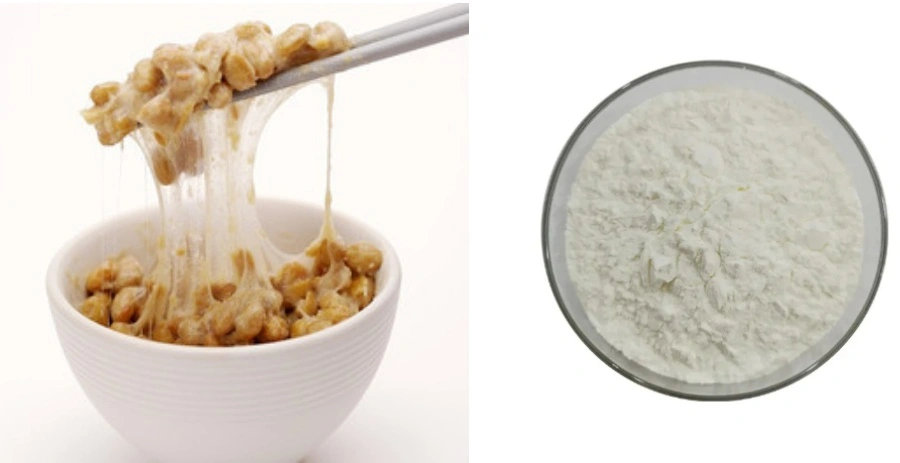
Nattokinase is a serine protease, a subtilisin-like enzyme having 275 amino acids and a molecular weight of around 27.7 kDa. This was discovered by Dr. Hiroyuki Sumi and colleagues in 1987 after examining natto, the Japanese delicacy created by fermenting soybeans with Bacillus subtilis var. natto. The commercial production of nattokinase usually involves the steps of fermentation, separation, concentration, drying, and milling. I would recommend that purchasers ask the provider what strain they use, how they regulate the fermentation, and how they maintain drying temperature. Process control is important since each step might alter enzyme activity. Also check powder characteristics such as wetness, particle size, and smell. A fine, low-odor powder provides a more even mix in completed capsules.
Compare Potency by Verified Activity
When evaluating Nattokinase Powder, never judge product quality or value based on weight alone. Nattokinase activity is typically expressed in fibrinolytic units (FU), which measure its fibrinolytic activity. However, different laboratories may use different testing methodologies, meaning that an FU value reported by one supplier may not be directly comparable to another. When sourcing Nattokinase Powder, request a clear definition of the activity unit, the specific test method, and the corresponding batch test results. A documented testing method, such as the fibrin plate assay, can provide a useful reference for comparing product specifications. Buyers should also calculate the cost per serving based on actual enzyme activity rather than simply comparing the price per kilogram. Lower-activity Nattokinase Powder may require a larger amount of raw material per capsule, increasing capsule fill weight and the need for additional excipients. Another important consideration is vitamin K2 content. Since natto naturally contains vitamin K2, some buyers may want a documented K2 specification when developing products with specific labeling requirements. Ask your Nattokinase Powder supplier for a separate vitamin K2 statement supported by appropriate testing so your regulatory and labeling teams can evaluate the information accurately. This is particularly important because vitamin K2 and nattokinase products may be relevant to consumers taking blood-thinning medications, making clear labeling and appropriate safety review essential.
Verify Safety and Regulatory Documents
Request Batch-Specific Certificates of Analysis
A generic certificate does not show what you have in your lot. Request a certificate of analysis for the specific batch number. It must state the specification, actual result, test dates, manufacture date, and expiration date. Look for enzyme activity, Loss on drying, Ash, Heavy metals, Total plate count, and Yeast and mold. Don’t only compare each output to the supplier spec, but compare it to your incoming spec. Your quality team should also make sure that test methods are named. Under 21 CFR Part 111, dietary supplement manufacturers in the US must validate the identification of dietary components. Retained samples and a clear certificate for each batch will help in audits. Record all the lots you take in.
Check Certifications and Allergen Statements
Certificates demonstrate how a factory is managed by a supplier. Check ISO, HACCP, Kosher, and Halal documents and verify scope, issuance date, and expiration date. The FDA registration is the facility’s registration with the agency. So it is not an FDA approval of the substance; regard it as one element of the submission. Nattokinase originates from fermented soybeans. Ask for an allergy declaration. By U.S. law, soy is one of the top food allergens; thus, your labeling team requires a clear written stance from the supplier. Also ask for non-GMO, vegan, and animal origin declarations when your company makes such claims. Do not make any claims on your bundle until you have a document to prove it.
Plan Labels and Claims Responsibly
Supplements may have structure/function claims under the Dietary Supplement Health and Education Act of 1994, but they can’t claim to treat or cure illness. These claims need to be submitted to the FDA 30 days before commercialization, along with a customary disclaimer. Changes in plasma fibrinogen, factor VII, and factor VIII levels were reported in persons using nattokinase in 2009 in Nutrition Research. Its relevance in cardiovascular research has been discussed in reviews published in 2017 and 2018. Studies nevertheless do not substitute for your own regulatory evaluation. Because nattokinase breaks down fibrin, warnings for persons on anticoagulants, those about to undergo surgery, or those with bleeding problems demand careful legal evaluation. Get all claims and warnings approved by expert regulatory counsel.
Compare Formats and Assess Supplier Capability
Bulk Powder vs. Finished Capsules
With bulk Nattokinase Powder, manufacturers have greater control over dosage, excipients, capsule size, and product branding. Buyers can specify the capsule fill weight and adjust the enzyme activity per serving whenever their formulation requirements change. However, this flexibility also comes with additional responsibilities. When purchasing bulk Nattokinase Powder, blending, encapsulation or tablet compression, moisture protection, and stability testing must be managed by your own factory or contract manufacturer. By comparison, finished nattokinase capsules are ideal for wholesalers, distributors, and new businesses looking for a faster market entry with fewer manufacturing stages, although they offer fewer opportunities for product customization. When comparing bulk Nattokinase Powder with finished capsules, buyers should evaluate more than the initial purchase price. Include testing, packaging, freight, customs duties, warehousing, and any necessary rework in the total procurement cost. Then divide the total expenditure by the number of verified active units obtained from the purchased Nattokinase Powder. This calculation provides a more realistic cost per serving and allows manufacturers to compare bulk ingredients and finished products on an equivalent basis. Ultimately, choosing between bulk Nattokinase Powder and finished capsules depends on your production capabilities, customization requirements, target market, and overall sourcing strategy.
Review Yanxi Herbs Nattokinase Powder Specifications
These are the specs of our product, in a way that your R&D and quality teams may compare them with yours.
| Item | Specification |
|---|---|
| Activity | 20000 FU/g |
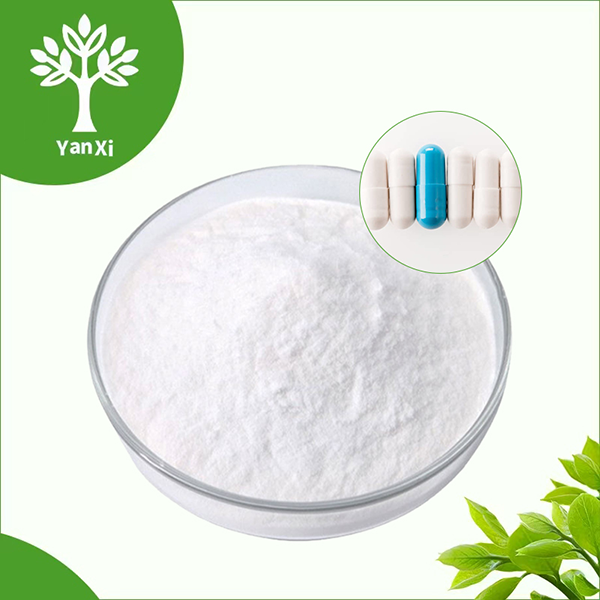
| Appearance | Off-white fine powder |
| Particle size | 100% pass through 80 mesh |
| Loss on drying | ≤5% |
| Ash content | ≤5% |
| Heavy metals | ≤10 ppm |
| Total plate count | <1000 cfu/g |
| Yeast and mold | <100 cfu/g |
| Shelf life | 24 months, sealed and proper storage |
| Certificates | ISO, HACCP, FDA Registration, Kosher, Halal |
These restrictions provide unambiguous acceptance requirements for incoming batches to your quality team. The fine powder does not have the disagreeable natto smell, which is helpful when you are formulating cardiovascular support capsules and functional blood health supplements.
Check Capacity, Lead Time, and Packaging
A good specification is of little use if delivery is late. Ask about manufacturing capacity, regular and rush lead times, inventory policy, and what happens if your demand doubles... Our Nattokinase Powder is in stock and delivery is 1-3 working days after payment. It is available in 1-kilogram bags, 5 kg boxes, and 25 kg drums, so you may match pack size to trial, pilot, or production quantities. Enzymes are sensitive to moisture; therefore, request sealed packaging and verify the remaining shelf life upon receipt. We also have local warehouse support in Europe and the US, so please check with your account manager for current availability. Confirm the MOQ, payment conditions, and Incoterms before you sign.
Confirm OEM and Customization Support
Private label and OEM projects add stages beyond the powder itself. Ask the supplier about spec adjustments, bespoke packaging, verify label content, and secure your formulae with a confidentiality agreement. We have been researching, producing, and exporting natural substances since 2010. Our goods are exported to over 100 countries and regions. We are certified to ISO 22000, HACCP, SGS, Kosher, and Halal standards, and provide flexible customization and rapid response. A supplier with this export history should be able to offer export documentation, answer technical concerns, and assist with long-term planning. Try out your talents in practice. Get a free trial and see how fast and clearly the staff responds.
Build a Scorecard and Avoid Costly Mistakes
Use a Weighted Supplier Scorecard
A scorecard takes views and puts numbers on them. Enzyme activity verification Manufacturing controls Documentation quality Contaminant testing Sample performance Batch consistency Lead time MOQ OEM Support Communication Give the highest weights to potency, safety papers and supply continuity, and a lower weight to pricing. In your own procedure, test each sample for identification, assay, moisture, microbiological, solubility, flowability, and blend uniformity. For bigger volume projects, include: quality questionnaire, remote audit, or on-site audit. Then sign a quality agreement including change control, complaints, deviations, recalls and replacements. Rate all suppliers the same and share findings with R&D, buying, and quality so everyone knows why one supplier is number one.
Avoid Common Buying Mistakes
There are several faults that are recurring from project to project. Buyers go for the lowest bid and discover the low price comes with less activity, poor testing, or insufficient packaging. Others are content with a certificate not tied to a certain batch. Some confuse rapid dispersion with enzyme function; however, a powder might dissolve rapidly and yet demonstrate poor FU. Some ignore shelf life, so stuff comes with little time remaining. Another thing is storage. Keep sealed bags in a cool, dry place and re-seal after each use, as heat, moisture, light, oxygen, and repetitive opening degrade stability. Compare landing cost, count unsuccessful batches and delays, since one botched run might erase months of savings. Lastly, keep marketing text clear of sickness claims.
Follow a Step-by-Step Procurement Workflow
A set sequence decreases risk. 1. Create a product brief that includes Dosage form, target activity, market, Annual volume, certificates, and packaging. Second, you select vendors based on credentials, testing abilities, papers, and supply history. Third, ask for samples and technical documentation, and then undertake lab and pilot testing. 4. Finalize specifications, testing responsibilities, MOQ, lead time, shipping conditions, payment terms, and change control. Fifth, authorize the supplier and monitor every batch received, complaints, and shelf life results. Before you commit, make a final check on activity and technique, lot documentation, contaminant limits, certifications, allergy declarations, capacity, packaging, and OEM support. The best companion isn’t always the cheapest or the greatest potency. The one that gives constant, provable quality at a reasonable overall cost.
Conclusion
The choice for supplement manufacture has to be based on proven evidence, not on price per kg for Nattokinase Powder. The specification is defined by dosage form, goal activity per serving, and manufacturing process. Enzyme activity has to be compared by unit, test technique, and batch result. Batch certificates, facility certifications, allergy declarations, and well-vetted labels mitigate US regulatory risk. Bulk powder provides formulators with control but adds blending and stability responsibilities. Cost should be calculated per confirmed active unit. Capacity, lead time, packaging, and OEM support are indicators of a supplier’s ability to handle long-term manufacturing. A weighted scorecard, sample testing, a quality agreement, and a staged process enable organizations to pick a provider that can consistently supply verifiable quality.
FAQ
What is the most important Nattokinase Powder specification?
Verified enzyme activity per gram, such as 20,000 FU/g, matters most. Pair it with a named test method and batch results. Moisture, particle size, and microbial limits come next.
Which documents should I request from a supplier?
Ask for a specification sheet, a batch-specific certificate of analysis, ISO, HACCP, Kosher, and Halal certificates, an allergen statement, and storage guidance. At Yanxi Herbs, we also provide free samples so your team can run lab and pilot tests.
How should I store the powder?
Keep it sealed in a cool, dry place away from heat and moisture. Our powder has a 24-month shelf life when sealed and stored properly. Always confirm stability inside your finished dosage form through your own testing.
Request Your Nattokinase Powder Sample From Yanxi Herbs
Yanxi Herbs is a Nattokinase Powder supplier with free samples, in-stock inventory, and delivery within 1-3 working days after payment. Send your dosage form, annual volume, and destination market to info@yanxiherbs.com, and our team will reply with specifications and documents. Visit yanxiherbs.com for more product details. Share your project today, and we will help you move from sample testing to steady bulk supply.
References
1. Experientia, 1987. "A Novel Fibrinolytic Enzyme (Nattokinase) in the Vegetable Cheese Natto; a Typical and Popular Soybean Food in the Japanese Diet."
2. Nutrition Research, 2009. "Nattokinase Decreases Plasma Levels of Fibrinogen, Factor VII, and Factor VIII in Human Subjects."
3. International Journal of Molecular Sciences, 2017. "Nattokinase: An Oral Antithrombotic Agent for the Prevention of Cardiovascular Disease."
4. Biomarker Insights, 2018. "Nattokinase: A Promising Alternative in Prevention and Treatment of Cardiovascular Diseases."
5. Code of Federal Regulations, Title 21, Part 111, 2007. "Current Good Manufacturing Practice in Manufacturing, Packaging, Labeling, or Holding Operations for Dietary Supplements."
6. Dietary Supplement Health and Education Act, 1994. United States Public Law 103-417.

Send Inquiry
Related Industry Knowledge
- How Can Bulk Fo-Ti Extract Powder Help Brands Expand Plant-Based Ingredient Product Portfolios?
- Hyaluronic Acid Powder Bulk Helps Cosmetic Manufacturers Develop Hydrating Serums, Masks, and Anti-Aging Product Lines
- Why Do Manufacturers Choose Stevia Extract Powder for Formulations?
- What Makes Chaga Mushroom Extract Powder Suitable for Beverage and Powder Blend Applications?